
SPCC Emergency Contact List: 7 Critical Response Contacts
Missing a single emergency contact during an oil spill can trigger EPA violations that cost facilities an average of $42,000 per incident. Your SPCC emergency contact list determines whether you contain the spill or face regulatory penalties.
Key Takeaways:
• EPA requires 7 specific contact categories within your SPCC emergency response plan
• Notification must begin within 60 minutes of spill detection to avoid regulatory penalties
• Annual contact verification reduces response delays by 34% during actual emergencies
What Are SPCC Emergency Contact Requirements?

SPCC emergency contact requirements are EPA-mandated notification protocols facilities must maintain under 40 CFR 112.7. EPA regulations mandate emergency contact protocols for any facility storing more than 1,320 gallons of oil in above-ground containers or 42,000 gallons total capacity. These contacts differ from general facility directories because they require 24/7 availability and specific response capabilities.
The Emergency Contacts component of your SPCC Plan must include both internal personnel and external agencies with defined roles during spill events. This means facility managers cannot simply list office numbers that go to voicemail after hours. Each contact requires verified mobile numbers, backup designations, and documented response authorities.
Regulatory penalties for non-compliance start at $19,014 per violation under the Clean Water Act. EPA inspectors specifically verify contact accuracy during facility audits. Outdated phone numbers or missing contacts trigger immediate citations because they compromise spill response effectiveness. The SPCC Plan becomes legally deficient if emergency contacts cannot be reached during actual incidents.
Primary Emergency Response Contacts
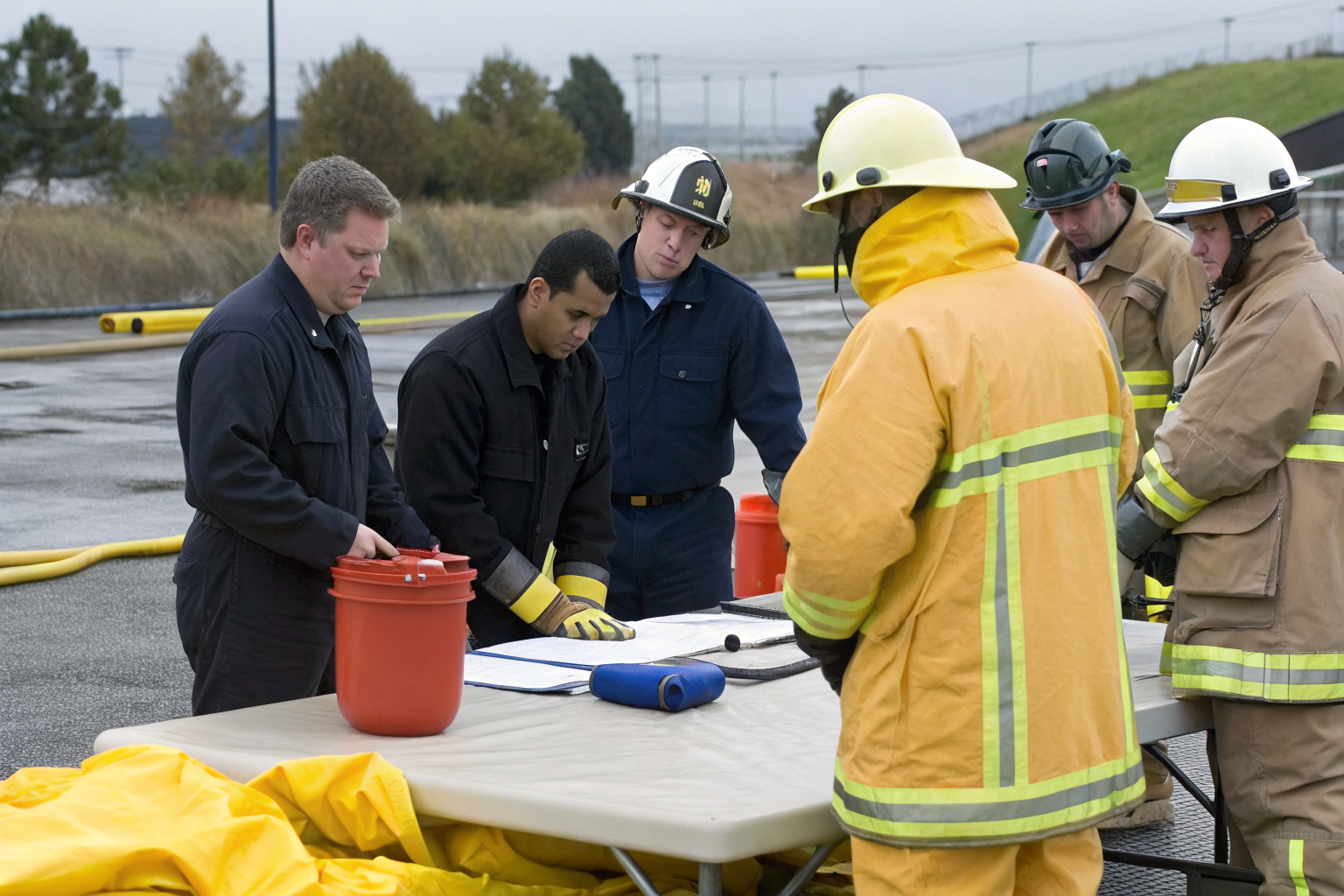
Emergency contacts include facility manager and response team personnel with immediate decision-making authority during spill events. Your primary response team handles initial containment while external notifications proceed simultaneously.
| Contact Type | Required Role | Response Time | Backup Required |
|---|---|---|---|
| Facility Manager | Overall incident command | 30 minutes | Yes |
| Environmental Coordinator | Regulatory compliance oversight | 45 minutes | Yes |
| Operations Supervisor | Equipment shutdown/isolation | 15 minutes | Yes |
| Maintenance Manager | Emergency repairs/containment | 30 minutes | Yes |
Facility managers must maintain 24/7 availability through mobile phones or answering services. The Environmental Compliance role requires someone with EPA reporting knowledge and authority to make regulatory notifications. Operations supervisors need physical access to shut off pumps, close valves, and activate containment systems within minutes of detection.
Backup designations prevent single points of failure when primary contacts are unavailable. Each backup must have equivalent training and authority levels. EPA inspectors verify backup contact capabilities during facility reviews because response delays often occur when primary personnel cannot be reached.
Regulatory Notification Contacts

Oil spill notification requires EPA and state agency contacts for immediate regulatory reporting obligations. Different agencies handle different spill scenarios based on location, volume, and environmental impact potential.
| Agency | Contact Method | Reporting Threshold | Response Time |
|---|---|---|---|
| EPA Regional Office | 24-hour hotline | Any discharge to waters | Immediate |
| State Environmental Agency | Emergency number | 25+ gallons or soil contamination | Within 2 hours |
| Local Fire Department | 911 then direct line | Fire/explosion risk | Immediate |
| Coast Guard (waterways) | National Response Center | Navigable waters discharge | Immediate |
EPA Regional Office territories determine which specific office receives your notification. Region 5 covers Illinois, Indiana, Michigan, Minnesota, Ohio, and Wisconsin. Region 9 handles Arizona, California, Hawaii, and Nevada. Wrong regional contacts delay response and create compliance gaps.
State environmental agency requirements vary significantly. California requires immediate notification for any visible sheen on water. Texas mandates reporting within 4 hours for spills exceeding 25 gallons. Your SPCC emergency contact list must include state-specific numbers, not generic agency switchboards that route calls during business hours only.
How Do You Structure the Notification Chain?

Response chain follows predetermined notification sequence to ensure regulatory compliance while coordinating containment efforts. The notification structure determines whether multiple agencies receive consistent information or conflicting reports that complicate response efforts.
First, activate internal response team contacts simultaneously within 15 minutes of spill detection. Facility manager, operations supervisor, and environmental coordinator receive immediate notification with spill location, estimated volume, and containment status. This parallel notification ensures rapid response deployment.
Second, initiate regulatory notifications based on spill characteristics. Environmental coordinator contacts EPA Regional Office and state agencies within 30 minutes. Operations supervisor notifies fire department if flammable materials are involved. Coast Guard notification occurs only for actual or potential water discharges.
Third, escalate to external contractors if internal resources prove insufficient. Industry standard 15-minute intervals between notification tiers prevent overwhelming responders while ensuring adequate response capacity. Document all notification times, contact persons, and information provided. EPA inspectors review notification logs during post-incident investigations to verify compliance with timing requirements.
External Contractor and Service Contacts

Emergency response requires qualified spill cleanup contractors with pre-established service agreements and guaranteed response times. External contractors provide specialized equipment and expertise beyond typical facility capabilities during major spill events.
Environmental remediation contractors must hold appropriate state licenses and EPA certifications for oil spill cleanup. Service agreements should guarantee 4-hour response times for initial assessment and 24-hour mobilization for full cleanup crews. Contractor response time commitments from service agreements typically specify equipment arrival, not just personnel dispatch.
Equipment rental companies provide emergency pumps, temporary storage tanks, and containment materials when facility resources prove inadequate. Your SPCC emergency contact list must include after-hours contact numbers, not business office lines. Analytical laboratories require pre-qualification for soil and water sampling during spill investigations. Many labs cannot accept emergency samples without existing client agreements.
Secondary Containment contractors handle specialized situations like Tank Storage system failures that require immediate temporary containment construction. These contractors need facility access procedures, equipment specifications, and site layout information before emergencies occur. Response effectiveness depends on pre-established relationships, not emergency vendor searches during active spills.
Contact Management and Maintenance

Contact management prevents outdated information during emergencies through systematic verification and database maintenance procedures. EPA inspection findings show 28% of violations involve outdated contact information that delays response or prevents proper notifications.
Quarterly verification procedures require calling each emergency contact to confirm current phone numbers, personnel assignments, and availability commitments. Environmental Compliance staff should document verification dates, contact responses, and any changes required. This systematic approach identifies disconnected numbers, personnel transfers, and contractor service lapses before emergencies occur.
Training Programs must address contact management responsibilities when personnel changes occur. New environmental coordinators need current contact databases, notification procedures, and agency reporting requirements. Facility managers require updated contractor agreements and service capabilities. Regular training prevents knowledge gaps that compromise emergency response effectiveness during actual spill events.