
Auto Shop Oil Storage Compliance: SPCC requirements for mechanic shops
Most auto shops unknowingly violate federal oil storage laws and face $37,500 per day EPA penalties because they don’t understand SPCC thresholds. Auto shop oil storage compliance affects thousands of repair facilities that store motor oil, transmission fluid, and hydraulic oil in quantities that trigger federal oversight.
Key Takeaways:
• Auto shops with 1,320+ gallons combined oil capacity require SPCC plans — most shops hit this with just 7-8 oil drums
• Secondary containment must hold 110% of largest container capacity plus 10% of remaining containers’ volume
• EPA fines for SPCC violations start at $2,500 per day and can reach $37,500 daily for willful noncompliance
When Do Auto Repair Shops Need SPCC Plans?
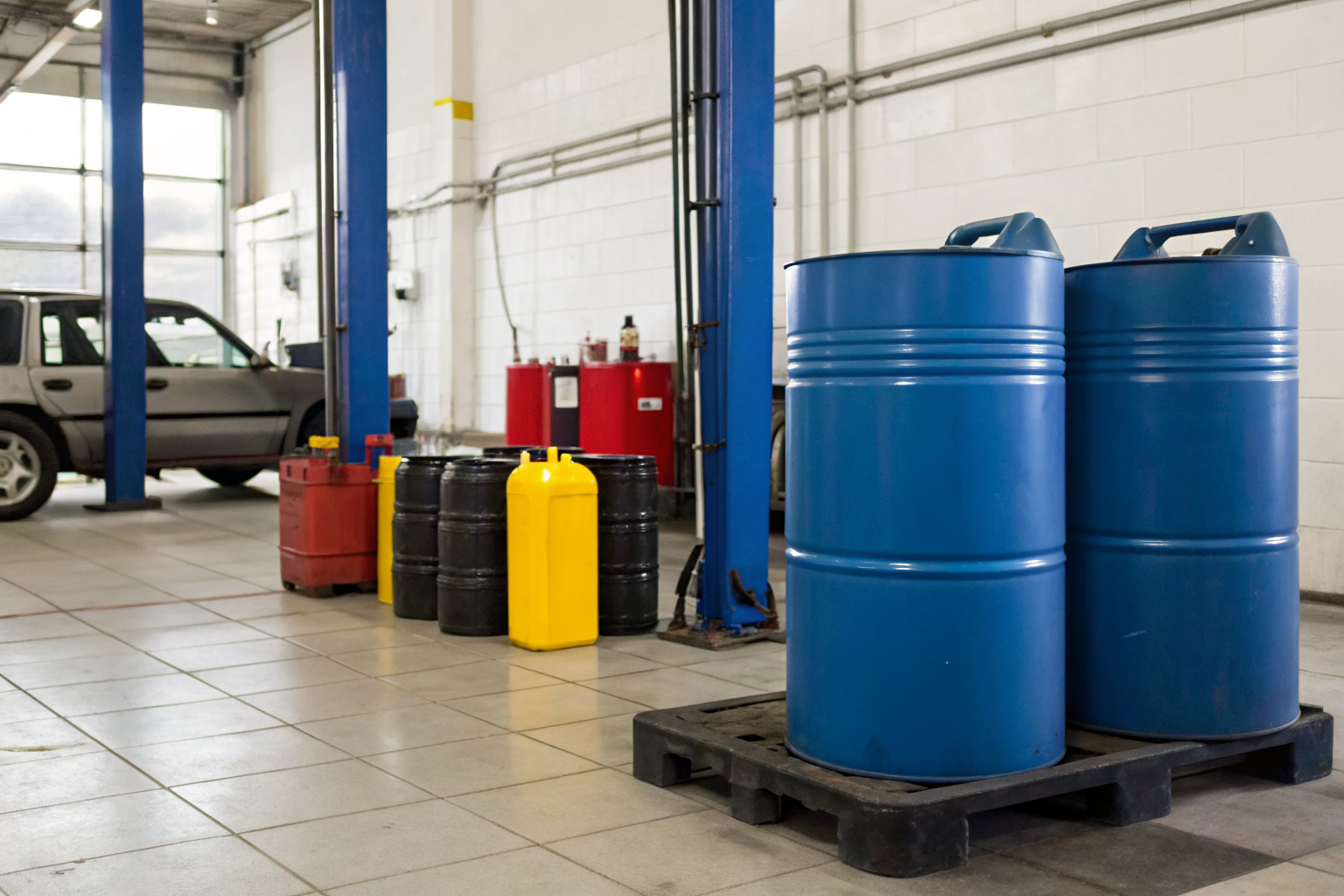
SPCC Plan requirements trigger when auto shops store 1,320 gallons or more of oil in containers with individual capacities of 55 gallons or larger. This means auto shops require SPCC plans when exceeding 1,320 gallons across all qualifying oil storage. The 1,320-gallon threshold equals approximately 7-8 standard 55-gallon drums plus equipment fluids like hydraulic oil in lifts and transmission fluid in bulk dispensers.
EPA Regulations define “oil” broadly to include petroleum-based lubricants, hydraulic fluids, and heat transfer fluids. Motor oil stored in 55-gallon drums counts toward the threshold. Transmission fluid in 30-gallon containers doesn’t count because containers under 55 gallons are exempt from aggregate calculations. However, the oil inside those smaller containers still matters if it connects to larger storage systems.
Oil Storage calculations include both new and used oil volumes. A typical 4-bay shop with eight 55-gallon motor oil drums, two 275-gallon waste oil tanks, and hydraulic fluid in four vehicle lifts easily exceeds 1,320 gallons. The math adds up faster than most shop owners realize — eight drums contribute 440 gallons, waste oil tanks add 550 gallons, and lift reservoirs contribute another 200+ gallons.
Mobile oil storage units like oil dispensing systems with integral tanks count toward capacity if they exceed 55 gallons per container. Shops using 120-gallon mobile oil units for bay service must include these volumes in SPCC calculations. Underground storage tanks require separate UST permits but also count toward SPCC thresholds when they store qualifying oils.
Automotive Oil Types That Count Toward SPCC Capacity
| Oil Type | Container Sizes | Counts Toward SPCC | Storage Location |
|---|---|---|---|
| Motor Oil (New) | 55-gal drums, 120-gal mobile units | Yes, if ≥55 gal containers | Service bays, storage rooms |
| Transmission Fluid | 30-gal containers, 55-gal drums | Only 55+ gal containers | Transmission work areas |
| Hydraulic Oil | Vehicle lifts, 55-gal drums | Yes, lift reservoirs + drums | Throughout facility |
| Gear Oil/Differential Oil | 5-gal pails, 55-gal drums | Only 55-gal drums | Parts/service areas |
| Waste/Used Motor Oil | 275-gal tanks, 55-gal drums | Yes, all qualifying containers | Waste storage area |
| Brake Fluid | 1-gal containers, 55-gal drums | Only 55-gal drums | Brake service bays |
| Power Steering Fluid | 1-qt bottles, 55-gal drums | Only 55-gal drums | Service areas |
| Coolant/Antifreeze | Various sizes | No, not petroleum-based | Excluded from SPCC |
Automotive oils contribute to SPCC capacity calculations differently based on container size and petroleum content. Typical 3-bay shops store 800-1,500 gallons across new and used oil containers when drums and waste oil tanks are included. Facility Types matter because tire shops focus on different oil types than transmission specialists, but the 55-gallon container threshold applies universally.
Waste oil storage requires special attention because used oil accumulates quickly. A busy shop generating 200 gallons of waste oil monthly needs proper-sized waste oil tanks to avoid overflow situations. Used oil tanks typically range from 275 to 550 gallons, and multiple tanks often push facilities over SPCC thresholds.
Secondary Containment Requirements for Repair Shop Operations
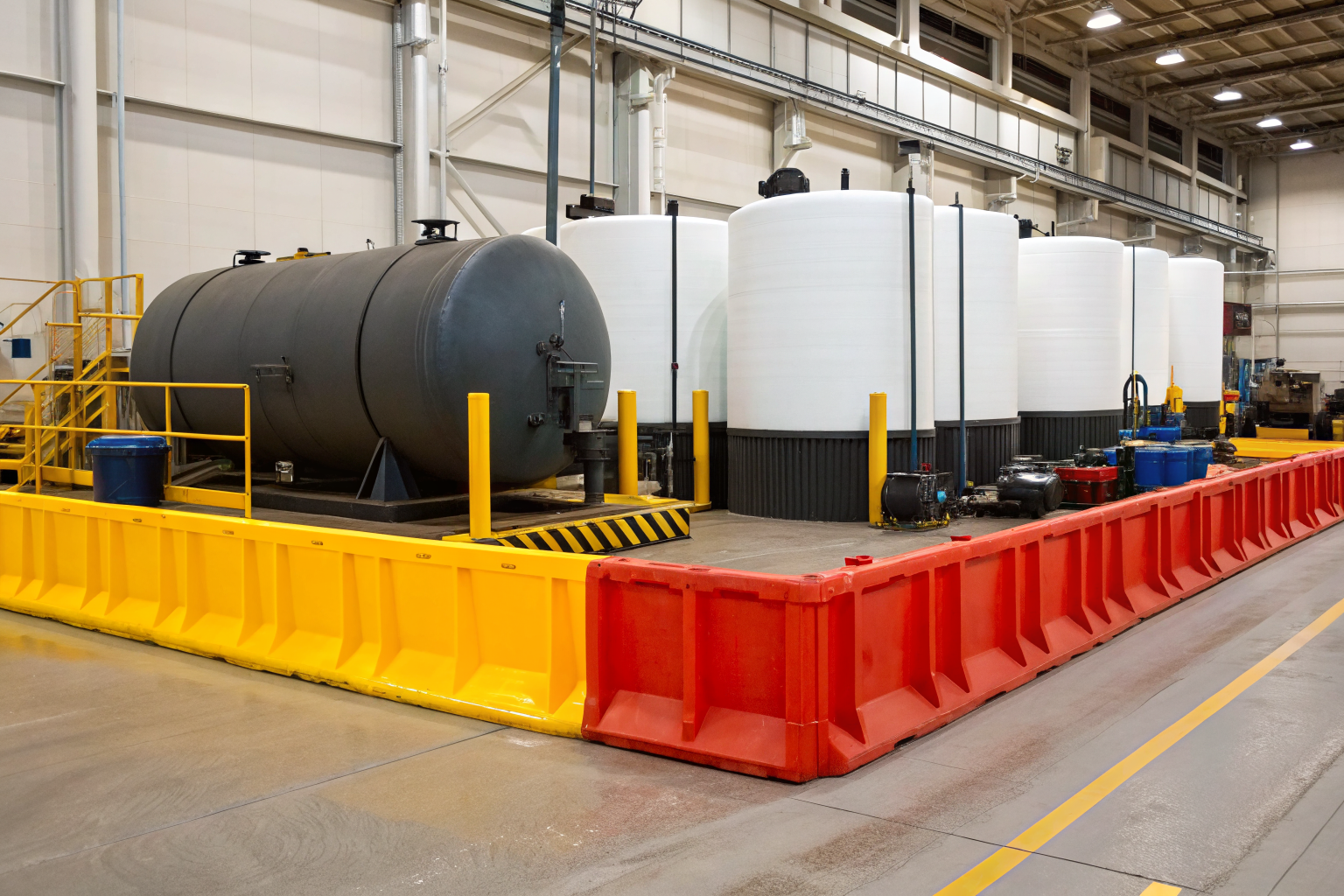
Secondary containment prevents oil spills in repair facilities through engineered barriers that capture leaked oil before it reaches soil or storm drains. Secondary containment must hold 110% of the largest tank plus 10% of remaining tank volumes when multiple containers share the same containment area. This containment capacity formula ensures adequate spill protection even during simultaneous releases.
Spill Prevention starts with proper containment system design. Steel or concrete containment areas work best for permanent installations. Portable containment units suit mobile oil storage systems. The containment floor must resist petroleum penetration — unsealed concrete fails this requirement. Epoxy coatings, polyurethane linings, or steel construction provide adequate petroleum resistance.
Calculating containment capacity follows specific steps. First, identify the largest container in the containment area — typically a 275-gallon waste oil tank. Multiply by 110% to get 302.5 gallons base capacity. Second, total the remaining containers’ volumes and multiply by 10%. If six 55-gallon drums share the area, that’s 330 gallons × 10% = 33 gallons additional capacity. Total required containment: 302.5 + 33 = 335.5 gallons minimum.
Drainage restrictions prevent contaminated rainwater from leaving containment areas. Containment areas cannot connect to storm drains unless they include oil-water separators and discharge permits. Most auto shops use containment areas without drainage — captured rainwater gets tested and disposed of as contaminated if oil sheens are visible. Manual pumping removes accumulated water after testing confirms it’s clean.
Inspection requirements mandate monthly visual checks of containment integrity, quarterly capacity verification, and immediate repair of any cracks or damage. Repair Shop Operations must document these inspections in writing. Containment areas showing signs of petroleum staining need immediate attention to prevent soil contamination.
How Do Small Auto Shops Handle Used Oil Compliance?
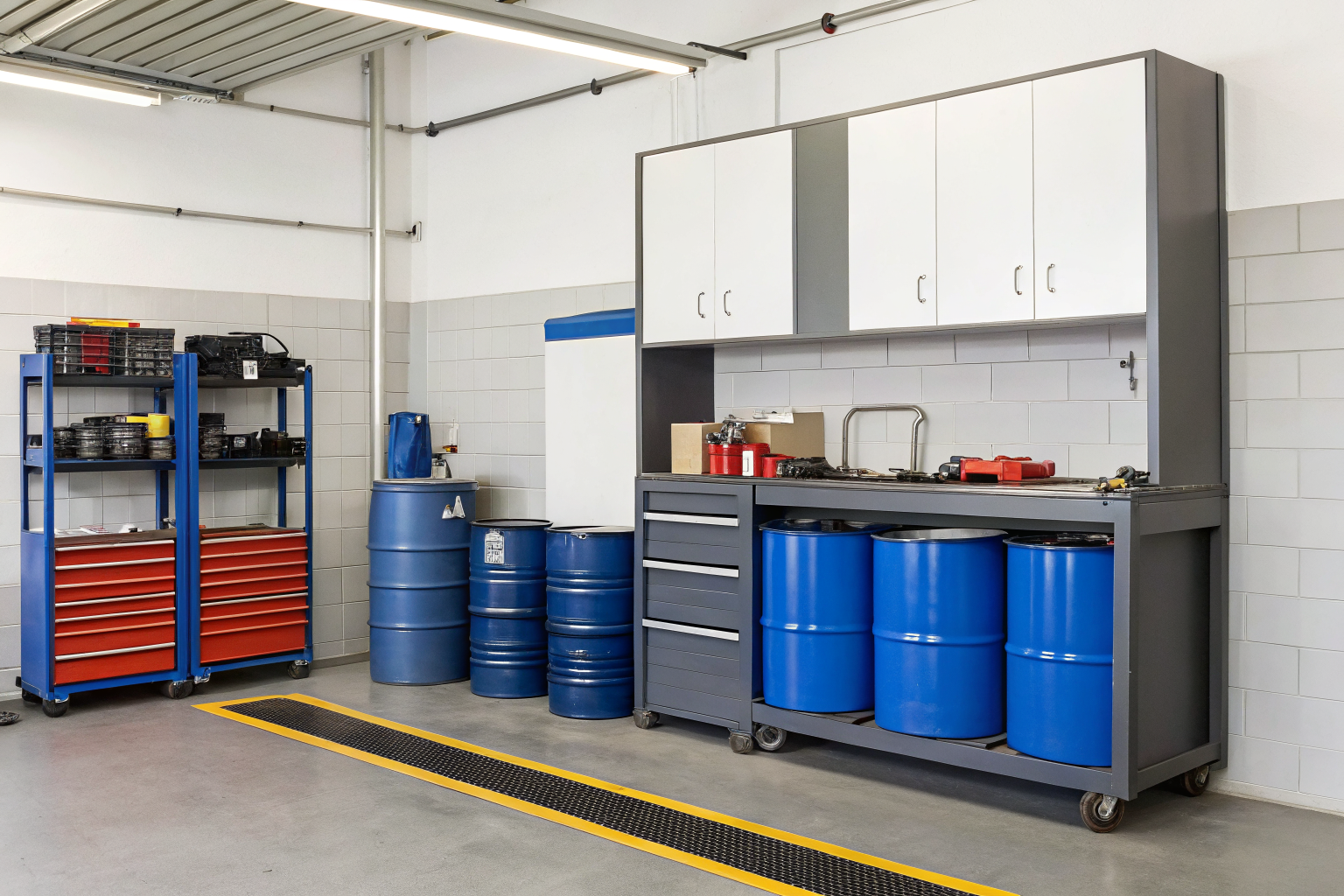
Used oil handling operates under different EPA regulations than new oil storage, but both systems interact within SPCC planning. Small shops manage used oil through specialized handling procedures that include separate storage requirements, pickup scheduling, and manifesting documentation. Used oil generators storing less than 6,000 gallons have simplified compliance requirements compared to larger waste oil facilities.
Small Shop Requirements focus on proper used oil identification and storage separation. Used oil cannot be mixed with other automotive fluids like coolant or brake fluid. Contaminated oil loses its recycling value and becomes hazardous waste with much stricter disposal requirements. Shops maintain separate containers for different used oil types — motor oil, transmission fluid, and hydraulic oil should be segregated when possible.
Used oil storage tanks count toward SPCC capacity calculations at full volume, even though they start empty. A 550-gallon used oil tank contributes 550 gallons to the facility’s SPCC calculation regardless of current fill level. This catches many shop owners off-guard — they see an empty tank and don’t realize it affects their compliance status.
Pickup scheduling through licensed used oil transporters typically happens monthly or quarterly depending on generation rates. Transporters provide manifests documenting oil quantities and destinations. These manifests prove proper disposal and protect shops from liability if downstream problems occur. Small shops generating under 25 gallons monthly can often use simplified manifesting procedures.
Specialized Compliance for used oil includes tank labeling requirements, spill response procedures, and employee training documentation. Used oil tanks need clear “USED OIL” labels visible from all approaches. Shops must train employees on used oil handling procedures and document this training. Emergency response plans specific to used oil releases help minimize environmental impact and regulatory penalties.
Auto Shop SPCC Plan Components and Documentation

SPCC plans require specific documentation for automotive facilities that differs from generic industrial SPCC templates. Industry Applications vary significantly — auto shops face different spill risks than manufacturing plants or fuel terminals. Shops under 10,000 gallons can self-certify SPCC plans, while larger facilities need Professional Engineer certification.
| SPCC Plan Component | Self-Certified (Under 10K gal) | PE-Certified (Over 10K gal) | Auto Shop Specific Requirements |
|---|---|---|---|
| Facility Diagram | Hand-drawn acceptable | CAD drawing preferred | Show all oil storage, drains, containment |
| Spill History | 3-year record required | 3-year record required | Include minor leaks, not just reportable spills |
| Discharge Prevention | Basic measures described | Engineered solutions required | Address lift maintenance, drum handling |
| Personnel Training | Annual training documented | Formal training program | Cover automotive-specific spill scenarios |
| Inspection Schedule | Monthly visual checks | Monthly plus quarterly detailed | Include lift inspections, drum condition |
| Contact Information | Local response contacts | Local plus regional contacts | Include used oil transporter, local fire dept |
Sector Requirements for automotive facilities emphasize mobile equipment and temporary storage situations that don’t apply to stationary industrial facilities. Auto shops routinely move oil containers, operate vehicle lifts containing hydraulic fluid, and handle customer vehicles with various fluid leaks. These dynamic conditions require specialized SPCC plan language.
Plan certification requirements depend on total facility oil storage capacity. Facilities storing between 1,320 and 10,000 gallons can use self-certification — the facility owner signs the plan after confirming it meets regulatory requirements. Facilities exceeding 10,000 gallons need Professional Engineer certification, which requires formal engineering review and PE signature on the plan.
Document retention rules require SPCC plans and supporting documentation to remain on-site and available for EPA inspection. Plans need updates within six months of facility changes that affect spill potential — adding storage tanks, relocating containers, or changing containment systems all trigger plan revisions. Outdated plans provide no regulatory protection during violations.
SPCC plan implementation goes beyond paperwork — it requires ongoing facility management aligned with plan requirements. Monthly inspections, employee training, and maintenance schedules outlined in the plan become legally binding facility operating procedures. Auto shops that develop comprehensive SPCC plans but fail to follow them face the same penalties as facilities without plans.