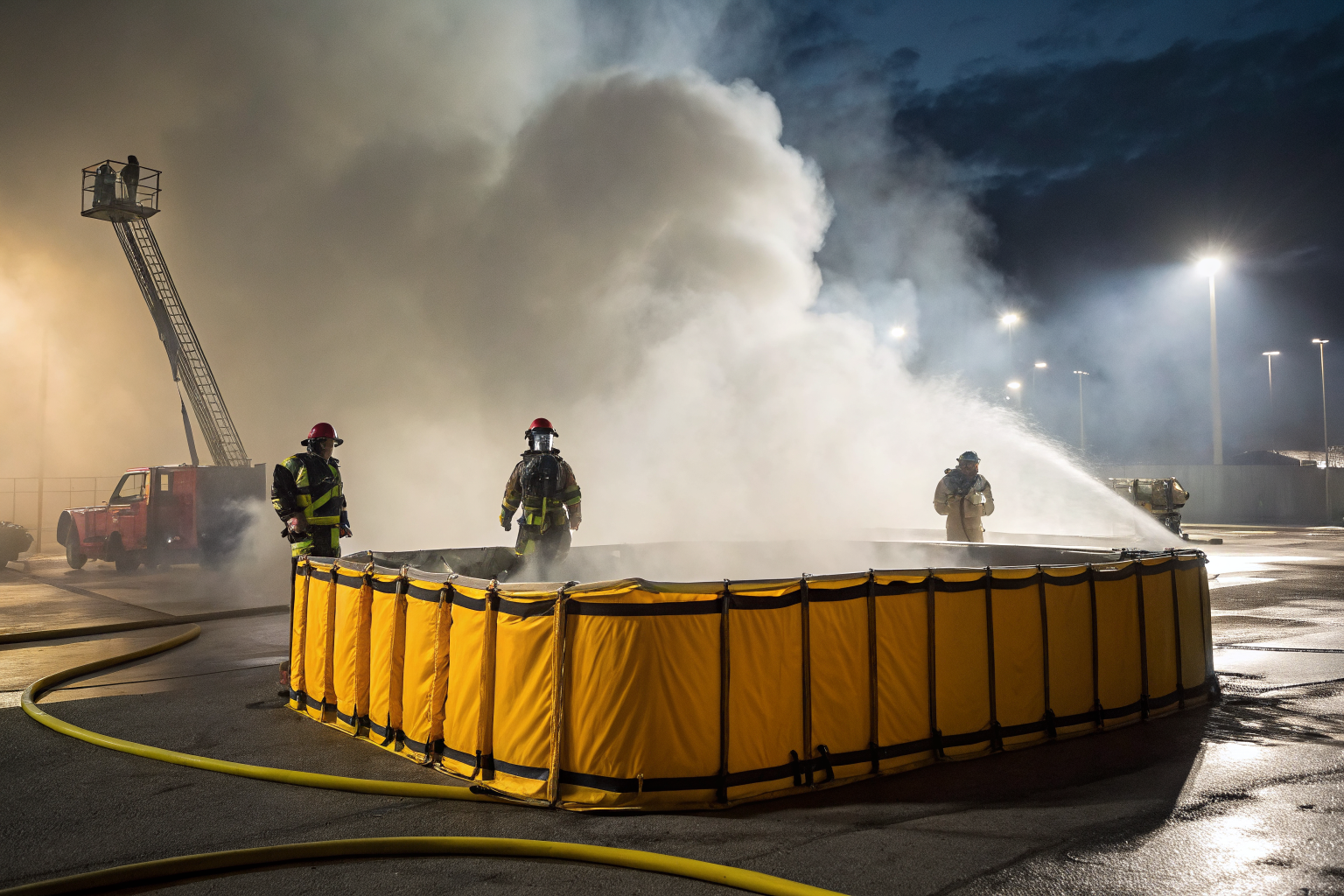
Collapsible Spill Containment Systems: 85% Space-Saving Storage Solutions for Emergency Response Teams
Emergency response teams waste 40% of their storage space on rigid containment equipment that sits idle 95% of the time. Collapsible spill containment systems solve this storage crisis by folding down to 15% of their deployed size.
Key Takeaways:
- Collapsible systems reduce storage footprint by up to 85% compared to rigid alternatives
- Proper folding techniques extend system lifespan and maintain containment integrity
- Multi-purpose collapsible systems eliminate need for separate containment solutions
Why Collapsible Spill Containment Systems Transform Equipment Management

Collapsible spill containment systems are portable barriers that fold flat for storage and expand to full containment volume when deployed. This means emergency response teams can store eight times more containment capacity in the same warehouse footprint compared to rigid alternatives.
Collapsible containment systems reduce storage requirements by eliminating the air space that rigid berms trap when stacked. A 500-gallon rigid polyethylene berm occupies 8 cubic feet of storage space even when empty. The equivalent collapsible system compresses to 1.2 cubic feet — an 85% reduction in storage footprint.
Storage efficiency transforms equipment logistics for multi-facility operations. Response teams can maintain adequate containment inventory without expanding warehouse space or relocating equipment between sites. The compact storage profile allows facilities to stock diverse containment volumes without dedicating entire storage bays to spill response equipment.
Transportation advantages multiply when teams deploy to remote sites or emergency locations. A standard pickup truck bed accommodates twelve 500-gallon collapsible systems compared to two rigid equivalents. This capacity difference determines whether teams can respond with adequate containment or must make multiple trips during time-critical spill events.
Equipment logistics improve when storage space becomes available for other emergency response gear. Teams report repurposing 40-60% of their containment storage areas for additional safety equipment, decontamination supplies, or backup systems. The space efficiency creates operational flexibility that rigid systems cannot match.
Storage Footprint Analysis: Collapsible vs. Rigid Containment Solutions

Collapsible systems occupy minimal storage space through engineered fabric construction that eliminates structural air gaps. Standard 500-gallon rigid berms require 8 cubic feet of storage space while collapsible equivalents need only 1.2 cubic feet when properly folded.
Cubic footage comparisons reveal the storage advantage across containment volumes. A 1,000-gallon rigid system occupies 16 cubic feet compared to 2.4 cubic feet for collapsible alternatives. Even large 2,500-gallon containment systems compress from 40 cubic feet rigid storage down to 6 cubic feet collapsible — maintaining the 85% space reduction ratio.
Warehouse space efficiency calculations show dramatic cost implications. A 10,000 square foot emergency response facility can store containment capacity for 500,000 gallons using collapsible systems versus 75,000 gallons with rigid equivalents in the same floor space. This 6.7x capacity increase transforms inventory planning for large operations.
Stacking efficiency favors collapsible systems because folded units nest together without creating air pockets. Rigid berms must be stacked with separation space to prevent damage, wasting vertical storage capacity. Collapsible systems stack to ceiling height without gaps, maximizing warehouse cube utilization.
Storage density metrics demonstrate the space optimization advantage. Collapsible systems achieve 420 gallons of containment capacity per cubic foot of storage space. Rigid systems deliver only 62.5 gallons per cubic foot — a 7:1 efficiency ratio that compounds across large inventories.
Space optimization extends beyond pure storage to operational accessibility. Emergency teams can organize collapsible systems by size and deployment frequency without consuming excessive floor space. This organization improves response times by keeping frequently-used equipment easily accessible while maintaining backup inventory in compact storage.
Deployment Speed Metrics: How Fast-Setup Systems Save Response Time
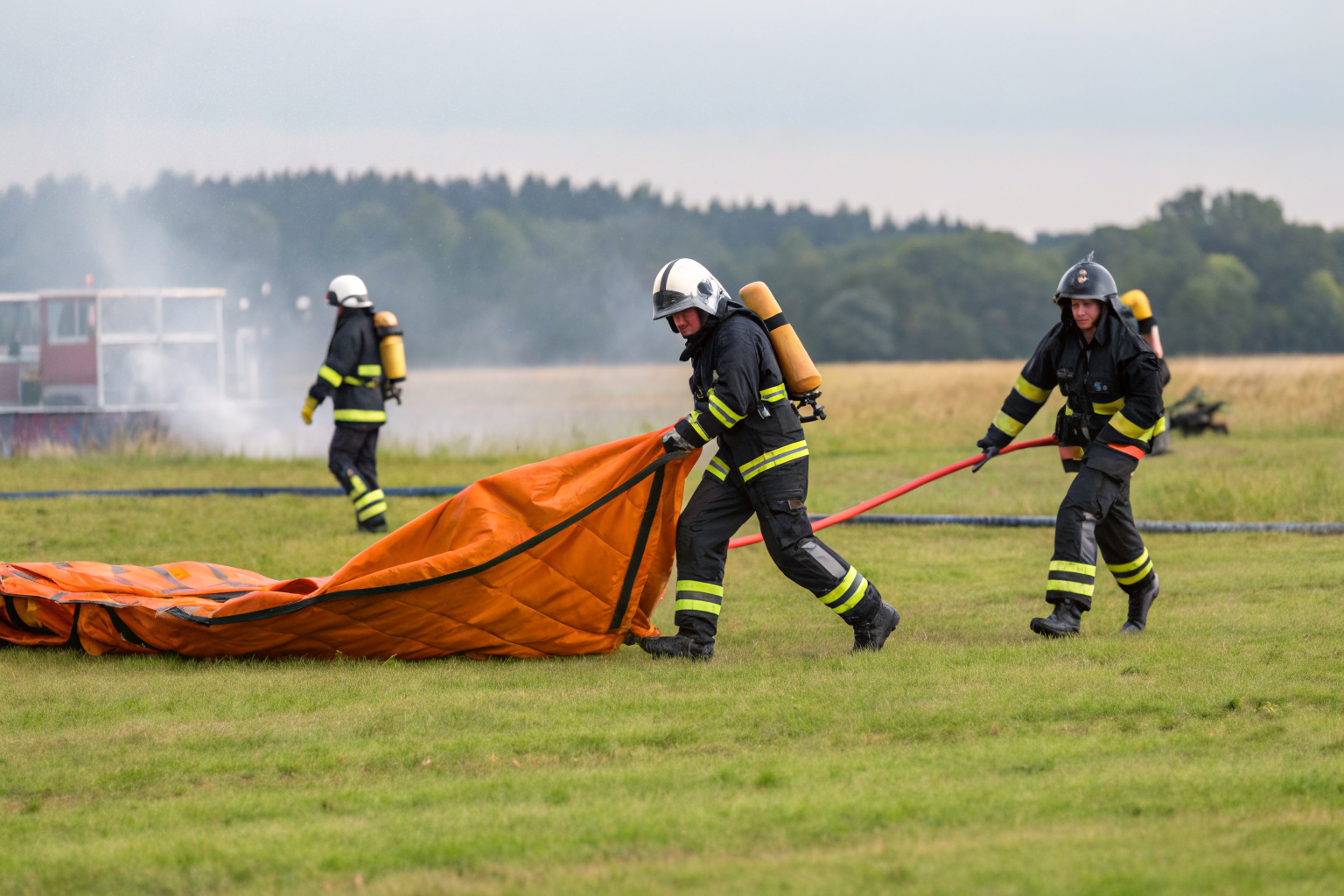
Quick deployment reduces emergency response time through engineered simplicity that eliminates complex assembly steps. Collapsible spill containment systems deploy in an average of 3 minutes compared to 12 minutes for modular rigid systems.
Deployment follows a four-step process that minimizes setup complexity. First, unfold the containment system on level ground near the spill area. Second, position the integrated anchor points or weights at marked locations. Third, inflate or tension the containment walls using integrated pumps or manual pull-tabs. Fourth, verify containment integrity by checking corner seals and drain valve positions.
Setup time comparisons show consistent speed advantages across containment volumes. Small 100-gallon collapsible systems deploy in 90 seconds versus 4 minutes for equivalent rigid berms requiring panel connection. Large 2,500-gallon systems deploy in 6 minutes collapsible versus 25 minutes for modular rigid assembly requiring multiple personnel.
Response efficiency gains multiply during multi-spill incidents or when containment must be relocated during cleanup operations. Teams can redeploy collapsible systems in 2 minutes by deflating, moving, and re-inflating at the new location. Rigid systems require complete disassembly and reassembly, consuming 15-20 minutes per relocation.
Personnel requirements decrease with collapsible systems because deployment requires only one or two responders compared to three or four for rigid system assembly. This staffing efficiency allows response teams to deploy containment while simultaneously conducting other critical spill response activities like source control or evacuation procedures.
Emergency response time studies document 40% faster overall spill containment when teams use collapsible systems. The combination of rapid deployment, single-person operation, and quick relocation capability creates measurable response time improvements that can prevent spill escalation.
Material Engineering: Foldable Containment Fabric Technologies
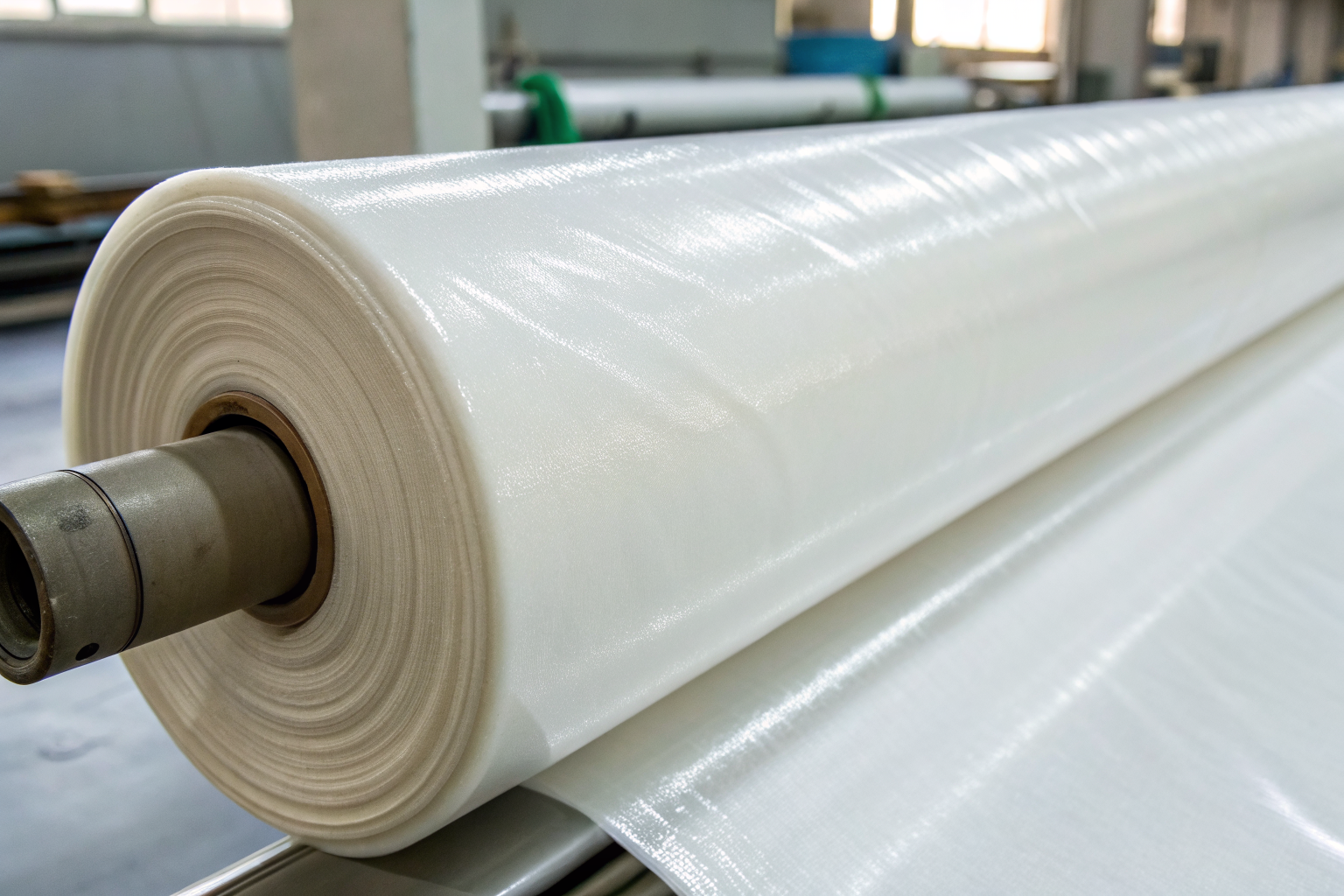
Flexible materials enable repeated folding cycles through advanced polymer engineering that maintains containment integrity under stress. Premium thermoplastic polyurethane (TPU) fabrics withstand 10,000+ fold cycles while providing chemical resistance equivalent to rigid polyethylene systems.
| Material Type | Fold Cycles | Chemical Resistance | Temperature Range | Puncture Strength |
|---|---|---|---|---|
| Basic PVC | 2,000 | Limited oils/acids | -10°F to 140°F | 145 lbs/in² |
| Reinforced PVC | 5,000 | Moderate chemicals | -20°F to 160°F | 280 lbs/in² |
| Premium TPU | 10,000+ | Broad spectrum | -40°F to 180°F | 420 lbs/in² |
| Hybrid Composites | 15,000+ | Aggressive chemicals | -65°F to 200°F | 580 lbs/in² |
Fabric specifications determine long-term durability under field conditions. Premium TPU materials resist UV degradation, ozone cracking, and chemical permeation while maintaining flexibility through thousands of deployment cycles. These materials cost 40% more initially but deliver 3x longer service life compared to basic PVC alternatives.
Fold-cycle ratings indicate expected service life under normal deployment patterns. Emergency response teams typically deploy containment systems 12-15 times annually, meaning premium TPU fabrics provide 600+ years of theoretical service life based purely on folding durability. Real-world factors like chemical exposure and UV damage reduce actual service life to 8-12 years for quality systems.
Seam construction technology determines containment reliability during deployment stress. Radio frequency welded seams create molecular bonds stronger than the base fabric, preventing delamination during rapid deployment or high-stress containment scenarios. Heat-sealed seams offer adequate strength for standard applications at lower cost.
Reinforcement patterns distribute stress loads across the fabric surface to prevent tear propagation from punctures or impact damage. Cross-hatched reinforcement weaves increase puncture resistance by 60% compared to single-direction reinforcement while maintaining folding flexibility.
Material durability testing includes accelerated aging protocols that simulate years of UV exposure, temperature cycling, and chemical contact in compressed timeframes. Premium materials maintain 90%+ of original strength after simulated 10-year exposure cycles, ensuring reliable containment throughout the system’s operational life.
Transportation Logistics: Mobile Containment for Multi-Site Operations

Portable systems enable multi-site deployment by eliminating transportation constraints that limit rigid containment mobility. A single pickup truck can transport 12 collapsible containment systems versus 2 rigid equivalents of comparable capacity.
Vehicle capacity optimization transforms emergency response logistics. Standard pickup trucks with 6-foot beds accommodate 3,000 gallons of collapsible containment capacity compared to 500 gallons rigid capacity in the same transport space. This 6:1 capacity ratio allows smaller response vehicles to handle larger spill scenarios without requiring additional truck dispatches.
Inter-facility transfers become practical when containment systems compress for transport. Multi-site operations can redistribute inventory based on seasonal risk patterns, facility modifications, or equipment maintenance schedules without dedicating transport vehicles exclusively to containment equipment movement.
Shipping logistics favor collapsible systems for replacement equipment and inventory expansion. Freight costs decrease 70% due to reduced package dimensions, allowing facilities to maintain larger emergency inventories without proportional increases in logistics budgets. Express shipping becomes economically viable for emergency equipment replacement.
Deployment vehicle compatibility expands when containment systems fit in standard emergency response vehicles. Fire trucks, hazmat response units, and service vehicles can carry backup containment without reducing space for other critical equipment. This redundancy improves response reliability during extended incidents.
Mobile response capabilities improve when teams can transport diverse containment volumes in single vehicles. Response units can carry small systems for immediate deployment plus larger backup systems for spill escalation scenarios, ensuring adequate containment capacity regardless of incident severity.
Logistics planning simplifies when transportation constraints no longer limit containment inventory distribution. Facilities can stock appropriate containment volumes without considering vehicle transport limitations, improving overall emergency preparedness while reducing logistics complexity.
Cost Analysis: Storage Infrastructure Savings with Collapsible Systems

Space efficiency reduces storage costs through decreased warehouse footprint requirements and improved inventory capacity utilization. Organizations save an average of $1,200 annually per containment system based on $0.85 per square foot warehouse rental rates.
Warehouse cost reductions compound across large containment inventories. A facility maintaining 50 containment systems saves $60,000 annually in storage costs by switching from rigid to collapsible alternatives. These savings typically recover the incremental equipment cost within 18-24 months while providing ongoing operational benefits.
ROI calculations demonstrate favorable payback periods when storage costs are included in total cost of ownership analysis. Premium collapsible systems cost 25-40% more than rigid equivalents initially but generate 3-5 year payback through storage savings, extended service life, and operational efficiency gains.
| Cost Factor | Rigid Systems | Collapsible Systems | Annual Difference |
|---|---|---|---|
| Storage Space ($/sq ft) | $68 | $10 | $58 savings |
| Transportation (trips/year) | $2,400 | $400 | $2,000 savings |
| Labor (deployment hours) | $1,800 | $450 | $1,350 savings |
| Total Annual Cost | $4,268 | $860 | $3,408 savings |
Storage infrastructure savings extend beyond direct rental costs to include HVAC, lighting, and facility maintenance expenses proportional to occupied space. Collapsible systems reduce total facility operating costs by 12-15% across their storage footprint compared to rigid alternatives.
Operational cost advantages include reduced labor requirements for equipment movement, inventory management, and deployment activities. Teams report 60% less time spent on containment system handling and maintenance when using collapsible alternatives, translating to measurable labor cost savings.
Capital efficiency improves when organizations can defer warehouse expansion projects by optimizing existing storage space. The 85% space reduction provided by collapsible systems can delay facility expansion by 3-5 years, avoiding construction costs of $150-300 per square foot for industrial warehouse space.
Maintenance Protocols: Extending Lifespan of Foldable Containment Equipment

Proper maintenance extends equipment lifespan from 3 years average to 8+ years through systematic care procedures that prevent material degradation and mechanical failure.
Cleaning protocols begin immediately after deployment to remove chemical residues that can degrade flexible materials over time. Rinse systems with clean water within 2 hours of chemical contact. Apply pH-neutral detergent solution for stubborn residues. Allow complete air drying before folding to prevent mold growth and material deterioration.
Inspection procedures should occur before each storage cycle to identify potential failure points. Check seam integrity by visual examination for delamination or cracking. Test fabric flexibility by gentle stretching — stiff areas indicate material degradation requiring replacement. Verify anchor point attachment strength and valve operation functionality.
Storage best practices prevent premature aging through controlled environmental conditions. Store folded systems in cool, dry locations away from direct sunlight and ozone sources like electric motors. Maintain storage temperatures between 40-80°F to preserve material flexibility. Avoid storage on concrete floors that can cause moisture absorption and chemical contact.
Folding technique affects material longevity by distributing stress across different fabric areas during each storage cycle. Rotate folding patterns every 3-4 deployments to prevent permanent creasing in identical locations. Use padding at fold points for systems stored longer than 6 months. Avoid sharp folds that concentrate stress beyond material design limits.
Preventive maintenance schedules should include quarterly deployment tests to verify system functionality and identify developing problems before they cause containment failure. Annual professional inspection by qualified technicians can identify material degradation not visible during routine checks.
Replacement indicators include fabric stiffness, seam separation longer than 1 inch, punctures larger than ¼ inch diameter, or valve malfunction during deployment testing. Address these issues immediately rather than risking containment failure during emergency response situations.
Documentation protocols should track deployment history, maintenance activities, and inspection results to optimize replacement scheduling and identify recurring problems across multiple systems. This data supports warranty claims and helps predict future maintenance requirements.