CATEGORY

Drum Containment Products

Chemical Compatibility Containment: 5 Critical Material Considerations

High-tech lab with advanced chemical containment systems and misty atmosphere.

Chemical compatibility containment: 5 Critical Material Considerations Most chemical spills happen because containment materials fail — not because the primary container breaks. Chemical compatibility containment requires matching specific materials to chemical properties, concentrations, and operating temperatures to prevent catastrophic failures that trigger EPA violations. Key Takeaways: Polyethylene fails against aromatic solvents within 30 days of … Read more

Flammable Liquid Storage Containment: 6 Essential Safety Requirements

Industrial storage tanks with flammable liquid signs under dramatic lighting.

Flammable Liquid Storage Containment: 6 Essential Safety Requirements Flammable liquid storage containment violations cost companies an average of $47,000 per OSHA citation, yet 67% of facilities still fail basic containment requirements during inspection. The gap between regulatory requirements and actual compliance creates massive financial and safety risks. Key Takeaways: OSHA requires flammable storage cabinets to … Read more

SPCC vs Hazmat Containment: 4 Key Regulatory Differences

Industrial facility with large petroleum storage tanks in dramatic lighting.

SPCC vs Hazmat Containment: 4 Key Regulatory Differences Most facility managers get slapped with containment violations because they assume all secondary containment follows the same rules. SPCC vs hazmat containment requirements operate under completely different EPA programs with distinct thresholds, calculations, and penalties. Key Takeaways: SPCC applies to petroleum storage above 1,320 gallons total capacity … Read more

Secondary Containment Design Standards: Engineering Specifications and Technical Implementation Guide

Industrial containment structure with steel beams and concrete sections, dramatic lighting.

Secondary Containment Design Standards: Engineering Specifications and Technical Implementation Guide Secondary containment systems fail not from regulatory gaps, but from fundamental engineering design flaws that could have been prevented with proper technical specifications. These failures cost facilities millions in cleanup costs and regulatory penalties that proper secondary containment design standards could prevent. Key Takeaways: • … Read more

Secondary Containment Calculator: Free Spill Containment Sizing Tool

Industrial containment system with tanks and safety gear, dramatic lighting.

Secondary Containment Calculator: Free Spill Containment Sizing Tool Getting secondary containment sizing wrong costs companies thousands in fines, cleanup costs, and regulatory headaches—this secondary containment calculator eliminates the guesswork. Key Takeaways: EPA requires 110% containment capacity for most hazardous liquids, but specific requirements vary by industry and substance type Proper containment sizing prevents 90% of … Read more

Collapsible Spill Containment Systems: 85% Space-Saving Storage Solutions for Emergency Response Teams

Deployed collapsible spill containment system in an emergency setting with dramatic lighting.

Collapsible Spill Containment Systems: 85% Space-Saving Storage Solutions for Emergency Response Teams Emergency response teams waste 40% of their storage space on rigid containment equipment that sits idle 95% of the time. Collapsible spill containment systems solve this storage crisis by folding down to 15% of their deployed size. Key Takeaways: Collapsible systems reduce storage … Read more

Drum Dispensing Station Containment: Safe Solutions for Drum Taps and Pumps

Drum dispensing station with colorful drums and advanced containment system under dramatic lighting.

Drum Dispensing Station Containment: Safe Solutions for Drum Taps and Pumps Drum dispensing stations create the highest spill risk per operation in industrial facilities — one loose coupling during transfer operations can dump 55 gallons in under two minutes. Proper drum dispensing station containment prevents these catastrophic releases while meeting EPA regulatory requirements. Key Takeaways: … Read more

Outdoor Drum Storage Containment: 6 Weather-Resistant Solutions

Weather-resistant drum storage solutions in dramatic lighting with volumetric fog.

outdoor drum storage containment: 6 Weather-Resistant Solutions Most outdoor drum storage containment systems fail because water infiltration voids EPA compliance and creates expensive spill incidents. Weather protection determines whether your containment system meets regulatory standards or becomes a liability. Key Takeaways: • Covered drum storage reduces spill risk by 78% compared to open-air solutions• UV-resistant … Read more

Low Profile Spill Pallet: Ergonomic Drum Containment for Easy Access

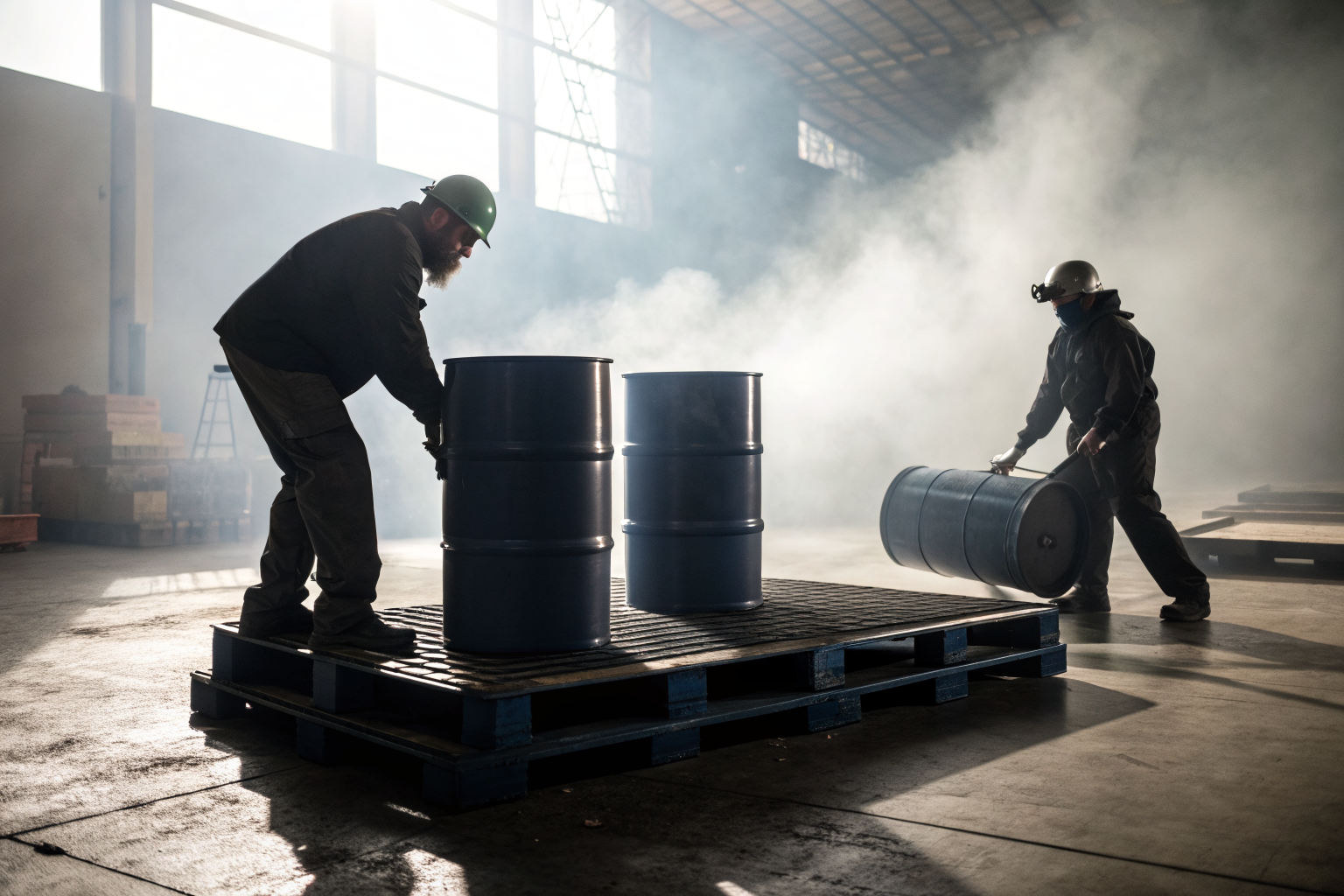
Workers lifting drums on a low profile spill pallet with dramatic lighting.

Low Profile Spill Pallet: Ergonomic Drum Containment for Easy Access Low profile spill pallets cut drum lifting height by 4-6 inches compared to standard models, reducing workplace injuries while maintaining full EPA secondary containment compliance. These specialized containment systems solve the dual challenge of worker safety and regulatory adherence in high-frequency drum handling operations. Key … Read more

Single Drum Containment: 9 Essential Solutions for One-Drum Storage

Single drum on spill pallet in industrial setting with dramatic lighting.

Single Drum Containment: 9 Essential Solutions for One-Drum Storage Single drum containment failures cost manufacturers an average of $47,000 per incident when EPA regulations aren’t met. Your facility’s compliance hinges on selecting the right containment solution for individual drum storage operations. Key Takeaways:• EPA requires 110% containment capacity — meaning a 55-gallon drum needs a … Read more