
Chemical compatibility containment: 5 Critical Material Considerations
Most chemical spills happen because containment materials fail — not because the primary container breaks. Chemical compatibility containment requires matching specific materials to chemical properties, concentrations, and operating temperatures to prevent catastrophic failures that trigger EPA violations.
Key Takeaways:
- Polyethylene fails against aromatic solvents within 30 days of continuous exposure
- Steel containment requires 316L stainless for acids above 20% concentration
- FRP systems cost 40% more upfront but last 3x longer with caustic chemicals
What Determines Chemical Compatibility in Containment Systems?

Chemical compatibility is the ability of a containment material to resist degradation when exposed to specific chemicals over time. This means the material maintains structural integrity, doesn’t allow permeation, and continues to meet secondary containment performance standards throughout its service life.
Chemical compatibility determines containment material performance through two primary mechanisms: permeation and degradation. Permeation occurs when chemicals pass through the molecular structure of the containment material without visible damage. The chemical migrates through the material at the molecular level, eventually reaching the outside environment. Degradation involves visible changes to the material — cracking, softening, swelling, or complete breakdown of the polymer chains or metal matrix.
Temperature coefficient effects on compatibility ratings show that chemical attack rates double for every 18°F increase in operating temperature. A polyethylene containment system rated for 10 years at 70°F may fail in 2.5 years at 106°F with the same chemical. This temperature dependence drives the need for site-specific compatibility assessments rather than relying on room-temperature test data.
Environmental compliance requires containment systems to maintain their designed capacity and structural integrity for the full service life. EPA regulations under SPCC and RCRA compliance frameworks mandate that secondary containment systems prevent any discharge to navigable waters or groundwater. Material compatibility directly impacts regulatory compliance because failed containment equals regulatory violation.
Acid Containment Material Selection
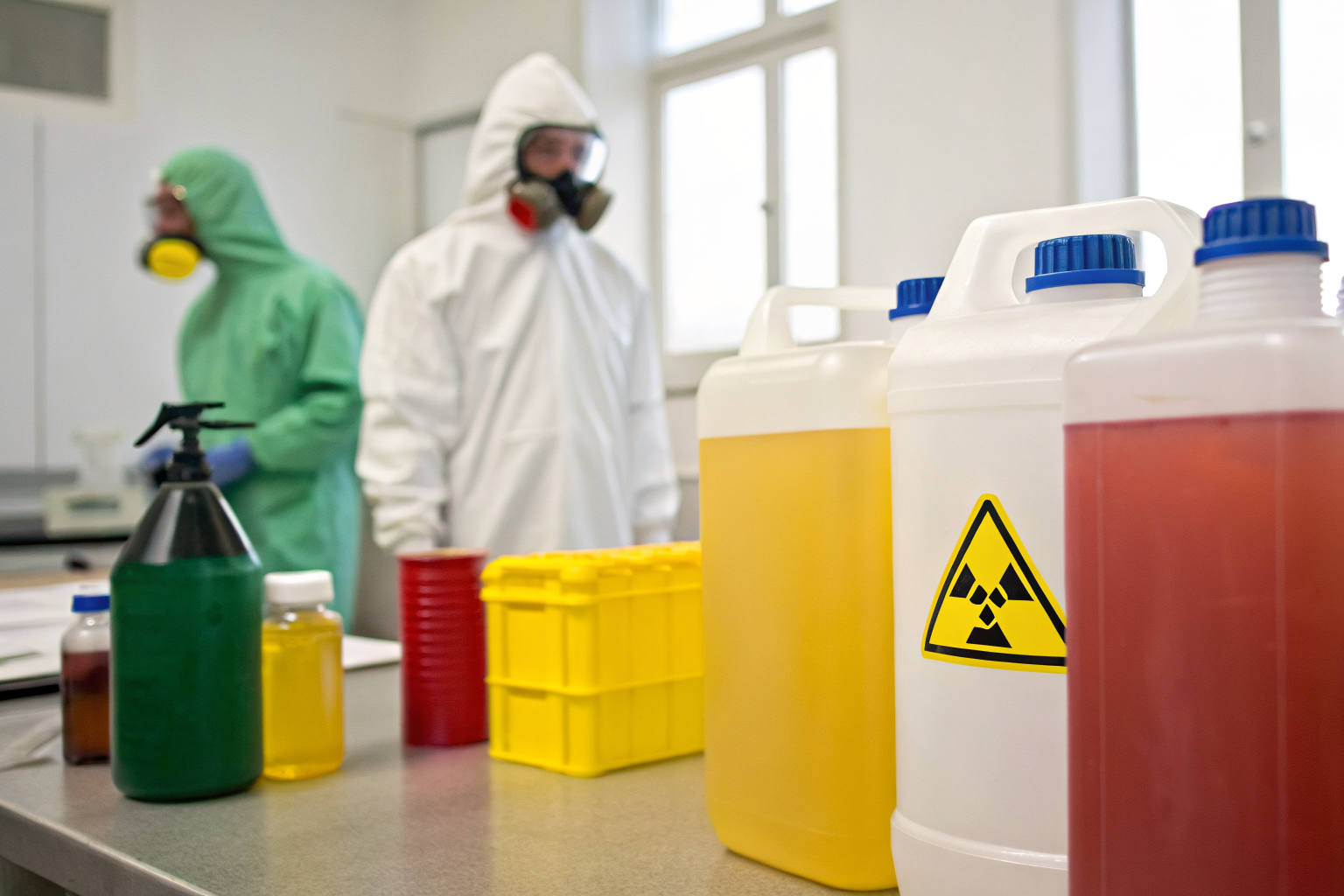
Acid concentration requires specific containment materials because corrosion rates accelerate exponentially with concentration increases. Below 20% concentration, most acids behave as weak electrolytes. Above 20%, they become aggressive oxidizers that attack metal substrates and break polymer chains through hydrolysis reactions.
| Material | Sulfuric Acid 10% | Sulfuric Acid 50% | Sulfuric Acid 98% | Max Temp °F |
|---|---|---|---|---|
| Carbon Steel | Poor | Not Recommended | Not Recommended | N/A |
| 304 Stainless | Good | Poor | Not Recommended | 140 |
| 316L Stainless | Excellent | Good | Fair | 200 |
| Hastelloy C-276 | Excellent | Excellent | Good | 400 |
| HDPE | Good | Fair | Poor | 120 |
| Polypropylene | Good | Good | Fair | 180 |
| FRP Vinyl Ester | Excellent | Excellent | Good | 220 |
Secondary containment sizing for acids must account for thermal expansion and potential reaction heat. Concentrated acids can generate significant heat when mixed with water or organic contaminants. The containment volume should be 110% of the largest container plus 10% freeboard for thermal expansion — not the standard 110% used for petroleum products.
Common failure modes for acid containment include stress corrosion cracking in stainless steels, particularly at weld zones where residual stresses concentrate. The 316L stainless steel compatibility ratings show excellent performance for sulfuric acid up to 50% concentration at ambient temperature, but performance drops to “fair” at 98% concentration due to passivation layer breakdown.
Temperature effects multiply acid attack rates. A containment system designed for 10% sulfuric acid at 70°F will experience 4x faster corrosion at 140°F. This explains why heated chemical storage requires upgraded containment materials or active temperature control systems.
Caustic Chemical Containment Requirements

Caustic chemicals attack specific polymer chains through nucleophilic substitution reactions, making material selection critical for long-term containment performance. Sodium hydroxide and potassium hydroxide show different attack patterns on containment materials despite similar pH values.
Sodium hydroxide containment performs better with thermoplastic materials because NaOH crystalizes at high concentrations, creating less molecular mobility for chemical attack. Potassium hydroxide stays liquid at higher concentrations, maintaining greater chemical activity against polymer substrates. This means KOH requires more resistant containment materials than NaOH at equivalent concentrations.
Polymer selection criteria for caustic containment focus on backbone chain structure. Linear polyethylene resists caustic attack better than branched polyethylene because the linear structure provides fewer attack sites for hydroxide ions. Cross-linked polyethylene (PEX) shows intermediate performance — better than branched PE but not as good as linear HDPE.
HDPE stress crack resistance test results for 50% NaOH show 2,400-hour survival at 50°C using ASTM D1693 protocols. This translates to approximately 15 years of service life at ambient temperature with continuous 50% sodium hydroxide exposure. However, the same HDPE fails in 600 hours when exposed to 50% KOH under identical test conditions.
Stress cracking in caustic environments occurs when mechanical stress combines with chemical exposure. Residual stresses from fabrication, thermal cycling, or external loads create crack initiation points. The caustic solution then propagates these micro-cracks through environmental stress cracking mechanisms. This explains why caustic containment systems often fail at corners, welds, or mounting points where stress concentrations exist.
How Do You Test Chemical Compatibility for Containment?

Compatibility testing validates containment material selection through standardized protocols that simulate years of service in accelerated timeframes. ASTM test methods provide the foundation for chemical resistance evaluation, but field validation confirms laboratory predictions.
First, conduct ASTM D543 immersion testing for baseline chemical resistance data. This standard requires full immersion of test specimens in the actual chemical at service concentration and temperature. Test durations range from 30 days for screening tests to 180 days for long-term evaluation. Temperature requirements specify testing at maximum expected service temperature plus 20°F to account for thermal variations.
Second, perform ASTM D1693 environmental stress crack resistance testing for thermoplastic containment materials. This test combines chemical exposure with mechanical stress to identify stress cracking potential. The test applies constant tensile stress while the specimen soaks in the chemical solution. Failure time indicates the material’s resistance to stress cracking in service.
Third, execute permeation testing using ASTM F739 protocols to measure chemical breakthrough time. This test determines how long it takes for the chemical to completely penetrate the containment material. Even if the material doesn’t degrade visibly, permeation can cause environmental compliance violations.
Fourth, validate field performance through pilot installations or accelerated outdoor exposure testing. Laboratory conditions cannot replicate all field variables — UV exposure, thermal cycling, mechanical vibration, and chemical contamination. Field validation testing runs for 6-12 months minimum with periodic inspection and testing.
Documentation for regulatory compliance requires maintaining test certificates, chemical compatibility charts, and service life calculations. EPA regulations demand technical justification for containment material selection. RCRA compliance specifically requires documentation showing the containment system will maintain integrity throughout the waste storage period.
Secondary Containment Material Failures and Prevention

Material failures cause regulatory violations through predictable failure modes that vary by containment material type. EPA enforcement data shows that 47% of secondary containment violations result from material compatibility issues, not design deficiencies or installation errors.
Polyethylene containment systems fail primarily through stress cracking and chemical permeation. Stress cracking appears as spider-web patterns around stress concentration points — corners, pipe penetrations, and support contact areas. The cracks start as hairline fractures but propagate rapidly once chemical exposure begins. Permeation failures show no visible damage but allow chemical migration through the polymer matrix, creating soil or groundwater contamination.
Steel containment systems fail through corrosion mechanisms that depend on the stored chemical. Uniform corrosion creates predictable material loss over time. Pitting corrosion concentrates at specific points, creating through-wall penetrations while leaving surrounding material intact. Galvanic corrosion occurs at dissimilar metal connections — steel-to-aluminum fittings or steel-to-stainless connections without proper isolation.
Fiberglass reinforced plastic containment fails through resin degradation and fiber exposure. Chemical attack breaks down the polymer matrix, exposing glass fibers to mechanical damage. Delamination occurs when chemical permeation reaches the fiber-resin interface, causing loss of structural integrity. Osmotic blistering develops when chemicals create osmotic pressure gradients across the FRP thickness.
Inspection protocols must target failure mode patterns specific to each material type. Visual inspection catches advanced degradation but misses early-stage failures. Ultrasonic thickness testing detects uniform material loss in steel systems. Electrical conductivity testing identifies permeation in polymer liners before visible damage occurs.
Replacement scheduling depends on chemical exposure severity and material performance data. SPCC plan compliance requires containment system integrity throughout the service period. Polyethylene systems storing aromatic solvents need replacement every 5-7 years. Steel systems handling weak acids last 15-20 years with proper corrosion allowances. FRP systems with caustic chemicals provide 20-25 year service life when properly specified.
EPA enforcement data on containment system failures shows material compatibility violations result in average penalties of $127,000 per incident, plus cleanup costs averaging $340,000 for soil remediation. Environmental compliance requires proactive material selection and replacement programs to avoid these catastrophic failure costs.