
Flammable Liquid Storage Containment: 6 Essential Safety Requirements
Flammable liquid storage containment violations cost companies an average of $47,000 per OSHA citation, yet 67% of facilities still fail basic containment requirements during inspection. The gap between regulatory requirements and actual compliance creates massive financial and safety risks.
Key Takeaways:
- OSHA requires flammable storage cabinets to withstand 1,700°F for 10 minutes minimum
- Secondary containment must hold 110% of the largest container volume plus precipitation
- IFC mandates 50-foot separation distances between Class I liquid storage and ignition sources
What Are OSHA Flammable Storage Requirements?
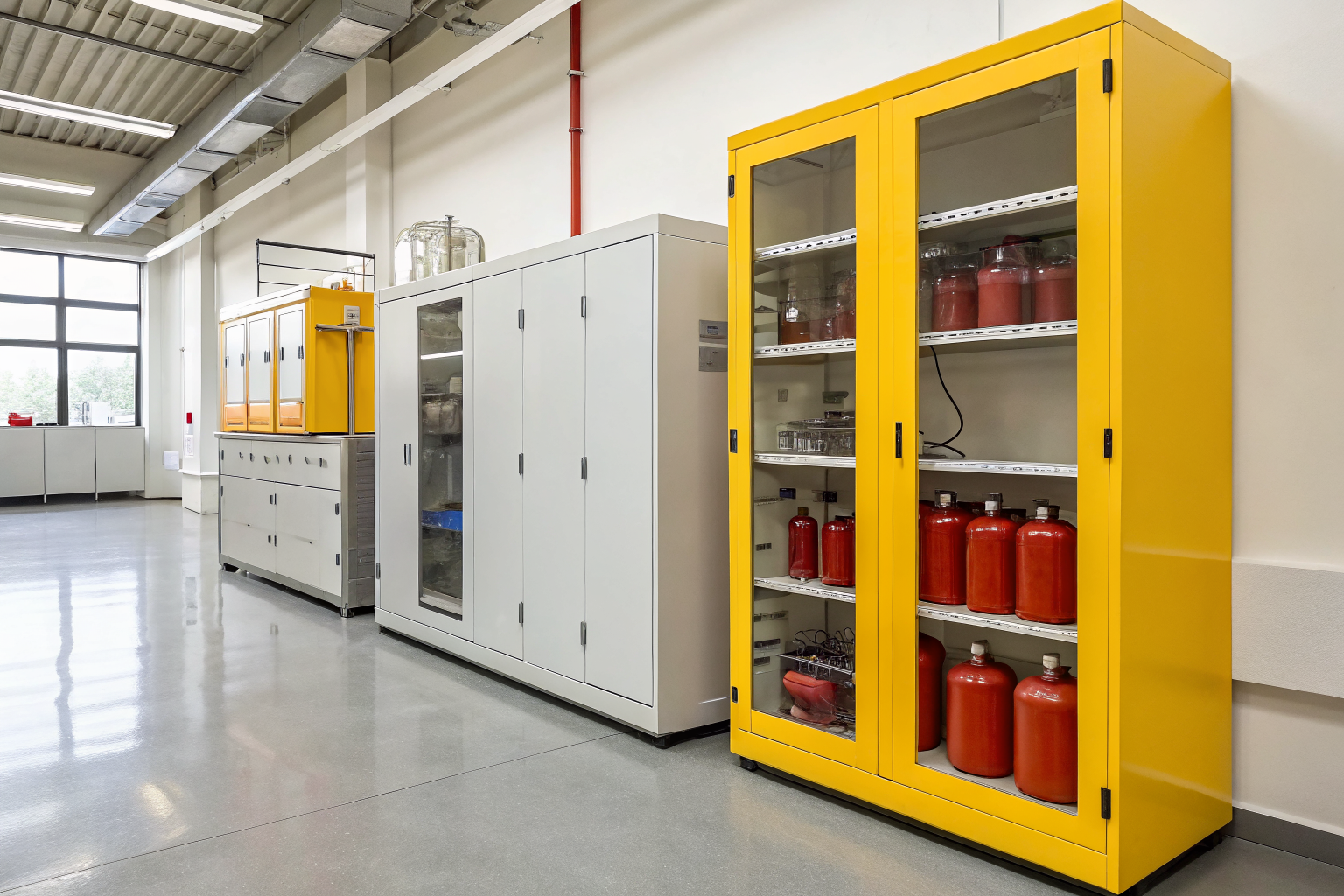
OSHA flammable storage requirements mandate specific cabinet specifications under 29 CFR 1910.106. This regulation defines construction standards, capacity limits, and safety features for storing flammable and combustible liquids in workplace environments.
OSHA requires flammable storage cabinets to withstand fire exposure at 1,700°F for a minimum of 10 minutes. The cabinet construction must include double-wall steel with 1.5-inch air space, three-point door latching systems, and self-closing doors that latch automatically. These specifications protect stored materials during fire emergencies and prevent flame propagation.
Storage capacity limits restrict Class I and Class II flammable liquids to a maximum of 60 gallons per cabinet. Class III combustible liquids can reach 120 gallons per cabinet. These volume restrictions prevent excessive fuel loading that could overwhelm fire suppression systems during an incident.
Grounding requirements connect storage cabinets to facility electrical ground systems. OSHA mandates continuous electrical bonding between containers, cabinets, and grounding points to prevent static electricity buildup during liquid transfer operations. Failure to maintain proper grounding creates ignition sources that violate multiple safety standards.
Ventilation specifications require cabinets to include bung hole covers and flame arrestors on vent openings. Natural ventilation through these openings prevents vapor accumulation while blocking external flame entry. Mechanical ventilation systems must maintain negative pressure and direct exhaust away from ignition sources.
Secondary Containment Systems for Flammable Liquids
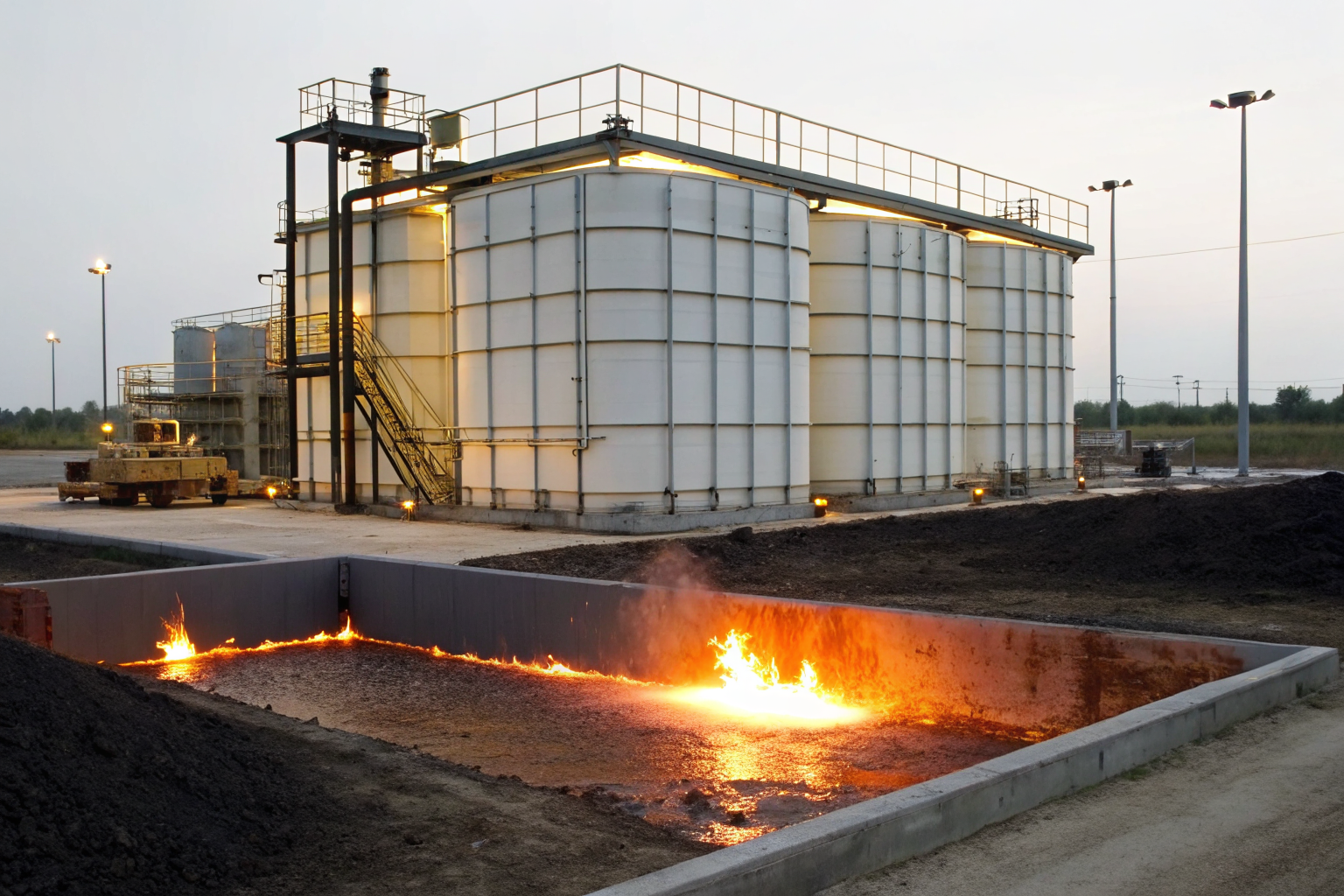
Secondary containment prevents environmental contamination by capturing spilled flammable liquids before they reach soil or groundwater. EPA regulations under the Spill Prevention Control and Countermeasure (SPCC) rule require containment systems for facilities storing over 1,320 gallons of oil products above ground.
The fundamental sizing requirement mandates containment capacity equal to 110% of the largest container volume plus additional volume for 25-year storm precipitation. This calculation ensures adequate capacity during worst-case spill scenarios combined with weather events.
| Containment Type | Capacity Requirement | Material Standard | Inspection Frequency |
|---|---|---|---|
| Concrete Dikes | 110% + precipitation | ACI 350 concrete | Annual visual |
| Steel Pans | 110% + precipitation | A36 steel minimum | Quarterly integrity |
| Composite Liners | 110% + precipitation | HDPE 60-mil | Semi-annual |
| Vault Systems | 110% + precipitation | Reinforced concrete | Annual structural |
Liner material selection impacts system longevity and chemical resistance. High-density polyethylene (HDPE) liners provide excellent chemical compatibility with petroleum products and resist UV degradation. Steel containment systems require corrosion protection through coating systems or cathodic protection.
Drainage system design must prevent accidental discharge while allowing precipitation removal. Manually operated valves with locked-closed positions satisfy EPA requirements. Automatic drainage systems require fail-safe designs that close during spill detection events.
Inspection protocols verify containment integrity through visual examinations, leak testing, and structural assessments. Documentation requirements include inspection dates, findings, corrective actions, and professional certifications. Environmental compliance depends on maintaining complete inspection records.
How Does Chemical Compatibility Affect Storage Design?
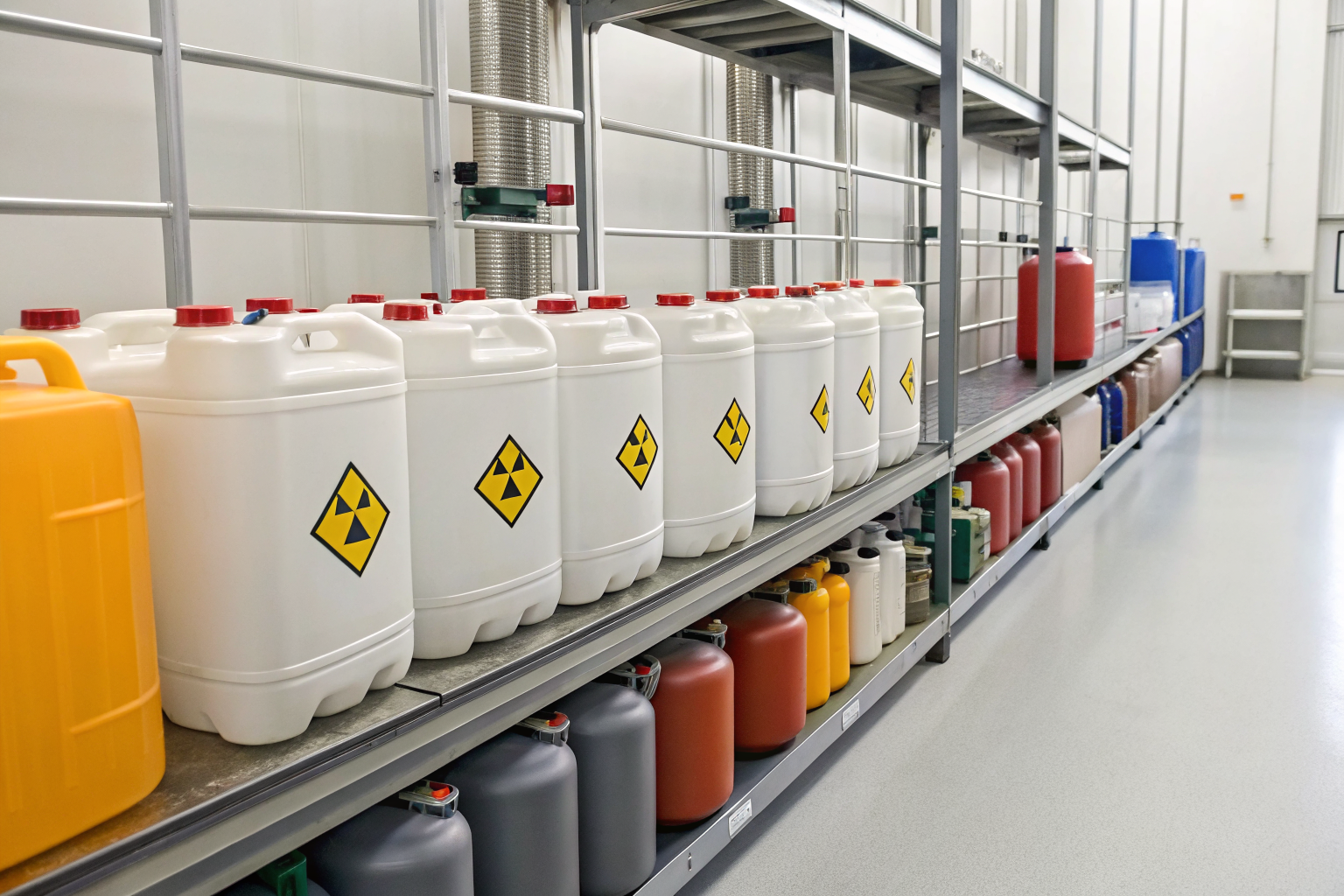
Chemical compatibility determines segregation requirements by analyzing potential reaction hazards between different flammable liquids. Incompatible chemicals create fire, explosion, or toxic gas hazards when stored in proximity during normal operations or emergency situations.
Incompatible chemical matrices include oxidizers with flammable liquids, acids with metals, and water-reactive materials with aqueous solutions. The Department of Transportation Hazmat Table identifies specific segregation requirements based on hazard class combinations. These requirements prevent chemical reactions that could overwhelm containment systems.
Segregation distances vary based on hazard severity and chemical quantities. NFPA 30 mandates minimum 8-foot separation between incompatible chemical classes in storage areas. Higher-risk combinations require 25-foot separation distances or physical barriers such as fire walls.
Reaction hazard categories classify chemical combinations by potential consequences. Category A incompatibilities may cause explosions or violent reactions requiring maximum separation distances. Category B combinations produce heat or gas generation needing moderate separation. Category C materials show minor compatibility concerns with minimal separation requirements.
Storage cabinet separation requirements apply when different chemical classes must coexist in limited space. Fire-rated walls between incompatible storage areas provide adequate separation when distance requirements cannot be met. Automatic fire suppression systems reduce separation distances by 50% when properly designed and maintained.
Ventilation system design must prevent cross-contamination between incompatible storage areas. Separate exhaust systems eliminate vapor mixing that could create hazardous atmospheres. Emergency ventilation systems activate during spill events to prevent vapor accumulation in confined spaces.
IFC Fire Safety Code Compliance for Tank Storage
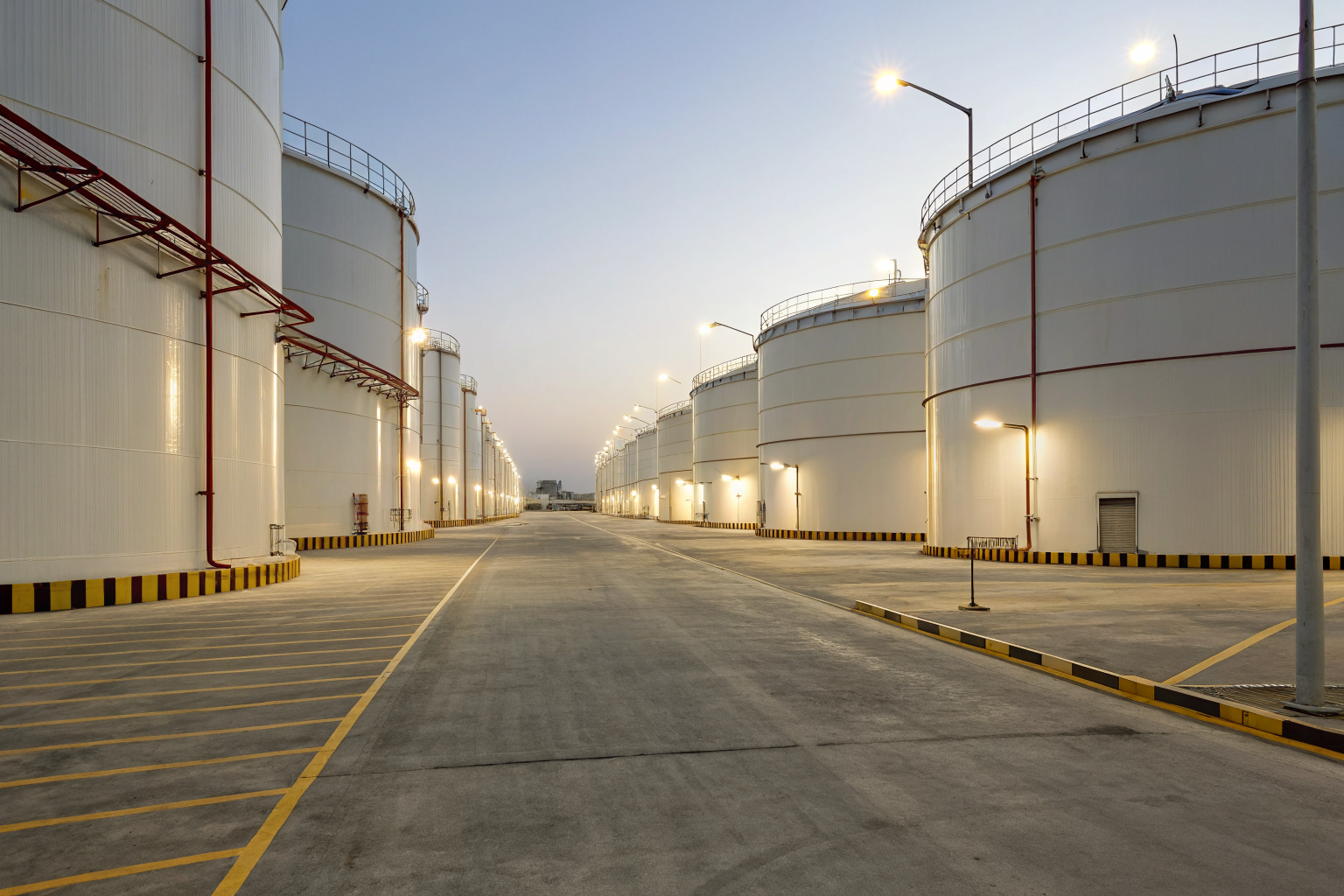
IFC requirements mandate fire separation distances based on tank capacity, liquid classification, and surrounding exposures. The International Fire Code establishes minimum spacing to prevent fire spread and protect emergency responders during tank incidents.
Step one requires calculating tank capacity to determine applicable separation distances. Tanks over 12,000 gallons require 50-foot minimum separation from property lines, buildings, and public access areas. Smaller tanks follow graduated spacing requirements based on stored volume and liquid flash point.
Step two involves installing fire suppression systems appropriate for tank size and contents. Fixed foam systems provide primary fire protection for tanks over 10,000 gallons. Water spray systems cool adjacent exposures during fire events. Portable fire extinguishers supplement fixed systems for initial attack capabilities.
Step three establishes emergency shutdown procedures and equipment locations. Remote-operated valves allow product isolation from safe distances during emergencies. Manual shutdown stations require weather protection and clear access paths. Emergency communication systems connect tank areas to facility control rooms.
Step four implements vapor control measures to prevent ignition source exposure. Pressure-vacuum valves maintain tank breathing while preventing vapor release during normal operations. Flame arrestors on tank vents stop external ignition from reaching tank contents. Vapor recovery systems capture displaced vapors during filling operations.
Step five creates inspection schedules for all fire safety equipment. Monthly inspections verify valve operation, suppression system readiness, and emergency equipment accessibility. Annual professional inspections document system performance and identify maintenance needs. Documentation requirements include inspection forms, test results, and corrective action records.
RCRA Hazardous Waste Storage Integration
RCRA compliance requires waste characterization protocols when flammable liquids become hazardous waste through contamination or process changes. The Resource Conservation and Recovery Act establishes storage limits, timing restrictions, and disposal requirements for facilities generating hazardous waste.
Waste determination processes begin with generator knowledge of waste streams and analytical testing when composition uncertainty exists. Flammable liquids contaminated with listed hazardous constituents automatically qualify as hazardous waste. Characteristic waste determination requires flash point testing and toxicity analysis.
Satellite accumulation limits allow 55-gallon maximum storage at the point of generation without permits or time restrictions. This provision enables temporary storage of flammable hazardous waste in original work areas. Exceeding 55 gallons triggers immediate waste movement to central accumulation areas with stricter requirements.
The 90-day storage rule governs central accumulation areas where facilities consolidate hazardous waste before disposal. Storage containers must remain closed except during waste addition or removal. Weekly inspections document container condition and proper labeling. Facilities exceeding 90-day limits require hazardous waste storage permits with enhanced operating requirements.
Manifesting requirements track hazardous waste shipments from generation to ultimate disposal. EPA Form 8700-22 documents waste identification, quantities, and transporter information. Generator signatures certify waste characterization accuracy and proper packaging. Receiving facility signatures confirm waste acceptance and treatment.
Integration challenges arise when flammable liquid storage systems must accommodate hazardous waste streams. Separate containment areas prevent cross-contamination between product storage and waste accumulation. Waste-specific labeling requirements exceed standard flammable liquid placarding. Personnel training programs must address both flammable liquid handling and hazardous waste management protocols.
Building an Effective SPCC Plan for Flammable Storage

SPCC Plan development prevents oil discharge violations through systematic spill prevention and response planning. The Spill Prevention Control and Countermeasure rule requires professional engineer certification for facilities storing over 1,320 gallons aggregate aboveground capacity.
Step one involves professional engineer assessment of facility spill risks and containment adequacy. Licensed engineers evaluate tank integrity, secondary containment sizing, and loading/unloading procedures. PE certification validates that facility design meets SPCC technical requirements. Engineers must inspect facilities and certify plan accuracy before implementation.
Step two creates comprehensive facility diagrams showing all oil storage locations, containment systems, and drainage patterns. Diagrams include tank capacities, pipe routing, valve locations, and potential spill flow paths. Engineering drawings document containment calculations and equipment specifications. Plan updates require revised diagrams reflecting facility changes.
Step three establishes spill response procedures for different incident scenarios. Small spill procedures address container leaks and minor equipment failures. Major spill protocols activate emergency response teams and regulatory notifications. Response procedures specify equipment locations, personnel assignments, and cleanup contractors.
Step four develops equipment inspection schedules ensuring ongoing spill prevention effectiveness. Monthly visual inspections document tank conditions, valve operations, and containment integrity. Annual integrity testing verifies tank shell thickness and foundation stability. Professional inspections by qualified technicians identify maintenance needs before failures occur.
Step five implements training documentation demonstrating personnel competency in spill prevention and response. Initial training covers SPCC requirements, facility-specific procedures, and equipment operation. Annual refresher training updates personnel on plan changes and regulatory updates. Training records include dates, topics covered, and employee signatures confirming understanding.