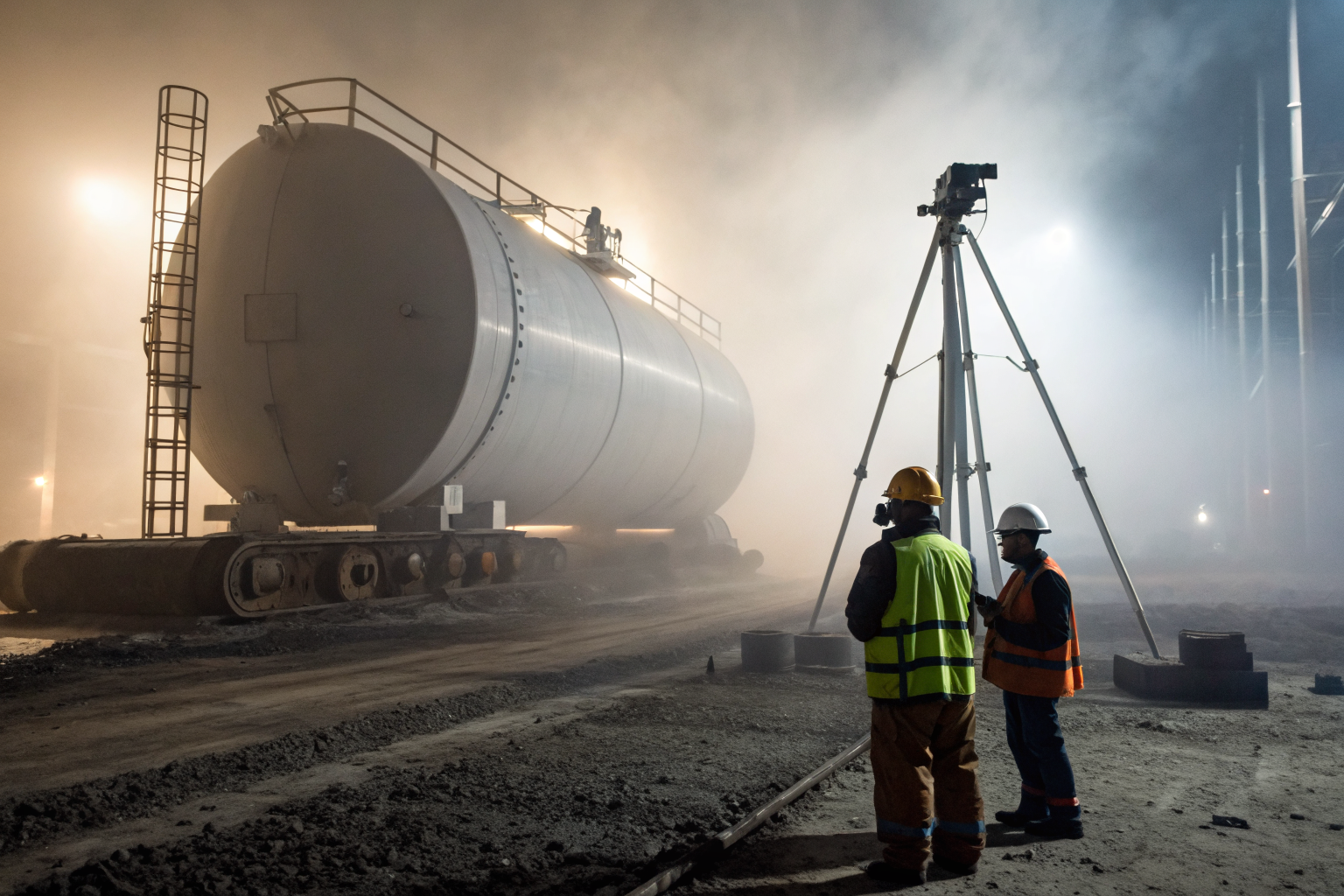
Tank Relocation Requirements: 5 Critical Moving Considerations
Tank relocations fail EPA compliance audits 40% more often than new installations because operators underestimate the regulatory complexity of moving existing storage systems. Tank relocation requirements involve multiple federal and state agencies, each with specific approval timelines and technical standards that must be met before any equipment moves.
Key Takeaways:
- EPA requires SPCC plan amendments within 60 days of tank repositioning for facilities storing 1,320+ gallons
- Tank relocation permits cost $2,500-$8,000 depending on state jurisdiction and secondary containment modifications
- Transportation safety violations during tank moves average $15,000 in DOT fines per incident
What EPA Regulations Apply to Tank Relocations?

EPA Regulations govern Tank Relocation through a complex framework that treats moved tanks differently from new installations. The regulatory scope depends on your facility’s total storage capacity and the specific location changes you’re making. If your facility stores 1,320 gallons or more of oil in aboveground tanks, you fall under SPCC Plan requirements regardless of whether you’re installing new equipment or relocating existing systems.
Environmental Compliance becomes more complex during relocations because you must satisfy requirements for both the old and new locations. The EPA treats tank moves as facility modifications, triggering SPCC plan amendments within 60 days of completion. This timeline is non-negotiable — facilities that miss the 60-day window face enforcement actions averaging $37,000 per violation.
Facility classification changes occur when relocations alter your storage configuration or total capacity. Moving tanks between different containment areas can change your facility’s risk profile, requiring updated spill prevention measures and potentially triggering new permit requirements. The 1,320-gallon threshold applies to your facility’s aggregate capacity, not individual tank sizes, so relocating multiple smaller tanks can push you into SPCC compliance unexpectedly.
Permit triggers activate based on state-specific thresholds that vary significantly from federal requirements. Some states require permits for any tank relocation regardless of size, while others mirror federal thresholds. The interaction between federal SPCC requirements and state permitting creates a regulatory maze that catches unprepared operators.
Tank Relocation Planning: Site Assessment Requirements

Site Preparation requires Environmental Compliance through systematic evaluation of both departure and destination locations. The assessment process begins with soil contamination testing at the current location to identify any existing contamination that could complicate the move or trigger cleanup requirements.
Step one involves comprehensive soil testing using EPA Method 8015 for petroleum hydrocarbons. Most state environmental agencies require testing within 30 days of the planned move, with results processed in 10-14 business days. Contamination discoveries can delay relocations by 60-90 days while remediation occurs.
Step two covers destination site evaluation for Tank Storage compatibility. The new location must support the tank’s weight, provide adequate access for future inspections, and meet setback requirements from property lines, wells, and surface water. Foundation requirements often differ between locations, requiring structural engineering assessments.
Step three addresses Secondary Containment system compatibility between old and new sites. Existing containment systems rarely transfer between locations, requiring new liner installations or concrete pad construction. Containment capacity calculations must account for the largest tank plus sufficient freeboard for precipitation.
Step four involves access route planning for the actual Tank Installation move. Routes must accommodate tank dimensions, weight restrictions, and overhead clearances while avoiding environmentally sensitive areas. Some relocations require temporary road permits or utility line relocations that add weeks to project timelines.
Geotechnical assessments typically require 15-20 business days from site visit to final report, while contamination testing adds another 10-14 days. Smart operators initiate site assessments 45-60 days before planned move dates to accommodate potential delays.
How Do Permit Modifications Work for Tank Moves?

Permit Modifications affect Tank Relocation through a state-by-state patchwork of requirements that vary dramatically in cost, timeline, and complexity. The decision between modifying existing permits versus applying for completely new permits depends on your state’s regulations and the scope of your relocation project.
| State Jurisdiction | Modification Cost | New Permit Cost | Processing Time | Relocation Distance Limit |
|---|---|---|---|---|
| California | $4,500-$6,200 | $8,000-$12,000 | 45-60 days | Within same county |
| Texas | $2,800-$4,100 | $5,500-$8,500 | 30-45 days | Within same facility |
| Florida | $3,200-$5,000 | $6,000-$9,200 | 35-50 days | Within 1-mile radius |
| New York | $5,100-$7,800 | $9,500-$15,000 | 60-90 days | Same property only |
| Illinois | $2,500-$3,800 | $4,800-$7,200 | 25-40 days | Within same site |
Environmental Compliance officers evaluate modification requests based on whether the relocation changes your facility’s environmental risk profile. Moves within the same secondary containment area typically qualify for permit modifications, while relocations to different containment systems or off-site locations require new permits.
EPA Regulations create additional complexity because federal SPCC plan amendments run parallel to state permitting processes. You cannot begin relocations until both federal and state approvals are complete. Some states coordinate with EPA review processes, while others require separate submissions with different technical standards.
Tank Installation permit modifications cost 40-60% less than new permits but carry distance and scope restrictions. Exceeding these limits automatically triggers new permit requirements, often discovered only after submitting modification paperwork. The most expensive mistakes happen when operators assume modification eligibility without confirming state-specific distance limits first.
Transportation Safety and DOT Compliance
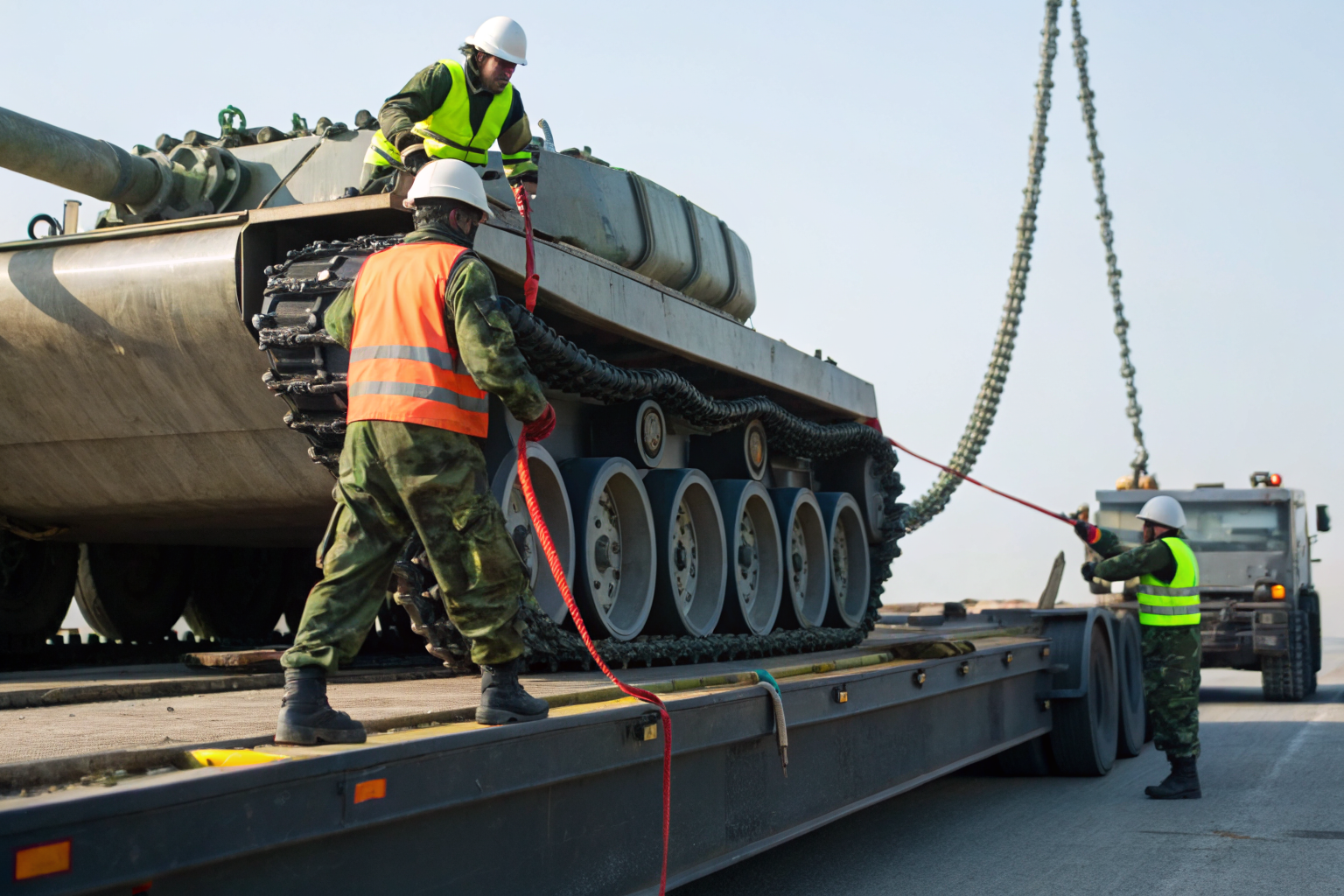
Transportation Safety prevents EPA Regulations violations through strict adherence to Department of Transportation hazmat requirements that apply to any tank containing residual product during relocation. Even “empty” tanks retain vapors and residual materials that trigger DOT oversight, regardless of cleaning attempts.
DOT hazmat requirements classify tanks based on their last contents, not current condition. Tanks that stored gasoline, diesel, or heating oil fall under Class 3 Flammable Liquids regulations, requiring placarding, route restrictions, and specialized hauling equipment. The classification remains in effect until tanks undergo certified cleaning and gas-free certification by qualified personnel.
Route restrictions affect Tank Relocation through state and local prohibitions on hazmat transport through populated areas, over certain bridges, or through tunnels. Some jurisdictions require police escorts for oversized loads, adding $150-$300 per hour to transportation costs. Weekend and overnight restrictions can extend single-day moves into multi-day projects.
Escort vehicle requirements vary by tank size and hazmat classification. Tanks exceeding 12 feet in width or 80,000 pounds gross weight typically require both front and rear escort vehicles with certified operators. These escorts cost $125-$200 per hour plus mobilization fees that can reach $500 per vehicle.
Insurance coverage for tank relocations requires Environmental Compliance endorsements that standard commercial policies exclude. Specialized environmental transportation policies cost $2,000-$4,500 annually but provide essential protection against spill liability during transport. Standard trucking insurance explicitly excludes environmental contamination claims.
Common DOT violations during tank moves include improper placarding ($1,200-$2,500 fines), missing shipping papers ($800-$1,500), and route violations ($3,000-$8,000). The average DOT enforcement action for tank transportation violations results in $15,000 in fines, with repeat offenders facing equipment seizure and operating authority suspension.
Tank Decommissioning vs Relocation Decision Matrix

Tank Decommissioning compares to Tank Relocation through a cost-benefit analysis that considers tank age, condition, regulatory compliance costs, and long-term operational needs. The decision matrix becomes complex when existing tanks approach end-of-life or when relocation costs exceed 70% of new tank replacement costs.
Age factors heavily influence the comparison because tanks older than 15 years often require extensive updates to meet current EPA standards during relocation. These updates include new corrosion protection systems, upgraded venting, and secondary containment modifications that can double relocation costs. Tank Closure becomes more attractive when update costs exceed $25,000 for single-wall tanks or $40,000 for double-wall systems.
Condition assessment reveals hidden costs that make Tank Decommissioning the better choice for deteriorated equipment. Tanks showing signs of corrosion, foundation settlement, or structural fatigue face rejection by new location inspectors, creating expensive mid-project surprises. Professional tank assessments cost $800-$1,200 but prevent costly relocation attempts with unsuitable equipment.
Regulatory implications differ significantly between Tank Relocation and permanent Tank Closure. Decommissioning triggers soil testing, potential remediation, and closure documentation but eliminates ongoing compliance obligations. Relocation maintains all existing compliance requirements while adding new location-specific permits and inspections.
Break-even analysis shows relocation makes financial sense when total project costs remain below 65% of new tank installation costs. Projects exceeding this threshold should consider Tank Decommissioning with new equipment installation instead. Typical break-even points occur at $35,000 for 10,000-gallon tanks and $55,000 for 20,000-gallon systems, including all permits, transportation, and site preparation costs.
Secondary Containment Modifications During Moves

Secondary Containment requires Tank Installation modifications because existing containment systems rarely accommodate relocated tanks without significant alterations. The compatibility assessment between tank dimensions and containment capacity determines modification scope and associated costs.
Step one involves containment capacity calculations based on EPA requirements for 110% of the largest tank volume plus sufficient freeboard for precipitation. Tank Storage configurations change during relocations, often requiring containment expansion or complete reconstruction. Concrete containment systems offer permanence but cost $15-$25 per square foot, while synthetic liner systems provide flexibility at $8-$12 per square foot.
Step two addresses liner requirements for soil-based containment systems. EPA Regulations mandate impermeable barriers beneath all tank installations, typically using 40-mil HDPE or reinforced polypropylene liners. Liner installation requires proper substrate preparation, seaming by certified technicians, and leak testing before tank placement.
Step three covers inspection protocol establishment for modified containment systems. New installations require third-party inspection within 30 days of completion, followed by annual integrity assessments. Modified systems face additional scrutiny because inspectors evaluate both original construction quality and modification workmanship.
Drainage system integration becomes critical when relocating tanks between different containment areas. Existing drainage may require rerouting, valve additions, or pump capacity upgrades to handle the relocated tank’s potential discharge volume. Inadequate drainage design causes containment overflow during testing or actual spill events.
Secondary containment capacity requirements specify 110% of primary tank volume as the minimum, but practical designs target 125-130% to accommodate inspection access and maintenance activities. Under-sized containment fails EPA inspection and requires expensive expansion before tank operation approval.