2 Drum Spill Pallet: Best Solutions for Small-Scale Drum Storage
Most facilities waste 40% more floor space than necessary when storing hazardous drums because they choose oversized containment systems. A 2 drum spill pallet provides the exact containment capacity you need without the bulk.
Key Takeaways:
- 2-drum spill pallets require only 68 gallons containment capacity versus 264 gallons for 4-drum systems
- Compact dual-drum solutions save 60-75% floor space compared to larger pallet configurations
- EPA secondary containment rules apply to any drum storage over 1,320 gallons total capacity
What Makes 2 Drum Spill Pallets Different from Larger Systems?
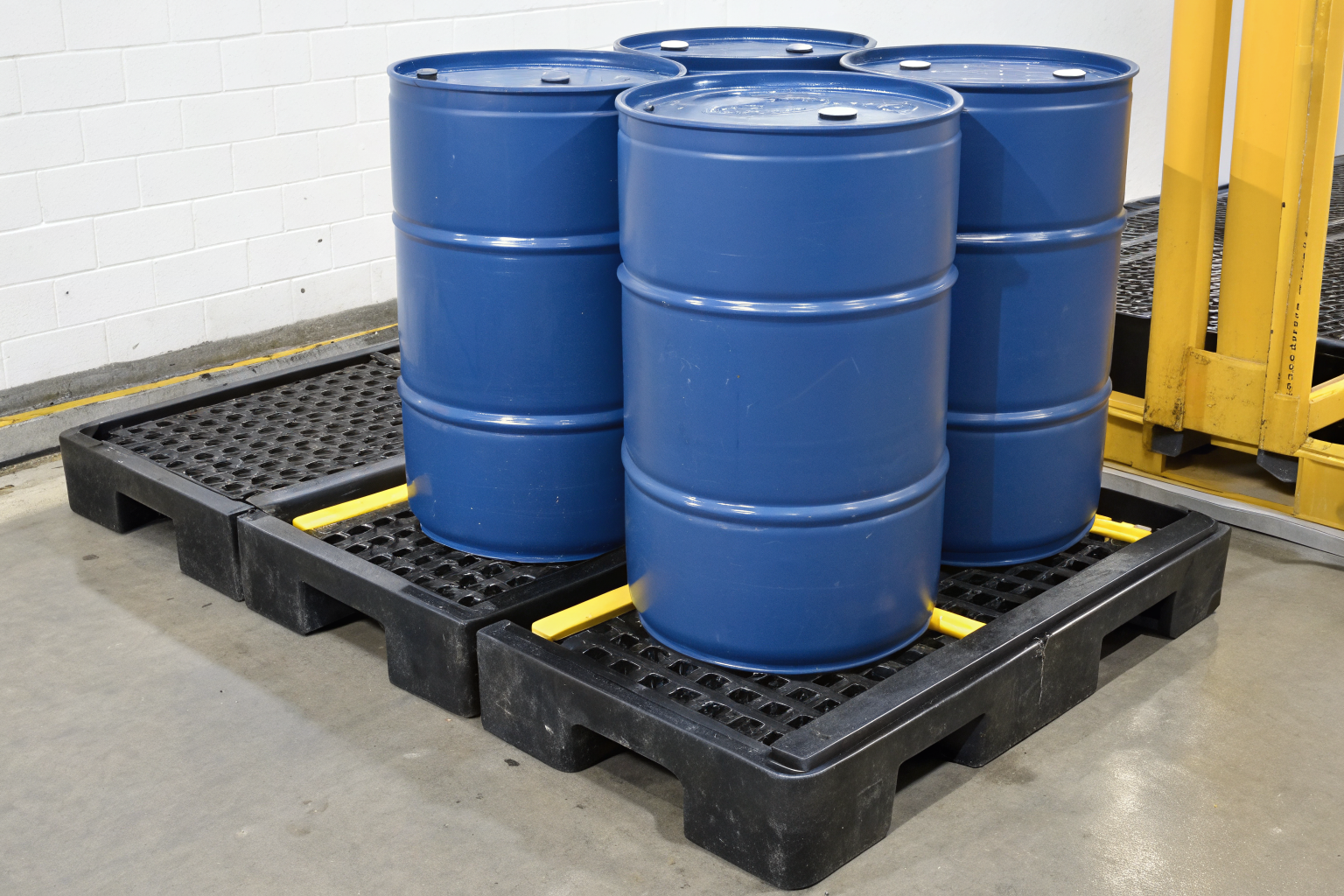
A 2 drum spill pallet is a secondary containment system designed specifically for holding two standard 55-gallon drums. This means you get precise capacity matching without paying for unused space. Two drum containment provides 68 gallon capacity based on the EPA’s 10% containment rule.
The containment calculation works like this: two 55-gallon drums contain 110 gallons total, requiring 11 gallons minimum containment (10% of contents). Most 2-drum systems provide 68 gallons — six times the legal minimum. Spill pallets in this category typically measure 51″ x 26″ x 6″ with integrated sumps that channel spills into collection areas.
Compare this to 4-drum systems that provide 264 gallons of containment capacity. If you only store two drums, you’re paying for 196 gallons of unused containment volume. Secondary containment becomes expensive real estate when you oversize the system. The 4-drum footprint at 51″ x 51″ consumes nearly double the floor space for capacity you don’t need.
Two-drum systems also offer better weight distribution. The load spreads across a narrower platform, reducing point loading on floors. This matters in older facilities where structural capacity limits heavy equipment placement.
Small Footprint Design: Space Requirements and Layout Options
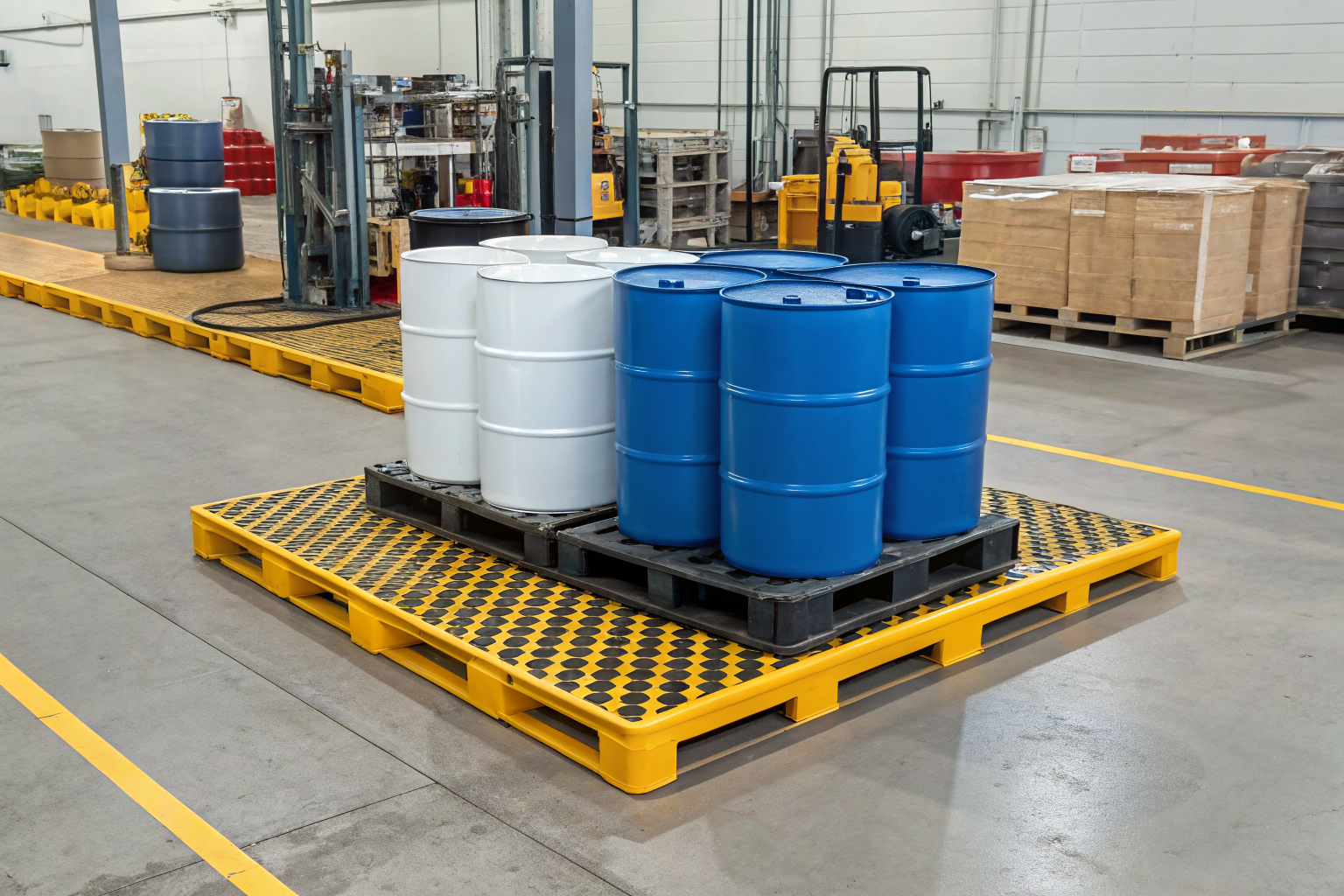
Compact design reduces facility floor space by 60-75% compared to larger containment systems. The space efficiency becomes critical in crowded facilities where every square foot costs money.
| Configuration | Dimensions | Floor Area | Drums | Space per Drum |
|---|---|---|---|---|
| 2-Drum Pallet | 51″ × 26″ × 6″ | 9.2 sq ft | 2 | 4.6 sq ft |
| 4-Drum Pallet | 51″ × 51″ × 6″ | 18.0 sq ft | 4 | 4.5 sq ft |
| Single Drum | 28″ × 28″ × 6″ | 5.4 sq ft | 1 | 5.4 sq ft |
| 6-Drum System | 76″ × 51″ × 6″ | 26.9 sq ft | 6 | 4.5 sq ft |
Dual-drum configurations fit through standard 36-inch doorways when oriented lengthwise. This access advantage matters during installation and maintenance. Drum storage in narrow aisles becomes possible with the 26-inch width dimension.
Layout flexibility improves with the rectangular footprint. You can position units against walls, creating neat rows that maximize warehouse efficiency. Small footprint design also allows stacking in some applications, though you must verify load ratings and local fire codes first.
Some facilities use modular arrangements, placing multiple 2-drum units in series. This approach scales containment capacity while maintaining the compact profile. When one unit needs maintenance, the others continue operating.
Which 2 Drum Containment Materials Handle Your Chemicals?
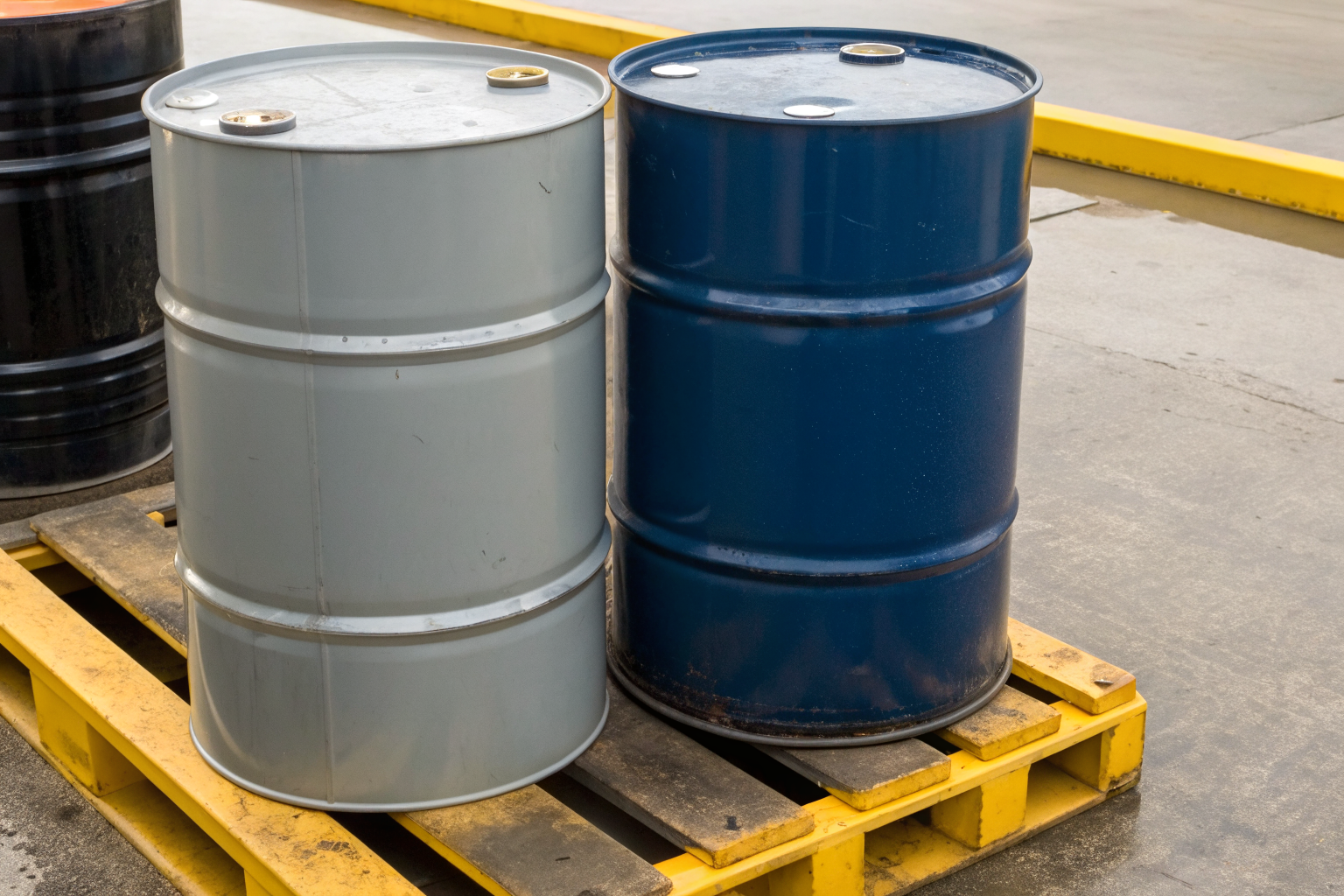
Material selection determines chemical compatibility for your specific applications. The two primary options — polyethylene and steel — each handle different chemical families with distinct temperature and corrosion characteristics.
Polyethylene handles 95% of common industrial chemicals including oils, coolants, and water-based solutions. The material resists most acids, bases, and alcohols at temperatures up to 140°F. Polyethylene costs 30-40% less than steel and weighs significantly less, reducing shipping and handling expenses. Product selection becomes straightforward for standard petroleum products and automotive fluids.
Steel construction handles aggressive solvents, high-temperature applications, and chemicals that attack plastic materials. Steel containment systems work with chemicals above 140°F and provide better durability in high-traffic areas. The material costs more but lasts longer under heavy use. Drum handling equipment causes less damage to steel surfaces compared to polyethylene.
Corrosion resistance varies by steel treatment. Powder-coated steel handles most oils and mild chemicals. Galvanized steel provides better corrosion protection but costs 25% more than standard powder coating. Stainless steel offers maximum chemical resistance but triples the cost of standard steel options.
Temperature ratings matter for outdoor storage. Polyethylene becomes brittle below 20°F, while steel maintains structural integrity in sub-zero conditions. Summer heat above 140°F can soften polyethylene, causing containment failure.
Spill prevention depends on matching materials to your chemical inventory. Review safety data sheets for storage temperature requirements and material compatibility before selecting containment materials.
Do You Need EPA Secondary Containment for 2 Drums?
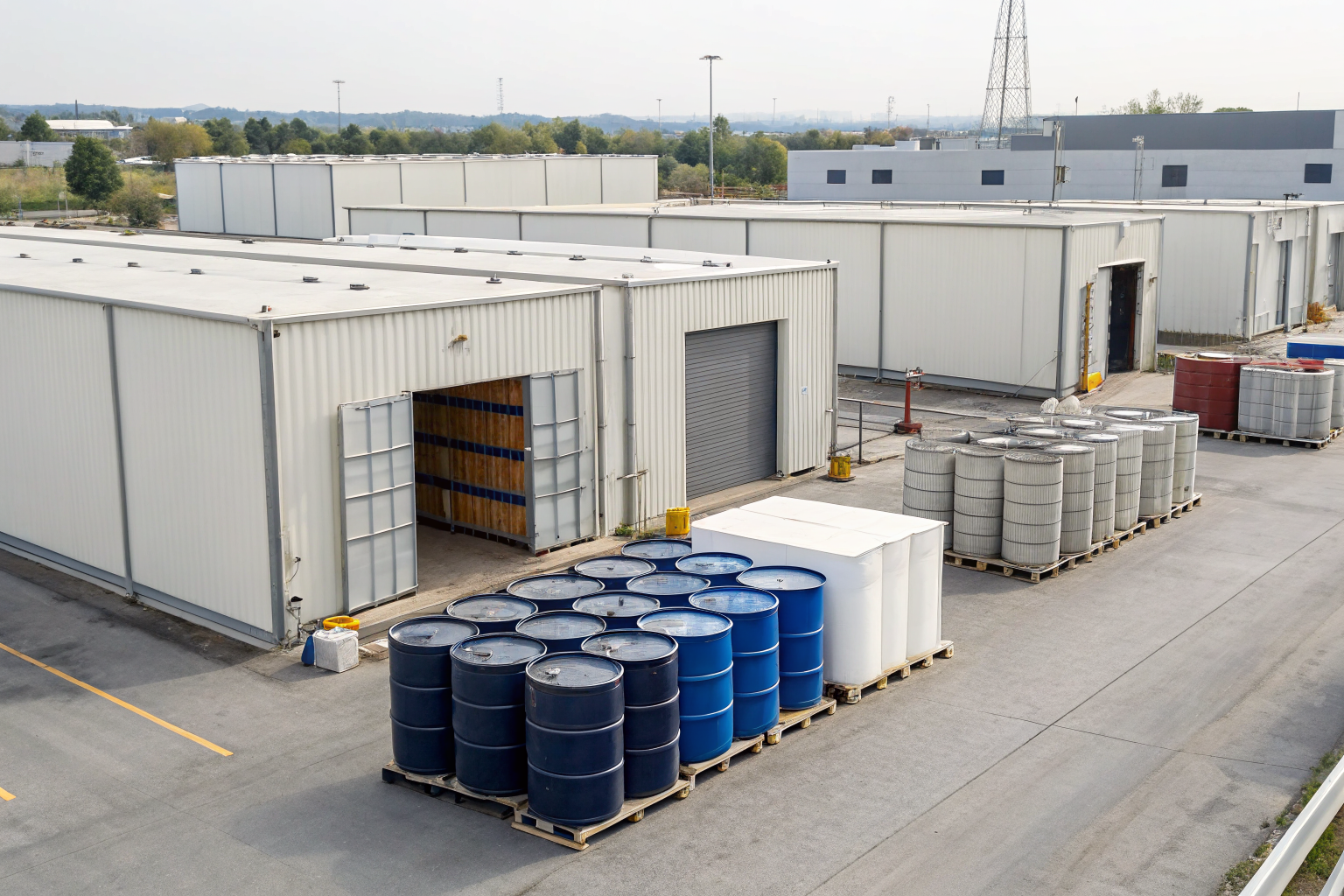
EPA regulations require containment calculations based on total facility capacity, not individual storage units. The 1,320 gallon aggregate threshold determines when SPCC requirements apply to your operation.
Step 1: Calculate total oil storage capacity across your entire facility. Include all tanks, drums, and containers holding petroleum products. SPCC plan requirements trigger when combined capacity exceeds 1,320 gallons.
Step 2: Determine if your 2-drum storage contributes to threshold violations. Two 55-gallon drums contain 110 gallons. If your facility already stores 1,210 gallons elsewhere, adding 2 drums triggers SPCC compliance requirements.
Step 3: Document secondary containment specifications if SPCC applies. The containment system must hold 10% of total stored volume or 100% of the largest container, whichever is greater. Two drums require 68-gallon minimum containment capacity.
Step 4: File SPCC documentation with qualified engineer certification if total capacity exceeds 10,000 gallons. Facilities between 1,320-10,000 gallons can self-certify their spill prevention plans.
Step 5: Implement inspection and maintenance schedules per SPCC requirements. Secondary containment systems need regular integrity checks and documented maintenance records.
Most standalone 2-drum installations remain below SPCC thresholds unless part of larger industrial operations. But regulations apply to facility-wide capacity, not individual storage areas.
Dual Drum Storage: Load Capacity and Safety Features
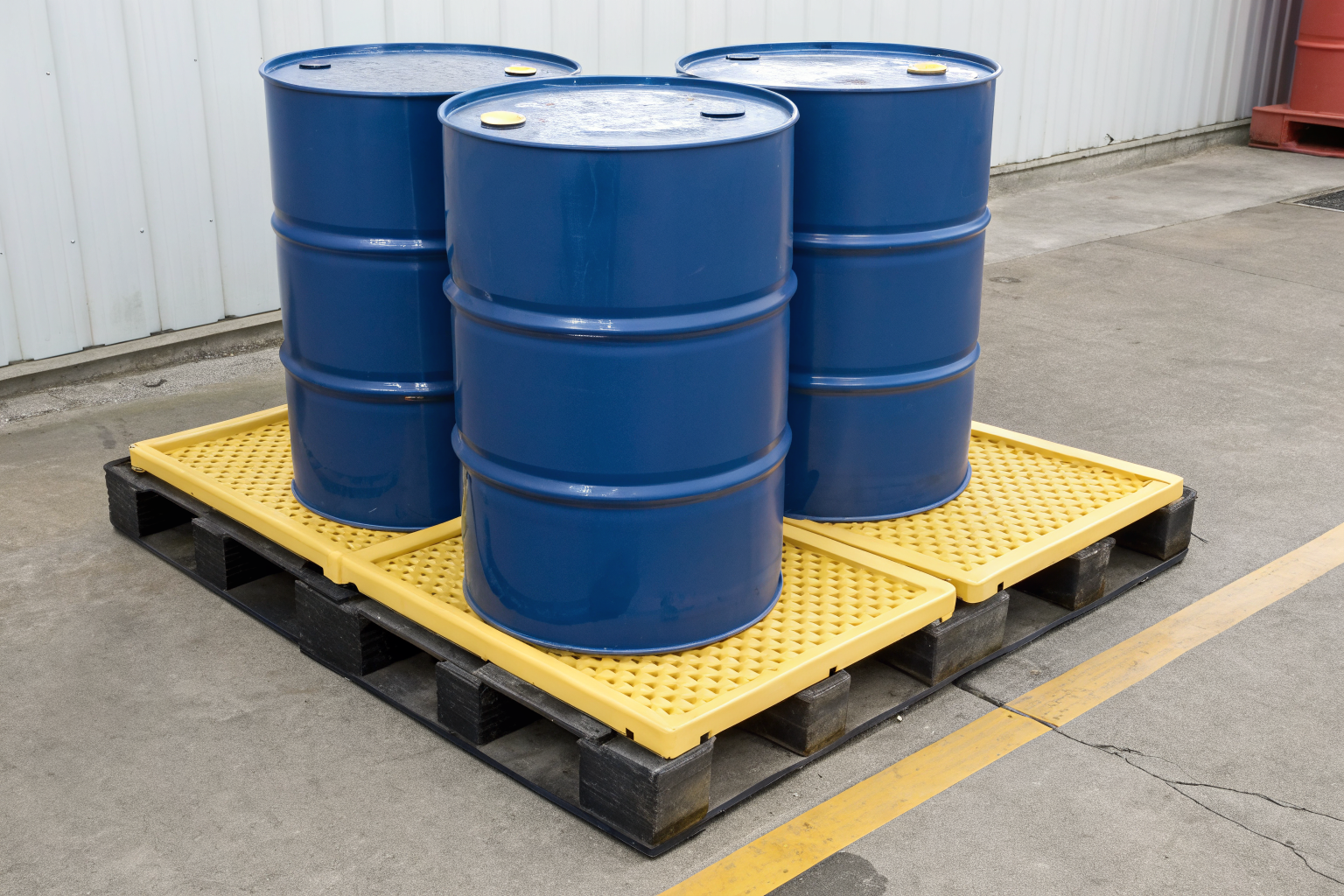
Dual drum capacity supports 1,100 pound loads when properly distributed across the containment platform. This weight rating accommodates two full 55-gallon drums plus the pallet structure without exceeding design limits.
Standard load calculations work as follows: each 55-gallon drum weighs approximately 459 pounds when filled with petroleum products (specific gravity 0.85). Two drums total 918 pounds, leaving 182 pounds margin for the pallet itself and dynamic loading during drum placement.
Removable grating provides the primary work surface while allowing spill access to containment sumps below. Steel grating handles forklift traffic better than polyethylene, but plastic grating resists chemical attack from corrosive spills. Oil storage applications typically use steel grating for durability.
Forklift compatibility requires proper approach angles and lifting point spacing. Most 2-drum pallets accommodate standard forklift forks from the 51-inch side. The 26-inch width prevents side loading in most cases. Some units include molded-in fork channels for secure lifting.
Drain plugs allow controlled spill removal without lifting the entire unit. Standard 3/4-inch NPT threads accept common drain valves and hoses. Some facilities install permanent drain lines to waste oil collection systems. Spill prevention improves when operators can quickly remove accumulated liquids.
Locking mechanisms secure drums during transport and prevent unauthorized access. Simple strap-down points work for most applications, while regulated facilities may require more sophisticated locking systems.