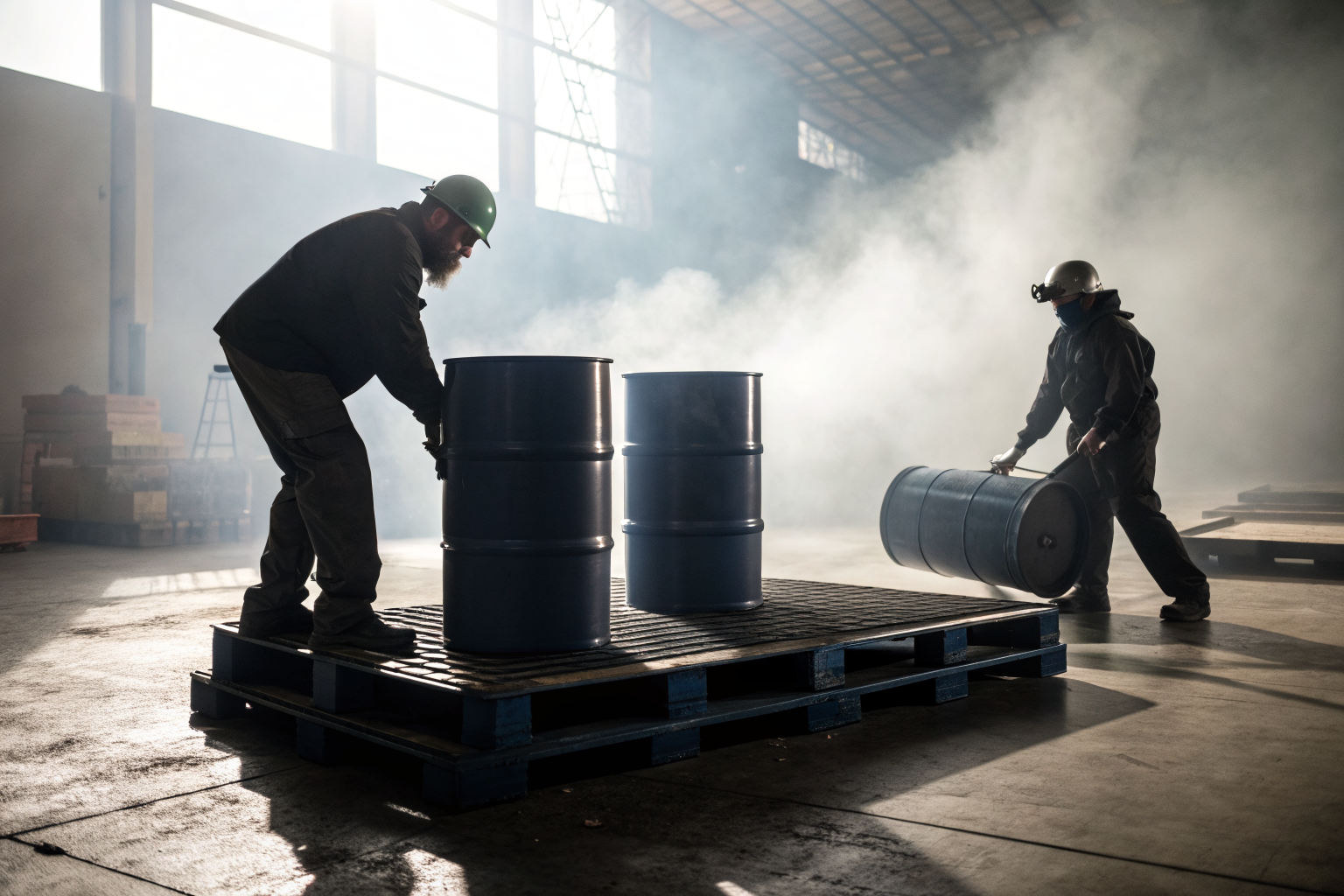
Low Profile Spill Pallet: Ergonomic Drum Containment for Easy Access
Low profile spill pallets cut drum lifting height by 4-6 inches compared to standard models, reducing workplace injuries while maintaining full EPA secondary containment compliance. These specialized containment systems solve the dual challenge of worker safety and regulatory adherence in high-frequency drum handling operations.
Key Takeaways:
- Low profile spill pallets reduce drum lifting height to 6-8 inches versus 12-14 inches for standard pallets
- OSHA reports 38% of workplace injuries involve lifting — ergonomic drum containment directly reduces this risk
- Low height design maintains 110% containment capacity required by EPA 40 CFR 264.175
What Makes a Spill Pallet Low Profile?

A low profile spill pallet is a secondary containment system designed with a maximum deck height of 6-8 inches above ground level. This means operators lift drums significantly less compared to standard containment platforms. The reduced height design maintains full structural integrity while prioritizing worker accessibility.
Low profile spill pallets reduce drum lifting height through engineered sidewall construction and optimized sump depth distribution. Standard spill pallets typically measure 12-14 inches in total height, forcing workers to lift 55-gallon drums (weighing up to 440 pounds when full) to shoulder-straining elevations. Low profile models cut this lifting distance by 50-60%, keeping drum placement within the optimal ergonomic zone below 30 inches.
The engineering trade-offs for low clearance design involve redistributing containment volume across a wider footprint rather than relying on vertical depth. Manufacturers achieve the required containment capacity by extending the pallet’s base dimensions or using advanced polymer molding techniques that maximize sump volume within height constraints. This horizontal expansion means low profile units often require 15-20% more floor space than standard alternatives.
Secondary containment functionality remains unchanged despite the height reduction. The deck surface maintains proper drainage angles, and structural load ratings match or exceed standard pallet specifications. Most low profile models support 4,000-6,000 pound distributed loads while containing the mandated 110% of stored drum capacity.
Ergonomic Benefits of Low Height Drum Storage
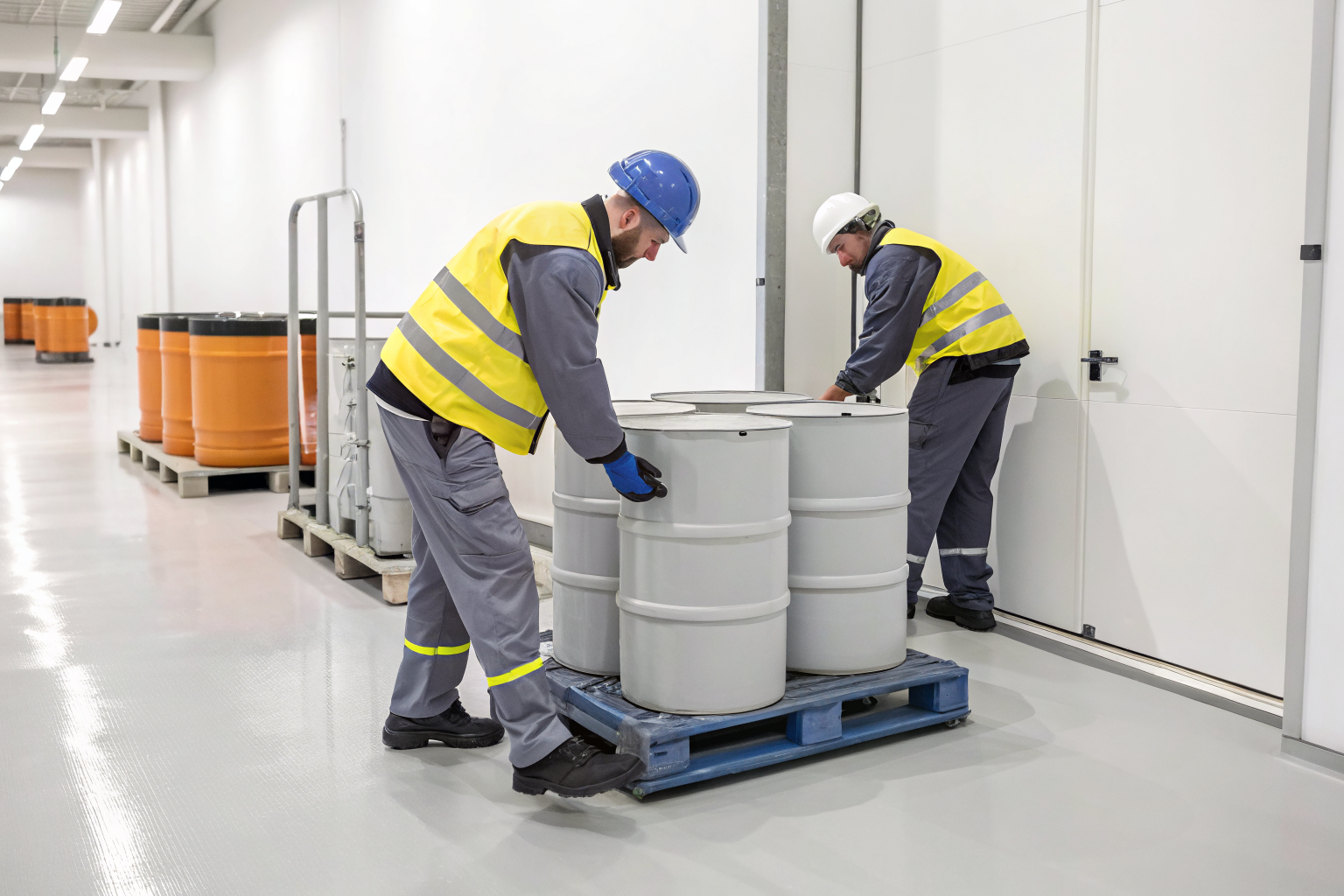
Ergonomic design prevents workplace injuries by reducing the biomechanical stress on workers’ spines and shoulders during drum handling operations. The National Institute for Occupational Safety and Health identifies lifting as the primary cause of back injuries in industrial settings, with 34% of all workplace injuries attributed to manual material handling tasks.
Drum handling creates particularly severe ergonomic challenges because of weight distribution and grip limitations. A full 55-gallon drum weighs 400-500 pounds and requires awkward lifting mechanics when placed on elevated surfaces. Standard spill pallets force workers to lift drums to heights that exceed NIOSH lifting guidelines, which recommend keeping loads below 30 inches for optimal safety. Low profile pallets keep drum placement within this ergonomic sweet spot.
Worker fatigue reduction translates directly to productivity gains and injury cost avoidance. Facilities using ergonomic containment report 25-30% fewer back strain incidents during drum changeover operations. The reduced lifting height means workers can maintain proper lifting posture — straight back, bent knees, load close to body — throughout the entire drum placement process.
OSHA compliance advantages extend beyond injury prevention to include reduced workers’ compensation claims and improved safety audit scores. The ergonomic benefits become most pronounced in operations requiring frequent drum access, where workers interact with contained drums multiple times per shift. Each lifting event on a low profile system reduces spinal compression forces by approximately 200-300 pounds compared to standard height alternatives.
Easy drum handling also enables better adherence to proper lifting procedures. When drums must be placed at shoulder height or above, workers often compromise lifting technique to complete the task. Low profile containment allows workers to maintain safe lifting practices consistently.
Low Profile vs Standard Spill Pallet Comparison

| Feature | Low Profile Spill Pallet | Standard Spill Pallet | Advantage |
|---|---|---|---|
| Deck Height | 6-8 inches | 12-14 inches | Low Profile |
| Lifting Distance | 30% less strain | Full shoulder lift | Low Profile |
| Floor Space | 120-130 sq ft (4-drum) | 100-110 sq ft (4-drum) | Standard |
| Containment Capacity | 66-68 gallons | 66-68 gallons | Equal |
| Load Rating | 4,000-6,000 lbs | 4,000-6,000 lbs | Equal |
| Purchase Price | $850-1,200 | $650-950 | Standard |
| Installation Cost | $200-400 (wider footprint) | $150-250 | Standard |
| Injury Risk Reduction | 25-30% fewer incidents | Baseline risk level | Low Profile |
| OSHA Compliance | Enhanced ergonomics | Meets minimum standards | Low Profile |
| Maintenance Access | Superior drum access | Standard access | Low Profile |
Low profile pallets offer accessibility advantages that become cost-effective in high-frequency drum handling environments. The 15-25% price premium pays for itself through reduced workers’ compensation claims and improved operational efficiency. Facilities processing 50+ drum changes monthly typically recover the additional investment within 8-12 months.
Capacity differences are negligible — both designs meet EPA containment requirements identically. The engineering challenge involves maintaining structural integrity at reduced height, which most manufacturers solve through reinforced sidewall construction and optimized polymer formulations. Weight ratings remain consistent between low profile and standard models, supporting equivalent drum loads safely.
Product selection should prioritize operational frequency over initial cost savings. Standard pallets suit low-activity storage applications where drums remain undisturbed for weeks or months. Low profile containment becomes essential in dynamic operations requiring daily drum access, changeovers, or frequent inspection activities.
How Do Low Profile Pallets Meet EPA Requirements?

Low profile design complies with EPA regulations through identical containment principles applied at reduced deck heights. EPA 40 CFR 264.175 mandates secondary containment systems must capture 110% of the largest container’s volume, regardless of the containment system’s physical height or configuration.
The 110% rule application remains unchanged for low profile systems. A standard 55-gallon drum requires 60.5 gallons of containment capacity, whether provided by a 6-inch or 14-inch high pallet. Low profile manufacturers achieve this volume through wider sump dimensions and optimized floor drainage patterns that direct spilled liquids into designated collection areas.
SPCC plan documentation requirements treat low profile pallets identically to standard containment systems. Facilities must record containment capacity calculations, inspection schedules, and maintenance procedures without height-specific modifications. The EPA focuses on containment effectiveness rather than physical dimensions when evaluating secondary containment compliance.
Inspection requirements follow standard protocols for all spill prevention equipment. Monthly visual inspections must verify structural integrity, proper drainage, and absence of stored liquids in containment sumps. Low profile designs actually simplify inspection procedures because reduced height provides better visual access to sump areas and drain mechanisms.
Spill prevention effectiveness depends on proper installation and maintenance rather than containment height. Low profile pallets must be installed on level surfaces with adequate clearance for spill response activities. The reduced lifting height can improve spill response times because emergency drum removal requires less physical effort and coordination.
Best Applications for Low Height Drum Containment

Easy access drum storage suits high-frequency operations where workers interact with contained drums multiple times daily. Manufacturing facilities, chemical processing plants, and automotive service centers benefit most from ergonomic containment because drum changeover activities occur regularly throughout each shift.
High-frequency operations typically involve drum access rates exceeding 10-15 interactions weekly per containment station. This threshold makes ergonomic benefits cost-justifiable through reduced injury risk and improved operational efficiency. Facilities below this activity level may find standard containment adequate for their needs.
Oil storage applications in maintenance shops and fleet service facilities represent ideal use cases for low profile containment. These environments combine frequent drum access requirements with space constraints that favor ergonomic solutions. Mechanics and technicians regularly dispense lubricants, hydraulic fluids, and coolants from drums throughout their work shifts.
Loading dock applications benefit significantly from reduced lifting heights during drum receiving and staging operations. Warehouse workers frequently transfer drums between delivery trucks and temporary storage areas, creating repetitive lifting scenarios where ergonomic containment prevents cumulative strain injuries. The improved access also speeds dock operations during peak shipping periods.
Space constraints in urban facilities often favor low profile designs despite their wider footprint requirements. The reduced vertical clearance allows installation under low overhead obstructions like HVAC ducts, lighting fixtures, or mezzanine structures where standard pallets won’t fit. This flexibility enables compliant drum storage in previously unusable areas.
Drum storage becomes most cost-effective with low profile containment when facilities prioritize worker safety metrics alongside regulatory compliance. Operations tracking injury rates, workers’ compensation costs, or ergonomic audit scores typically see measurable improvements within 6-12 months of installation.