Secondary Containment Calculator: Free Spill Containment Sizing Tool
Getting secondary containment sizing wrong costs companies thousands in fines, cleanup costs, and regulatory headaches—this secondary containment calculator eliminates the guesswork.
Key Takeaways:
- EPA requires 110% containment capacity for most hazardous liquids, but specific requirements vary by industry and substance type
- Proper containment sizing prevents 90% of environmental violations and reduces cleanup costs by up to 75%
- Most businesses undersize containment by 20-30% when they fail to account for displacement volume and freeboard requirements
What is Secondary Containment and Why Calculator Tools Matter
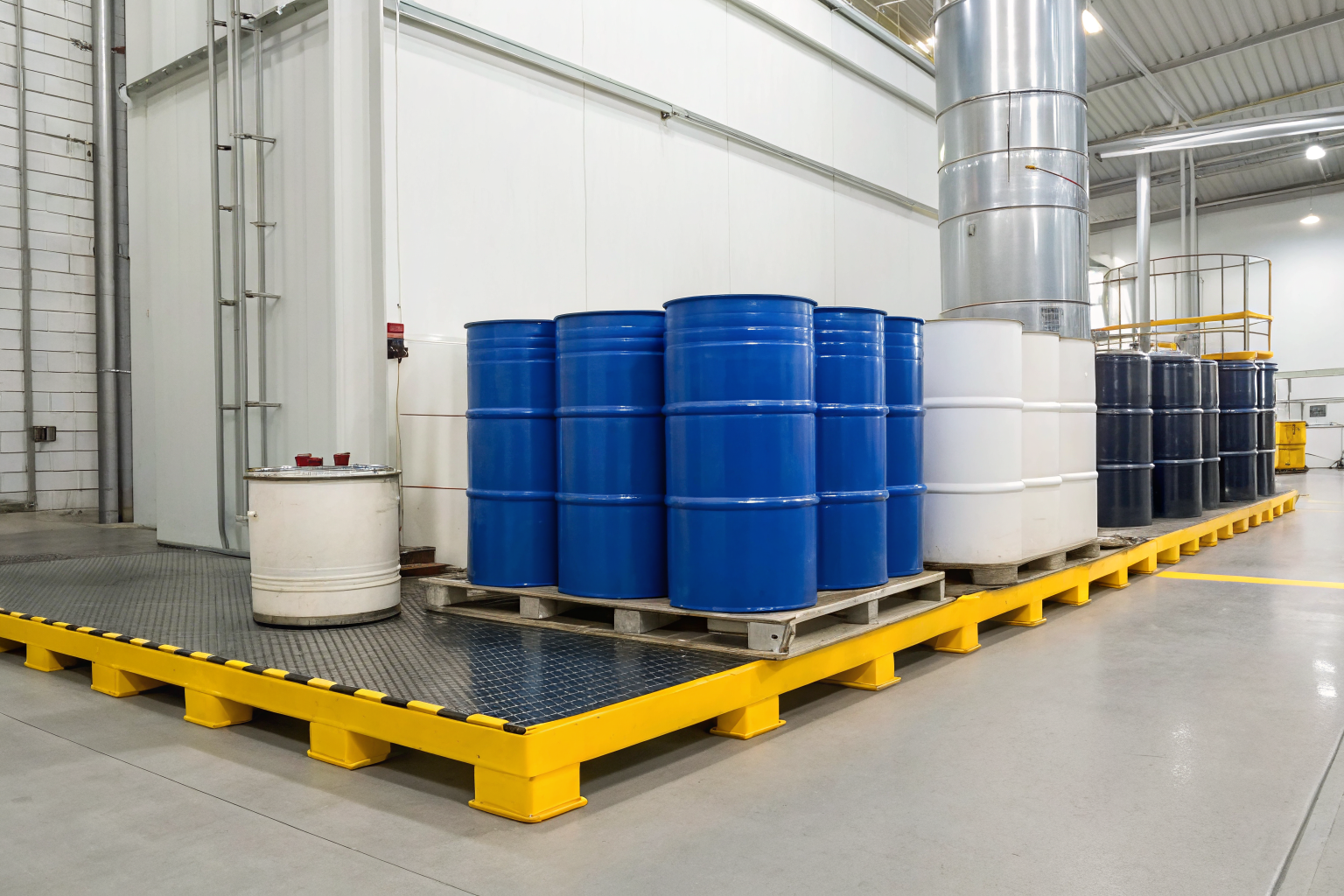
Secondary containment is a backup system that captures spills and leaks from primary storage containers. This means if your main tank, drum, or vessel fails, the secondary system contains the hazardous liquid before it reaches soil or groundwater. For example, a spill pallet under chemical drums creates a sealed barrier that holds leaked contents.
EPA regulations drive the need for precise containment calculations through the Spill Prevention, Control, and Countermeasure (SPCC) rule. Environmental compliance requires businesses to prove their containment systems can handle worst-case spill scenarios. The regulatory framework treats inadequate containment as a serious violation that threatens public health and environmental safety.
The cost of non-compliance hits companies hard. EPA fines for inadequate containment average $87,500 per violation. Beyond monetary penalties, businesses face cleanup costs that often exceed initial containment investments by 300-400%. Secondary containment prevents environmental contamination from spills by creating physical barriers that regulatory agencies can inspect and measure.
Free Secondary Containment Calculator Tool
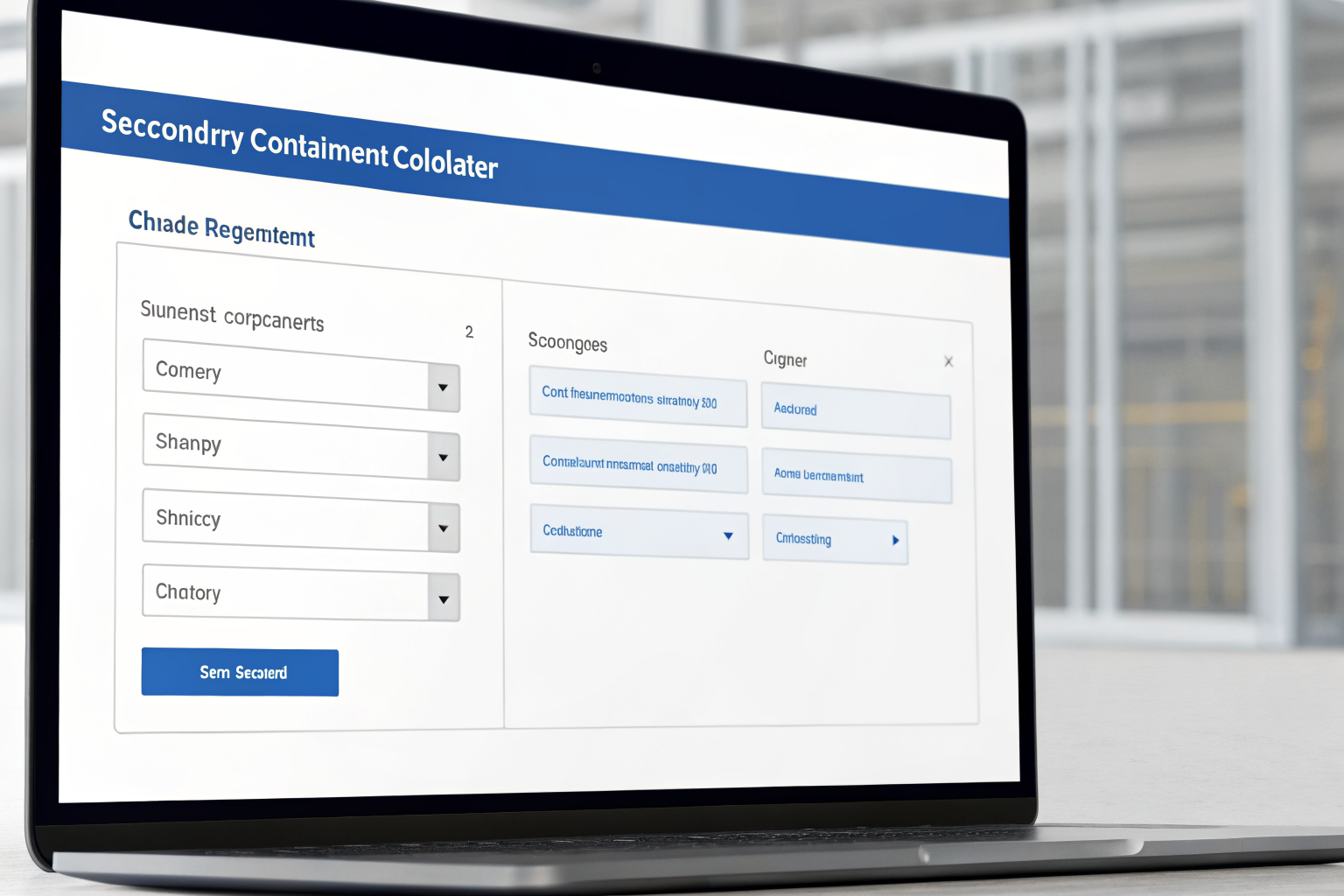
The calculator tool determines required containment volume by processing your specific storage configuration and regulatory requirements. This automated approach eliminates manual calculation errors that lead to undersized or oversized systems.
Start by entering your container specifications including drum count, tank volume, and stored liquid type. The interface requires basic measurements: container dimensions, liquid density, and installation location. Input parameters include primary storage capacity, container displacement volume, and applicable regulatory standards for your industry.
Next, select your regulatory framework from EPA SPCC, OSHA hazmat standards, or industry-specific requirements. The system calculates base containment needs, adds mandatory safety margins, and factors in operational considerations like pump access and maintenance space.
Interpreting results requires understanding the output components. The calculator accounts for 110% EPA requirement plus 6-inch freeboard standard in its final recommendations. Total containment volume includes primary liquid capacity, displacement from containers and equipment, freeboard allowance, and regulatory safety factors. The tool provides specific dimensions for berms, pallets, or vault systems that meet your calculated requirements.
Results display three containment options: minimum compliance, recommended operational, and maximum protection configurations. Each option shows upfront costs, maintenance requirements, and compliance safety margins.
Essential Containment Sizing Principles You Must Know

Sizing principles determine adequate containment capacity through three core calculations that most businesses handle incorrectly. Understanding these fundamentals prevents costly design errors and regulatory violations.
The 110% rule fundamentals require containment systems to hold 110% of the largest single container’s contents. This EPA standard applies to most hazardous liquid storage but excludes certain petroleum products and waste materials. The calculation starts with your largest tank or container, not total stored volume.
Displacement calculations account for volume occupied by containers, equipment, and structural elements within the containment area. Standard 55-gallon drums displace 7.5 gallons each when sitting in containment pallets. Pumps, pipes, and support structures reduce available containment volume significantly. Most sizing errors stem from ignoring displacement volume entirely.
Freeboard considerations add vertical space above maximum liquid level to prevent overflow during handling operations. Standard freeboard requirement is 6 inches above maximum liquid level for most applications. Chemical facilities need additional freeboard for foam expansion during emergency response. Loading areas require extra capacity for splash and spillage during transfer operations.
These principles work together to create containment systems that handle real-world conditions rather than theoretical maximum volumes.
Regulatory Compliance Requirements by Industry

| Industry | Primary Regulation | Containment Standard | Inspection Frequency | Special Requirements |
|---|---|---|---|---|
| Chemical Manufacturing | EPA 40 CFR 264.175 | 110% + access space | Monthly visual | Double-wall tanks |
| Petroleum Storage | EPA SPCC | 110% largest tank | Annual professional | Leak detection |
| Waste Management | RCRA Subtitle C | 110% + precipitation | Weekly inspection | Liner compatibility |
| Food Processing | FDA/USDA + EPA | 110% + sanitation | Daily cleaning | Washdown capability |
| Pharmaceuticals | FDA + EPA | 110% + containment | Continuous monitoring | Temperature control |
| Transportation | DOT + OSHA | Varied by class | Pre-transport check | Portable systems |
Industry regulations mandate specific containment standards that extend beyond basic EPA requirements. Chemical facilities must comply with EPA’s 40 CFR 264.175 requiring 110% capacity plus inspection access. This regulation covers hazardous waste storage and treatment facilities with containers holding more than 55 gallons.
EPA SPCC rule requirements apply to facilities storing 1,320 gallons or more of petroleum products. The rule mandates engineered containment systems designed by professional engineers for larger facilities. SPCC compliance includes regular inspections, maintenance records, and updated containment calculations when storage configurations change.
OSHA hazmat standards focus on worker safety during spill response and cleanup operations. These requirements specify containment access, emergency equipment placement, and personnel protection systems. OSHA standards often require larger containment areas to accommodate response activities.
State and local variations add complexity to compliance requirements. California’s hazardous materials regulations exceed federal standards in many areas. Texas requires additional containment for oil and gas operations. Local fire departments often impose containment requirements through permit conditions.
Spill Pallet vs General Containment: Choosing the Right Solution
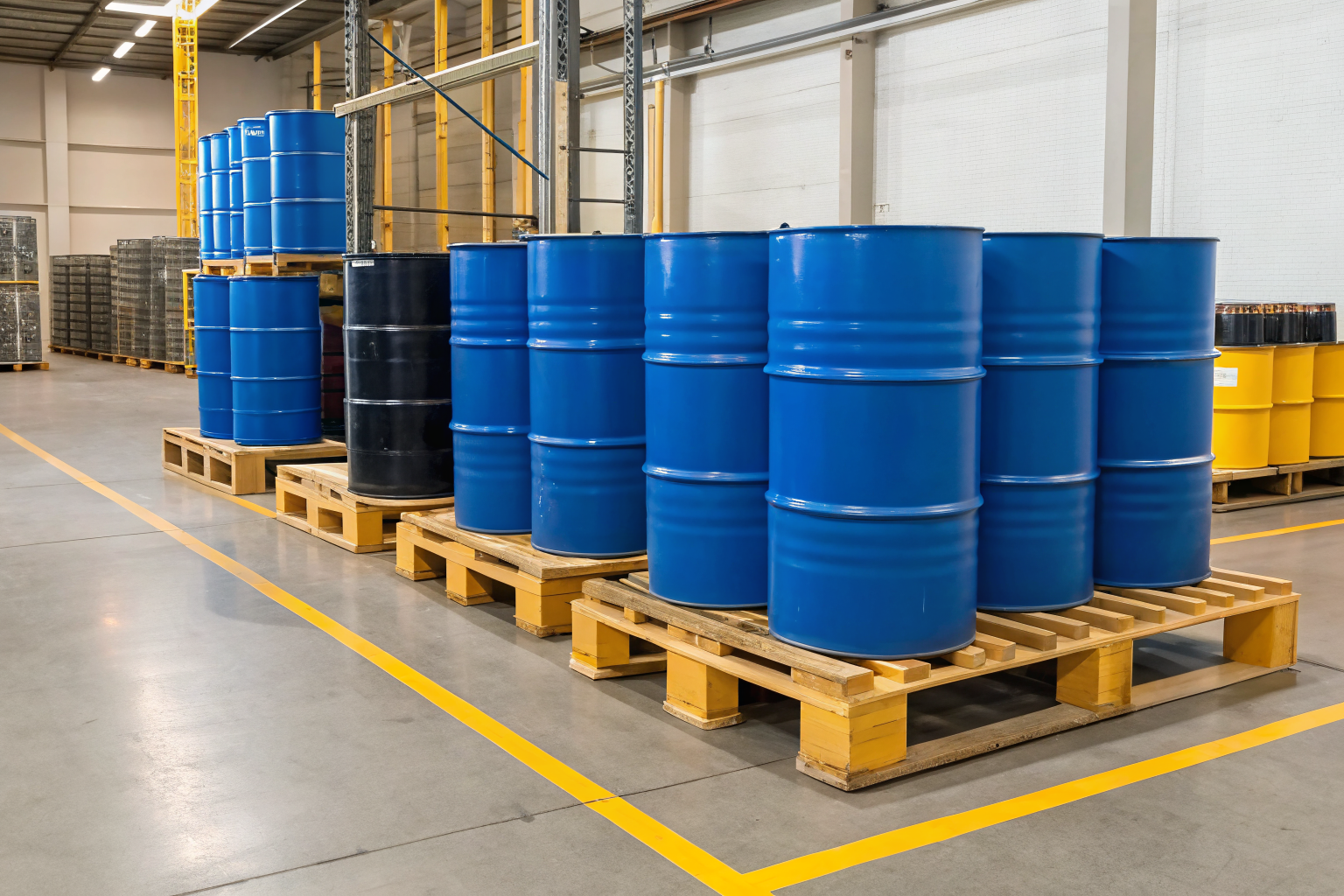
Spill pallets provide portable secondary containment for drum storage and small-scale operations. These systems work best for facilities with 2-8 drums in single locations. Standard spill pallets handle 2-4 drums with 66-gallon capacity, making them suitable for most 55-gallon drum configurations.
Spill pallet advantages include mobility, quick installation, and lower upfront costs compared to permanent containment. You can relocate pallets as storage needs change and remove them for facility modifications. Polyethylene pallets resist chemical attack and provide excellent visibility for leak detection.
Permanent containment systems work better for large-scale operations, bulk storage, and fixed installations. Concrete berms, steel-lined pits, and vault systems handle higher volumes and provide superior structural integrity. Use permanent containment when storing more than 1,000 gallons in single locations or when dealing with highly corrosive materials.
Capacity limitations restrict spill pallet applications to smaller operations. Most commercial pallets max out at 400-500 gallon capacity, insufficient for bulk storage requirements. Permanent systems scale up to thousands of gallons with proper engineering design.
Cost-Benefit Analysis: Right-Sizing Your Containment Investment

Containment sizing balances compliance costs with operational needs through careful analysis of upfront investment versus long-term risk exposure. The key lies in avoiding both undersizing penalties and oversizing waste.
Initial investment costs vary dramatically based on containment type and capacity. Spill pallets cost $200-800 per unit depending on capacity and materials. Permanent concrete containment runs $15-25 per square foot installed. Steel-lined systems cost $30-50 per square foot but provide superior chemical resistance.
Fine costs from inadequate containment create immediate financial impact. EPA violations average $87,500 per incident, while cleanup costs often reach $200,000-500,000 for moderate spills. State agencies add additional penalties that compound federal fines. Criminal liability applies to serious violations affecting groundwater or public health.
Oversizing penalties include unnecessary construction costs, lost facility space, and increased maintenance expenses. Oversizing containment by 50% increases costs by 35% but provides minimal additional protection. Excessive containment areas collect rainwater, require more frequent cleaning, and consume valuable operational space.
Maintenance cost factors include inspection frequency, cleaning requirements, and system longevity. Polyethylene systems need replacement every 8-12 years depending on chemical exposure. Concrete containment lasts 25-30 years with proper maintenance. Steel systems fall between these ranges based on coating quality and chemical compatibility.
Common Sizing Mistakes That Cost Money and Compliance

Sizing mistakes cause regulatory violations and excess costs through fundamental calculation errors that most facility managers make repeatedly. These errors stem from misunderstanding displacement principles and regulatory requirements.
Ignoring displacement volume creates the most common and expensive sizing error. Drums, tanks, pumps, and piping occupy significant containment space that reduces liquid capacity. A 500-gallon containment area filled with four 55-gallon drums and associated equipment may hold only 350 gallons of spilled liquid. This 150-gallon difference causes compliance failures during regulatory inspections.
Inadequate freeboard calculations fail to account for operational splash, thermal expansion, and emergency response foam. Many facilities calculate containment to exact regulatory minimums without considering real-world conditions. Loading operations create splash zones that require additional capacity. Chemical reactions can generate foam that occupies 3-5 times liquid volume.
Wrong capacity calculations result from misunderstanding the “largest container” rule. Facilities with mixed container sizes often calculate based on total storage rather than single largest vessel. EPA requires containment sized for the biggest individual container, not aggregate volume. A facility with one 1,000-gallon tank and ten 55-gallon drums needs containment for 1,100 gallons, not 1,550 gallons.
Access and maintenance gaps create operational failures that lead to compliance violations. Containment systems need pump access, cleaning capability, and inspection ports. 75% of containment violations stem from undersizing due to displacement miscalculations. Facilities discover their “compliant” systems fail during actual spill events when displacement volume prevents adequate liquid retention.