4 Drum Spill Pallet: Complete Guide to 55-Gallon Drum Containment Solutions
Four drum spill pallets prevent EPA fines that average $37,500 per violation while containing 220 gallons of spilled oil, chemicals, or hazardous liquids. These containment systems protect facilities from regulatory penalties and environmental damage when 55-gallon drums leak or overflow.
Key Takeaways:
- Standard four-drum pallets hold 8,000 pounds and contain 66 gallons of spilled liquid
- HDPE construction costs 40% less than steel while offering superior chemical resistance
- EPA requires 110% containment capacity — four 55-gallon drums need 66+ gallon sump capacity
What Are 4 Drum Spill Pallets and Why Do You Need Them?
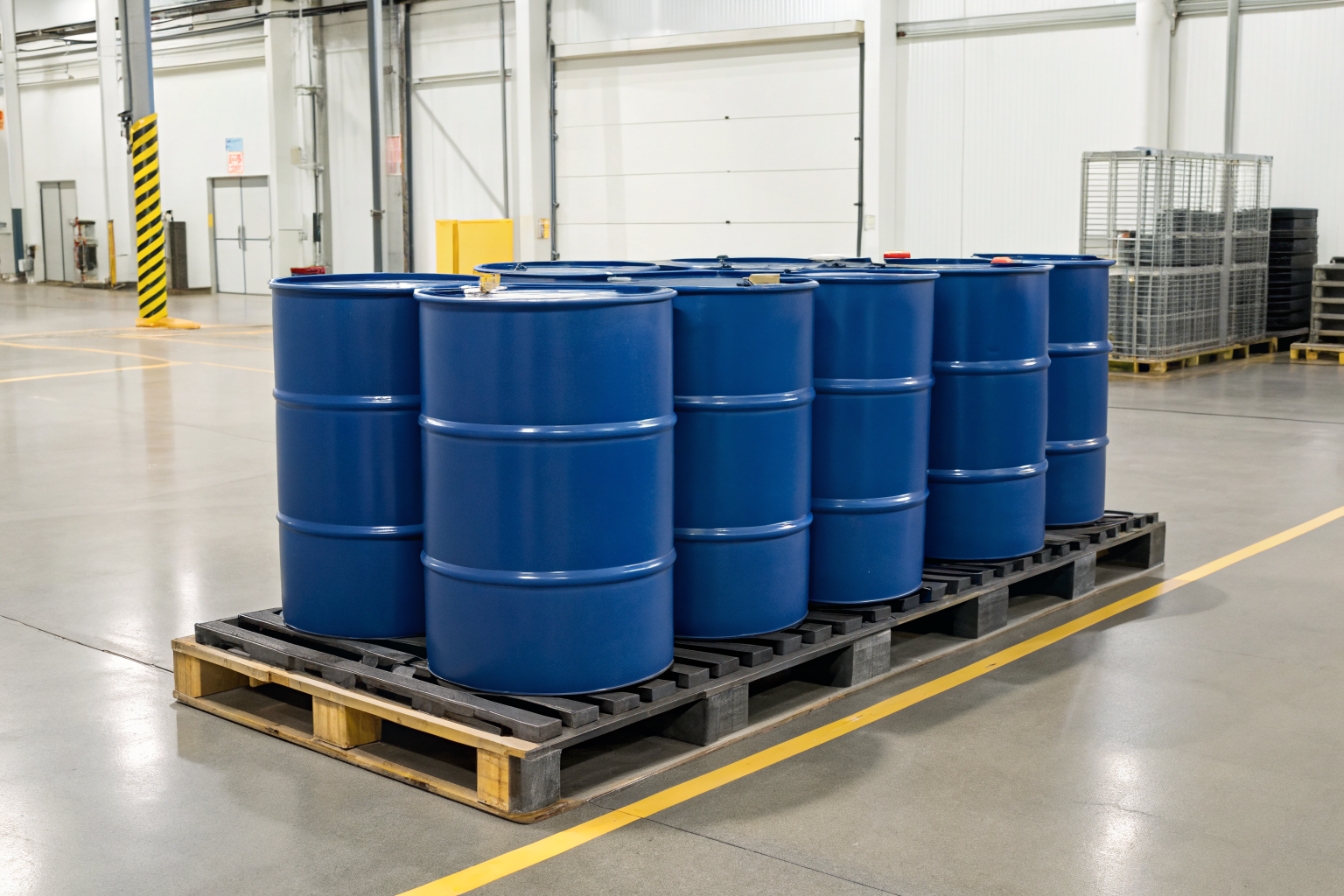
Four drum spill pallets are secondary containment platforms designed to hold four 55-gallon drums while capturing any leaked liquids in an integrated sump. These platforms prevent spilled chemicals, oils, or hazardous materials from reaching soil, groundwater, or storm drains. The EPA mandates secondary containment for facilities storing oil or hazardous substances to prevent environmental contamination.
Secondary containment systems like four-drum pallets serve as the first line of defense against costly spills. When drums develop leaks, crack, or get damaged during handling, the pallet’s built-in sump captures the escaped liquid before it spreads. This containment prevents violations of the Clean Water Act and Resource Conservation and Recovery Act, which carry penalties ranging from $25,000 to $50,000 per incident.
EPA regulations require 110% containment capacity for any stored liquid volume. Four 55-gallon drums contain 220 gallons total, so the pallet must capture at least 242 gallons of spilled material. Most standard four-drum pallets exceed this requirement with 66-gallon sump capacity, assuming normal fill levels and partial spillage scenarios rather than catastrophic failure of all drums simultaneously.
Beyond regulatory compliance, four-drum pallets protect your facility’s operational continuity. Uncontained spills trigger emergency response protocols, facility shutdowns, soil remediation, and potential groundwater monitoring that can cost hundreds of thousands of dollars. The pallet system prevents these cascading consequences by containing the problem at the source.
Businesses handling oils, solvents, acids, caustics, or other regulated liquids need four-drum pallets when storing these materials outdoors, in warehouses, or production areas. The containment requirement applies regardless of whether you’re temporarily staging drums for use or maintaining long-term inventory. Any location where drums could leak onto the ground requires secondary containment.
How Much Liquid Do 4 Drum Containment Pallets Actually Hold?

Containment volume determines regulatory compliance for drum storage systems, making capacity calculations critical for proper selection. Four-drum pallets come in different sump capacities depending on construction design and intended use cases.
| Pallet Type | Sump Capacity | Drum Capacity | Weight Rating | Compliance Status |
|---|---|---|---|---|
| Standard HDPE | 66 gallons | 4 x 55-gallon | 8,000 lbs | Exceeds EPA 110% |
| Low-Profile Steel | 50 gallons | 4 x 55-gallon | 12,000 lbs | Meets EPA minimum |
| High-Capacity HDPE | 75 gallons | 4 x 55-gallon | 6,000 lbs | Exceeds EPA 110% |
| Modular Polyethylene | 60 gallons | 4 x 55-gallon | 10,000 lbs | Exceeds EPA 110% |
Standard four-drum pallets contain 66 gallons, exceeding the 55-gallon regulatory minimum required by EPA secondary containment rules. This extra capacity accounts for rainwater accumulation, overfilled drums, or multiple drum failures. The additional volume prevents overflow during normal operations and weather events.
SPCC plan documentation must specify exact containment volumes for each storage area. Facilities calculate total liquid inventory, multiply by 110%, and verify that installed containment systems meet or exceed this capacity. Four drums at 80% fill level contain 176 gallons, requiring 194 gallons of containment capacity minimum.
Containment calculations become more complex when factoring displacement from the drums themselves sitting in the sump. Each 55-gallon drum displaces approximately 8 gallons when resting on the pallet deck. Four drums reduce effective sump capacity by 32 gallons, meaning a 66-gallon rated pallet provides 34 gallons of actual liquid containment once loaded.
This displacement factor explains why many facilities choose higher-capacity pallets or limit drum fill levels. A 75-gallon sump provides 43 gallons of actual containment with four drums loaded, offering better protection against multiple leaks or weather-related overflow. The extra capacity reduces maintenance frequency and compliance risk.
HDPE vs Steel: Which 4 Drum Pallet Material Performs Better?

Material construction affects chemical resistance and durability of spill pallets, making selection critical for long-term performance and cost control. HDPE and steel represent the two dominant construction options, each with distinct advantages for different applications.
HDPE pallets resist 95% of industrial chemicals while steel pallets corrode with acidic substances, making polyethylene the preferred choice for chemical storage. High-density polyethylene maintains structural integrity when exposed to acids, bases, solvents, and petroleum products that would rapidly degrade steel containment systems. This chemical resistance eliminates replacement costs from corrosion damage.
Steel construction offers superior weight capacity and durability for heavy-duty applications. Steel four-drum pallets typically handle 12,000-15,000 pounds compared to 6,000-8,000 pounds for HDPE units. Facilities using forklifts for frequent drum movement benefit from steel’s resistance to impact damage and structural deformation under repeated loading cycles.
Cost analysis favors HDPE construction for most applications. HDPE four-drum pallets cost $300-500 compared to $750-1,200 for equivalent steel units. The 40% cost savings make polyethylene attractive for facilities needing multiple containment stations. However, steel pallets last longer in high-traffic environments, potentially offsetting initial cost differences.
Chemical compatibility determines which material works for specific storage applications. Acids, including sulfuric, hydrochloric, and nitric acid, require HDPE construction since steel experiences rapid corrosion and structural failure. Petroleum products, solvents, and most industrial chemicals work safely with either material, allowing cost considerations to drive selection.
Environmental factors influence material performance over time. HDPE pallets handle temperature extremes better, remaining flexible in cold conditions where steel becomes brittle. UV resistance varies by manufacturer, but quality HDPE formulations include UV stabilizers that prevent cracking from sunlight exposure. Steel pallets require protective coatings that may fail over time, leading to rust and contamination.
Maintenance requirements differ significantly between materials. HDPE pallets need occasional cleaning but rarely require repairs or replacement parts. Steel units need regular inspection for coating damage, rust spots, and structural integrity. Facilities in corrosive environments should budget for steel pallet replacement every 5-7 years versus 15-20 years for quality HDPE construction.
What Weight Capacity Do You Need for 4-Drum Storage?

Load ratings determine safe drum handling capacity for industrial storage applications, making weight calculations essential for proper pallet selection. Four 55-gallon drums filled with oil weigh approximately 1,800 pounds total, but different liquids create varying load requirements.
Drum weight varies dramatically based on contents. Water weighs 8.34 pounds per gallon, making a full 55-gallon drum weigh 458 pounds plus the 48-pound steel drum itself, totaling 506 pounds. Four water-filled drums create 2,024 pounds of static load. Oil products average 7.5 pounds per gallon, resulting in 412-pound drums or 1,648 pounds total for four drums.
Chemical density affects load calculations significantly. Sulfuric acid weighs 15 pounds per gallon, creating 825-pound drums that total 3,300 pounds for four units. Solvents like acetone weigh only 6.6 pounds per gallon, producing lighter 363-pound drums. Always calculate based on your specific liquid density to avoid overloading.
Static versus dynamic load ratings determine safe handling procedures. Static ratings apply when drums remain stationary on the pallet. Dynamic ratings cover forklift movement, crane lifting, and transportation loads that create stress multiplication. Most pallets handle 2-3 times more static weight than dynamic loads.
Forklift handling requires additional safety margins beyond basic weight capacity. Lifting creates dynamic forces that multiply actual weight by 1.5-2.0 times depending on acceleration, deceleration, and turning speed. A 2,000-pound drum load becomes 3,000-4,000 pounds of effective stress during forklift operations.
Safety margins prevent structural failure and workplace accidents. Industry standards recommend staying within 75% of rated capacity for regular operations. An 8,000-pound rated pallet should handle maximum 6,000 pounds of loaded drums to account for weight variations, handling stresses, and long-term material fatigue.
How Do 4 Drum Pallets Fit Your SPCC Plan Requirements?

SPCC compliance requires documented secondary containment for oil storage facilities, making proper pallet integration essential for regulatory approval. Facilities storing 1,320+ gallons of oil must maintain SPCC plans with secondary containment documentation that proves adequate spill prevention measures.
Step one involves calculating total oil storage capacity across your facility. Count all drums, tanks, transformers, and equipment containing oil, then multiply by 110% to determine required containment volume. Four-drum pallets contribute to this calculation by providing documented containment for specific storage areas. Each 66-gallon pallet covers 220 gallons of drum capacity with regulatory compliance.
Step two requires mapping containment systems to storage locations. SPCC plans must show where each pallet sits, what drums it protects, and how spills flow to containment areas. Draw facility diagrams showing pallet locations, drainage patterns, and emergency response access routes. Include pallet specifications, capacity ratings, and installation dates in your documentation.
Step three establishes inspection and maintenance protocols. EPA requires regular containment system inspections to verify structural integrity and proper function. Document monthly visual checks for cracks, damage, or debris that could reduce containment capacity. Schedule annual capacity verification using water testing to confirm actual sump volume matches specifications.
Step four creates spill response procedures specific to pallet-contained areas. When drums leak onto pallets, response teams need clear protocols for liquid removal, contaminated pallet cleaning, and disposal procedures. Document which personnel handle cleanup, what equipment they use, and how they prevent secondary contamination during response activities.
Step five integrates pallets into your facility’s overall spill prevention strategy. SPCC plans must show how individual containment systems work together to protect soil and waterways. Four-drum pallets prevent small spills from reaching storm drains, but larger incidents may require additional containment barriers, sumps, or treatment systems. Your plan should address how pallet systems connect to broader facility protection measures.
Compliance verification requires maintaining detailed records of pallet purchases, installations, inspections, and any incidents involving contained spills. EPA auditors examine these records to verify that secondary containment systems function as documented in SPCC plans. Proper documentation demonstrates due diligence and helps minimize penalties during compliance inspections.