
Single Drum Containment: 9 Essential Solutions for One-Drum Storage
Single drum containment failures cost manufacturers an average of $47,000 per incident when EPA regulations aren’t met. Your facility’s compliance hinges on selecting the right containment solution for individual drum storage operations.
Key Takeaways:
• EPA requires 110% containment capacity — meaning a 55-gallon drum needs a 66-gallon capacity spill pallet minimum
• Polyethylene spill pallets handle 90% of industrial chemicals safely but fail with acetone and MEK solvents
• Funnel-equipped containment systems reduce transfer spills by 73% compared to basic drip pans
What Makes Single Drum Containment Different from Multi-Drum Systems?
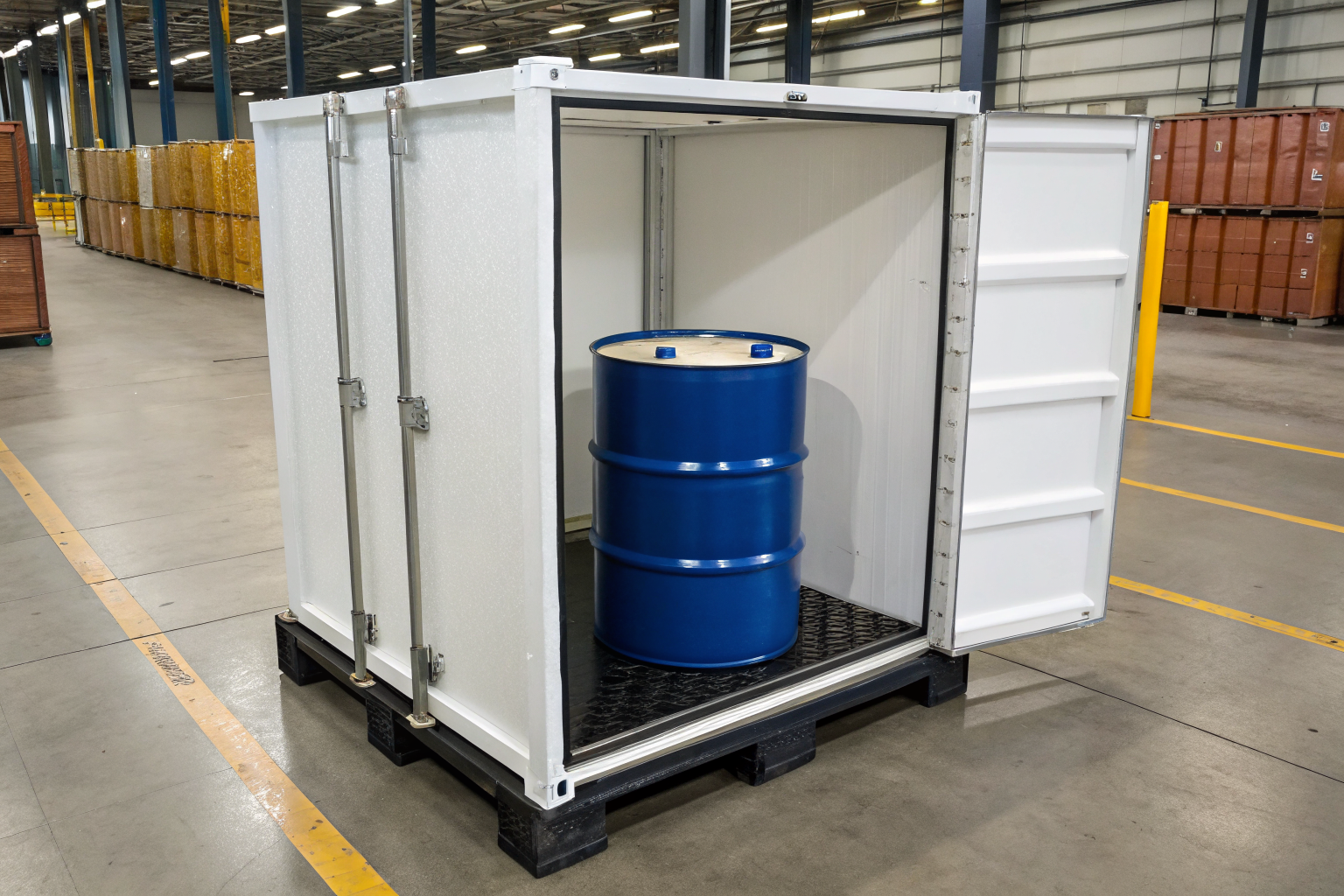
Single drum containment is a secondary containment system designed to capture spills from individual drums rather than bulk storage arrays. This means each drum gets its own dedicated containment unit instead of sharing space in a larger containment area. Single drum containment requires individual unit design that matches the specific drum size and chemical properties.
The EPA mandates 110% containment capacity for all oil storage applications. A standard 55-gallon drum needs at least 66 gallons of containment capacity to meet federal requirements. This rule applies whether you’re storing one drum or one hundred drums. Spill pallets serve as the primary solution for meeting this requirement in single drum applications.
Individual protection matters because it prevents cross-contamination between different stored chemicals and limits the scope of any spill incident. When you isolate each drum in its own secondary containment, you reduce cleanup costs and regulatory exposure. Drum storage facilities that use shared containment areas face higher liability when incompatible chemicals mix during a spill event.
Spill Pallets: The Foundation of One-Drum Protection
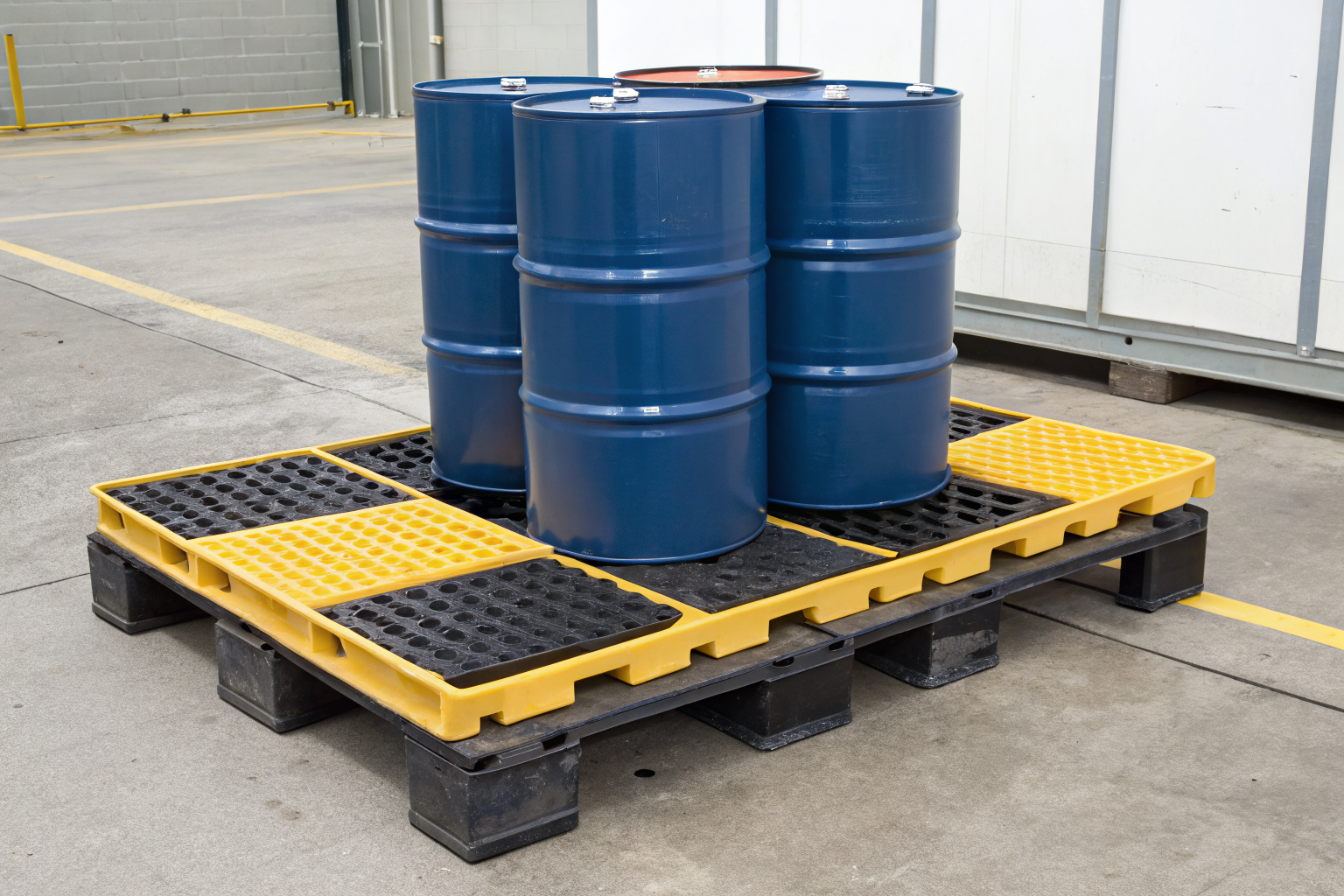
Spill pallets provide secondary containment through a raised platform design with integrated sump capacity. Standard single drum pallets support 1,500-pound load capacity, which handles a full 55-gallon drum plus the weight of pumping equipment or dispensing accessories. Spill pallets use either polyethylene or steel construction, with material selection driving chemical compatibility and durability.
Polyethylene spill pallets resist most acids, bases, and petroleum products. They won’t rust or corrode when exposed to moisture, making them ideal for outdoor oil storage applications. However, polyethylene degrades when exposed to certain organic solvents like acetone, MEK, and toluene. Steel pallets handle aggressive solvents better but require powder coating or galvanized finishes to prevent corrosion in harsh environments.
Capacity ratings vary from 66 gallons for basic single drum models up to 75 gallons for oversized units. The extra capacity accommodates dispensing spills and drum overfill situations. EPA regulations don’t specify maximum capacity, so choosing a larger sump provides additional safety margin. Load ratings matter when using dispensing pumps or handling equipment that adds concentrated weight to specific areas of the pallet deck.
Chemical compatibility charts from manufacturers show which materials work with specific stored chemicals. Always verify compatibility before selecting a pallet material, because chemical reactions can compromise containment integrity and create worse environmental hazards than the original spill.
How Do Drum Drip Pans Compare to Full Containment Systems?
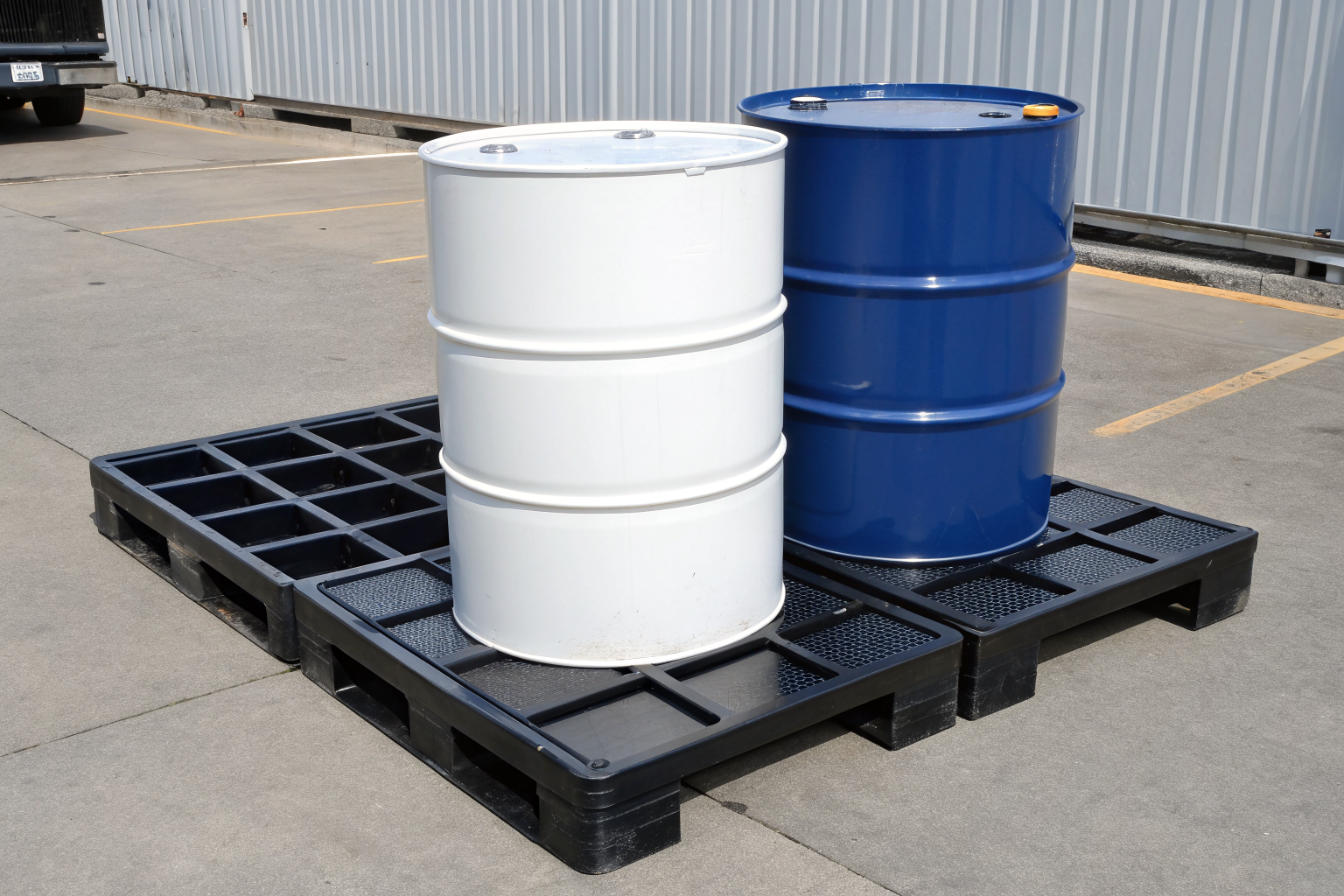
| Feature | Drum Drip Pans | Full Containment Pallets |
|---|---|---|
| Capacity | 5-15 gallons | 66-75 gallons |
| EPA Compliance | No (under 110% rule) | Yes (meets 110% rule) |
| Cost Range | $45-85 | $180-350 |
| Load Rating | 500-800 lbs | 1,500+ lbs |
| Forklift Access | None | 4-way or 2-way |
| Chemical Compatibility | Limited | Full range available |
Drum drip pans offer drip containment for minor leaks and condensation but fall short of EPA secondary containment requirements. Basic drip pans hold 5-15 gallons versus the 66+ gallon capacity needed for full containment pallets. This makes drip pans suitable only for temporary storage or non-regulated chemicals.
Cost differences reflect the capacity gap. Drip pans cost $45-85 for basic models, while compliant spill pallets range from $180-350 depending on construction material and features. The price premium pays for regulatory compliance and genuine spill protection. Spill prevention becomes critical when you consider that cleanup costs typically exceed equipment costs by 10-20 times.
Application scenarios determine which option works best. Use drip pans for workshop areas where drums contain non-hazardous materials like lubricants or cutting oils in quantities under regulatory thresholds. Full containment systems are mandatory for facilities subject to SPCC regulations or state environmental requirements. Drum handling frequency also matters — high-turnover applications benefit from the structural integrity of full containment pallets.
Drum Funnels: Essential Tools for Safe Transfer Operations
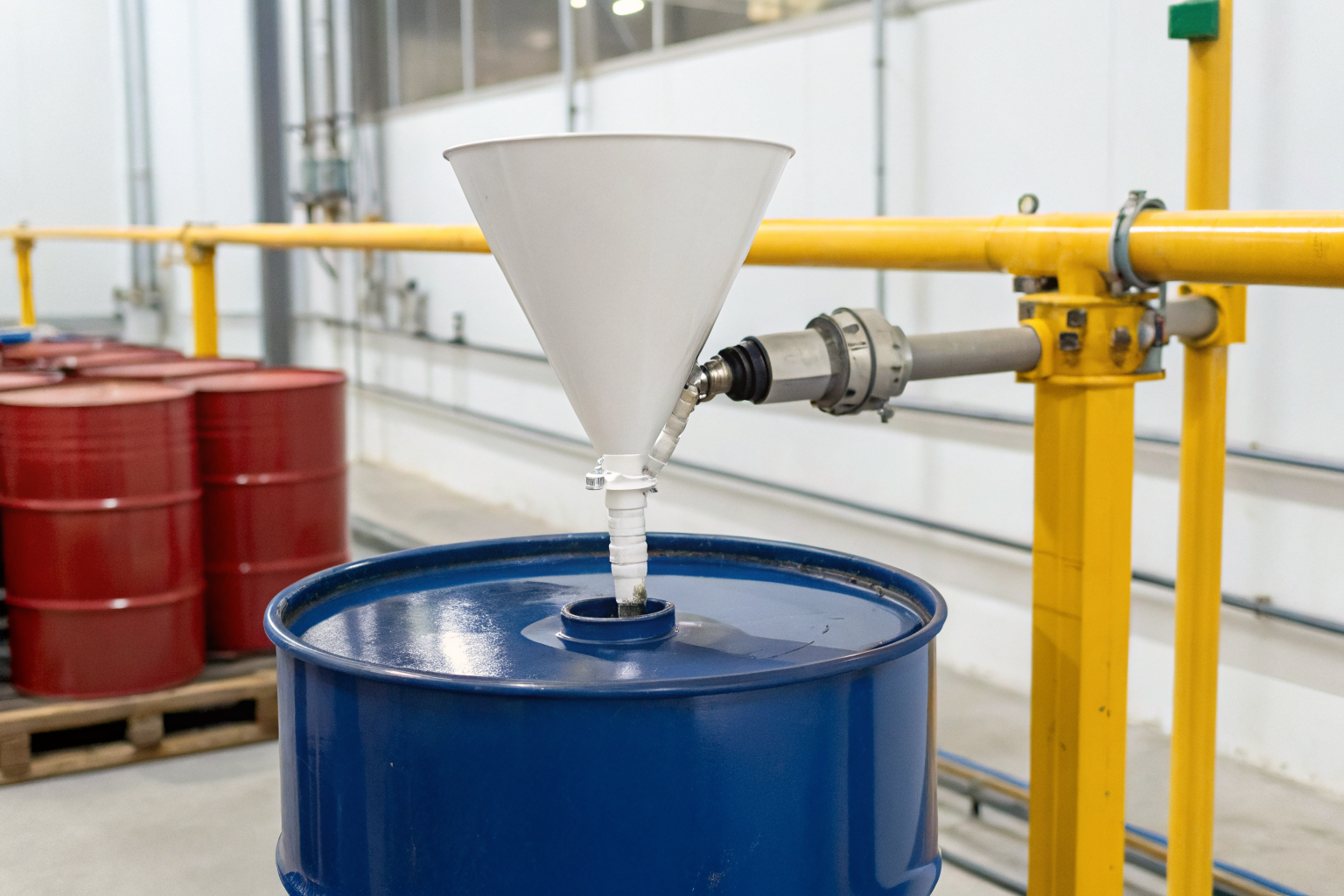
Drum funnels prevent transfer spills by creating a sealed interface between dispensing equipment and drum openings. Anti-splash funnels reduce operator exposure incidents by 67% compared to direct pouring methods. Drum funnels integrate with secondary containment systems to create comprehensive spill prevention during transfer operations.
Funnel types include standard pour funnels, anti-splash models, and integrated containment designs. Standard funnels simply direct flow into drum openings. Anti-splash versions include internal baffles or mesh screens that break up fluid streams and reduce splashing. Integrated designs mount directly to spill pallet grating and funnel spills into the containment sump.
Separate funnel designs offer flexibility for multiple drum sizes and transfer scenarios. You can move portable funnels between different containment stations as needed. Integrated systems provide permanent installation advantages but limit flexibility. Consider your facility’s drum handling patterns when choosing between portable and fixed funnel installations.
Chemical compatibility affects funnel material selection just like spill pallets. Polyethylene funnels handle most industrial chemicals but degrade with aggressive solvents. Stainless steel funnels cost more but provide universal chemical compatibility. Aluminum funnels offer a middle ground for petroleum products and mild chemicals while remaining lighter than steel alternatives.
Which Single Unit Design Works Best for Your Application?
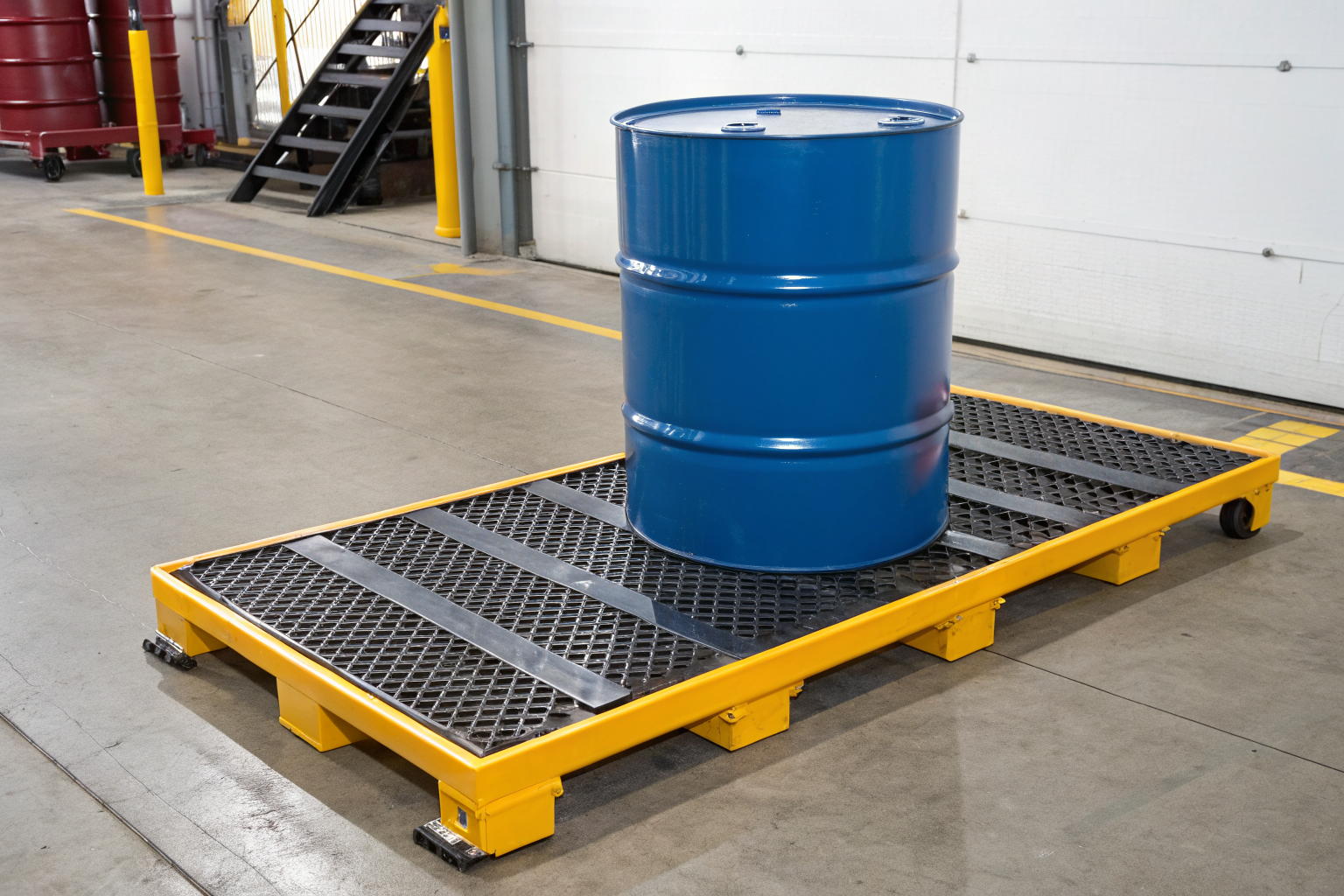
Single unit design determines containment effectiveness through platform height, grate configuration, and mobility features. Low-profile pallets reduce lifting height by 4-6 inches compared to standard models, making drum placement safer for manual handling operations. This height reduction matters when operators must lift drums onto containment platforms multiple times per day.
Standard height pallets provide maximum sump capacity and better drainage characteristics. The extra height creates more space between stored drums and collected spills, reducing contamination risk. Standard pallets also accommodate larger dispensing pumps and accessories that require vertical clearance. Product selection depends on balancing operator safety against containment capacity needs.
Removable grates simplify cleaning and maintenance access to containment sumps. Welded grate designs cost less but make sump cleaning difficult when spills occur. Consider maintenance requirements when choosing between removable and permanent grate options. Facilities with frequent small spills benefit from removable grates that allow thorough cleaning.
Forklift access features enable mechanical handling of loaded drums and pallets. Four-way forklift access allows approach from any direction, while two-way access limits handling flexibility. Drum storage areas with restricted space benefit from four-way access pallets. Indoor versus outdoor ratings affect material durability and UV resistance. Outdoor applications require UV-stabilized materials or protective coatings to prevent degradation.
Mobility features like built-in casters transform stationary containment into portable spill response tools. Caster-equipped pallets work well for temporary storage applications or facilities that frequently reconfigure storage layouts.
SPCC Plan Requirements for Individual Drum Storage
SPCC plans mandate individual drum protection when facilities store 1,320+ gallons total oil capacity and could reasonably discharge to navigable waters. The plan must document secondary containment measures for each oil storage container, including individual drums. This documentation requirement applies regardless of drum size or storage duration.
Step one requires calculating total facility oil storage capacity across all containers. Include hydraulic fluids, lubricating oils, fuel oils, and any petroleum-based chemicals in your inventory. Step two involves mapping potential discharge pathways from each storage location to surface waters, storm drains, or groundwater. Step three documents the secondary containment system for each storage area, specifying containment capacity and inspection procedures.
Step four establishes inspection protocols for individual drum containment systems. Monthly visual inspections must verify containment integrity, proper drum positioning, and absence of accumulated spills. Step five creates spill response procedures specific to single drum incidents, including cleanup methods and regulatory notification requirements.
Documentation needs include containment capacity calculations, inspection logs, and maintenance records for each containment unit. EPA inspectors review these records during facility audits. Missing or inadequate documentation triggers violations even when physical containment systems meet capacity requirements. Inspection protocols should specify what constitutes acceptable containment condition and when maintenance or replacement becomes necessary.
Facilities must maintain SPCC compliance through regular plan updates when storage configurations change. Adding or removing individual drum storage locations requires plan amendments within six months of the change. This requirement applies to temporary storage arrangements and seasonal capacity fluctuations.