
IBC Spill Containment Pallet: Complete Guide to 275-Gallon Tote Protection
IBC spill containment pallets prevent catastrophic environmental penalties that cost companies an average of $47,000 per violation according to EPA enforcement data. These specialized platforms protect facilities from regulatory fines while preventing chemical spills from contaminating soil and groundwater.
Key Takeaways:
- EPA requires 110% containment capacity for IBC storage — a 275-gallon tote needs 302.5 gallons minimum containment
- Polyethylene pallets handle 95% of standard chemicals while steel pallets are mandatory for aggressive solvents above pH 12
- Single-tote spill pallets cost $180-450 while four-tote platforms run $1,200-2,800 depending on material and capacity
What Is an IBC Spill Containment Pallet?
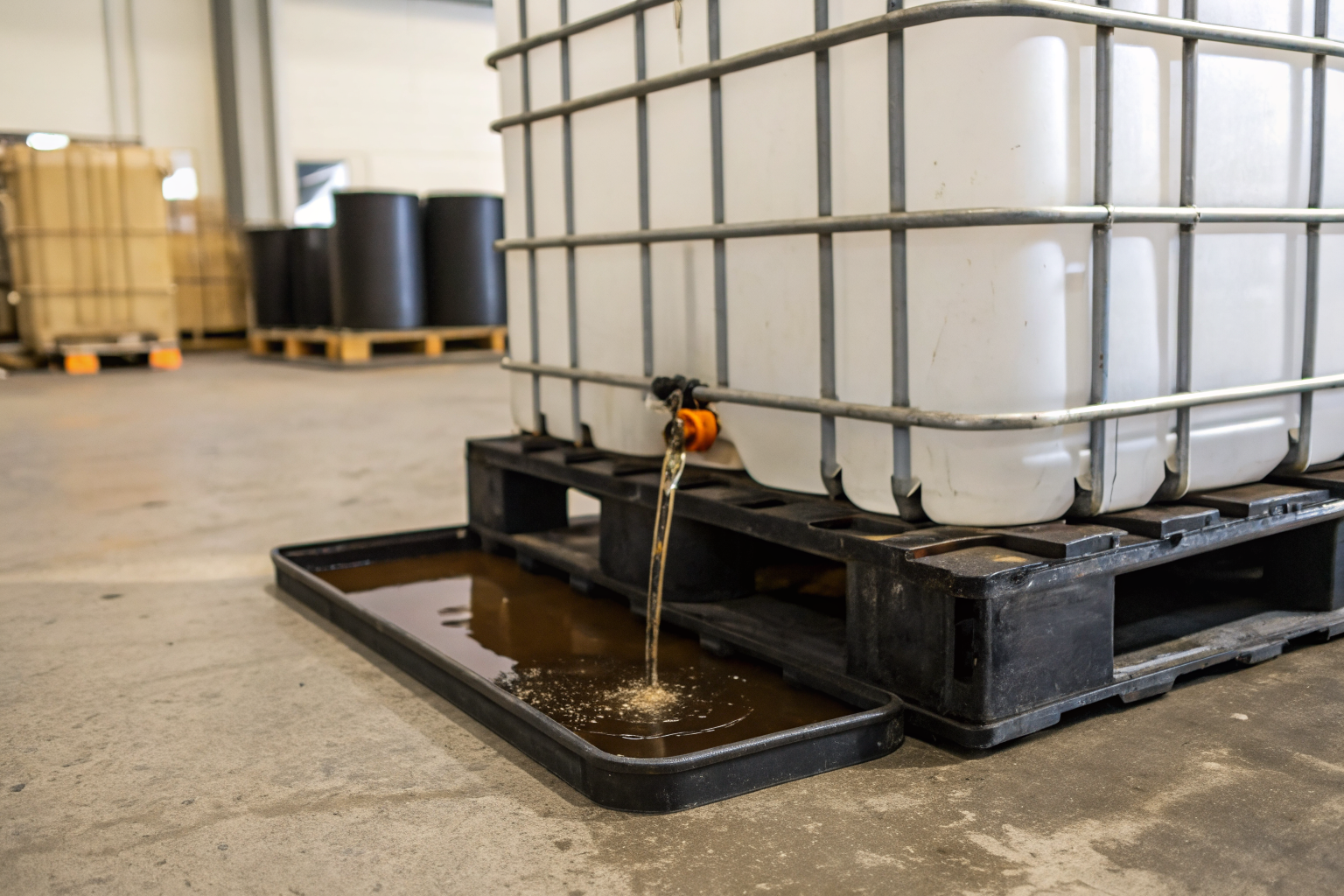
An IBC spill containment pallet is a specialized platform designed to capture and contain leaks from intermediate bulk containers during storage and handling operations. This means facilities can store chemical totes without risking soil contamination or EPA violations. For example, a polyethylene containment pallet catches hydraulic fluid drips from a damaged IBC valve before they reach the warehouse floor.
IBC spill containment pallets prevent environmental contamination through secondary containment systems built into their design. The pallet features raised edges and a sump capacity that collects any liquid that escapes the primary container. Unlike standard shipping pallets that allow spills to flow onto the ground, containment pallets trap liquids within their containment volume.
EPA regulations require secondary containment for facilities storing oil and hazardous substances under SPCC plan guidelines. The 110% containment rule applies to all IBC storage systems — meaning a 275-gallon tote must sit on a pallet capable of holding at least 302.5 gallons. This regulation covers everything from diesel fuel storage to industrial chemical warehouses.
Secondary containment systems must be impervious to the stored substance and structurally sound enough to contain the full IBC capacity plus precipitation. Standard shipping pallets fail both requirements since they lack containment volume and chemical resistance. IBC tote pallets solve this compliance gap with purpose-built containment features.
The key difference between IBC containment pallets and regular pallets lies in their containment capacity and material construction. Containment pallets feature deep sumps, chemical-resistant materials, and load ratings sufficient for filled totes weighing up to 2,500 pounds including the container weight.
How Do You Size IBC Containment for 275-Gallon Totes?
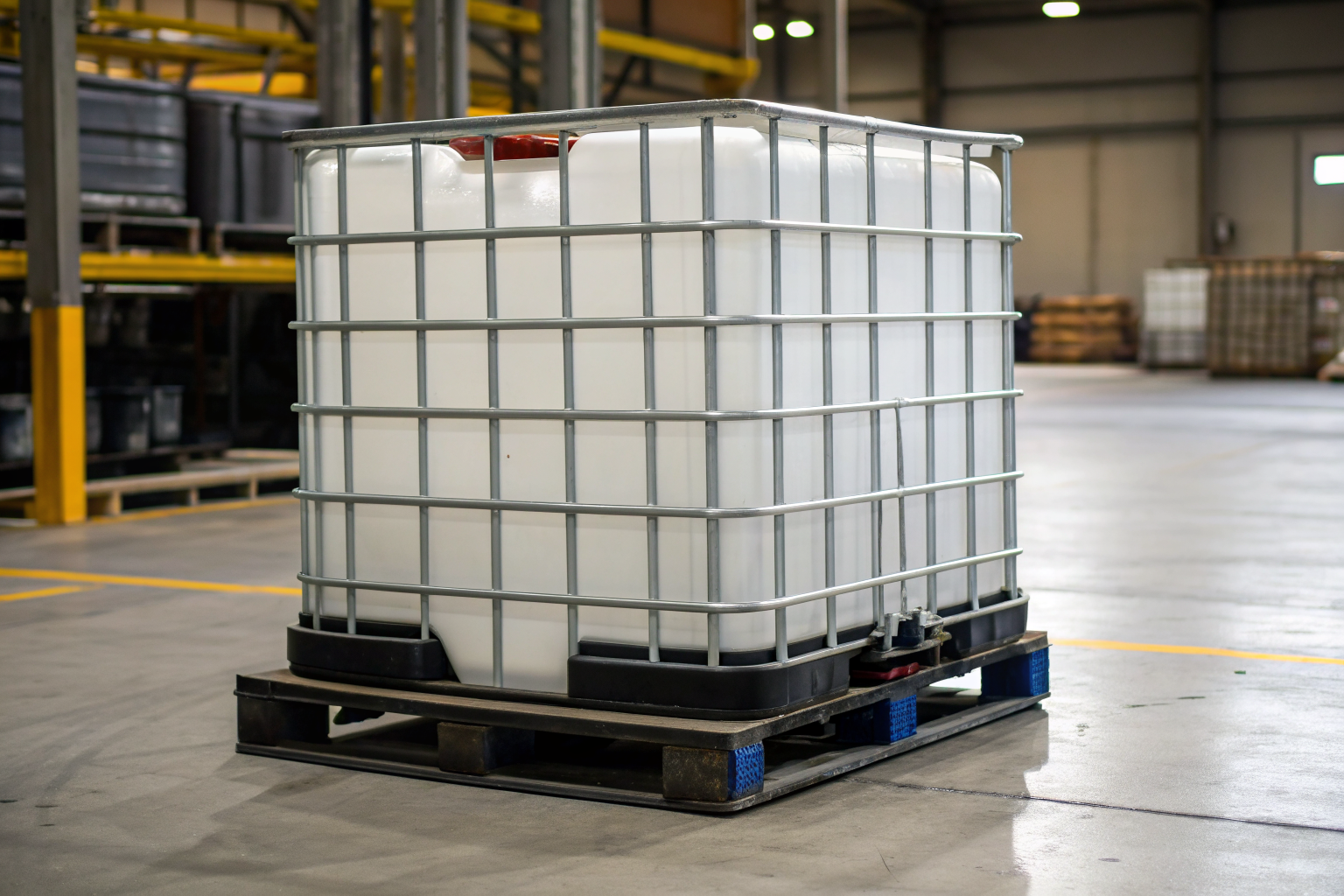
Containment volume must exceed 110% of tote capacity according to EPA secondary containment regulations. A standard 275-gallon IBC measures 48x40x46 inches and requires 302.5 gallons minimum containment capacity when accounting for the regulatory buffer.
| Tote Configuration | IBC Capacity | Required Containment | Pallet Dimensions | Sump Depth |
|---|---|---|---|---|
| Single 275-gallon | 275 gallons | 302.5 gallons | 52x52x8 inches | 6 inches |
| Double 275-gallon | 550 gallons | 605 gallons | 104x52x8 inches | 6 inches |
| Quad 275-gallon | 1,100 gallons | 1,210 gallons | 104x104x10 inches | 8 inches |
| Single 330-gallon | 330 gallons | 363 gallons | 52x52x10 inches | 8 inches |
Standard IBC dimensions affect containment calculations beyond just liquid capacity. The 48×40-inch footprint requires a pallet deck of at least 52×52 inches to provide adequate support and spill capture area around the tote base. Most single-tote containment pallets measure 51×51 inches or 52×52 inches to accommodate standard IBC positioning.
Containment volume formulas account for both liquid capacity and physical displacement. The calculation starts with 110% of tote capacity, then subtracts the volume displaced by the IBC itself when sitting in the sump. For a 275-gallon tote, the displaced volume equals approximately 8 gallons, meaning the sump needs 310.5 gallons total capacity.
Multiple tote configurations multiply both storage capacity and containment requirements. Four 275-gallon totes require 1,210 gallons of containment capacity across the platform surface. This drives pallet designers toward larger footprints with deeper sumps to meet regulatory minimums while maintaining structural integrity.
Temperature expansion affects containment calculations for heated storage applications. Liquids expand approximately 1% per 10-degree temperature increase, requiring additional containment volume for heated chemical storage. Cold storage applications face the opposite problem — frozen expansion can crack inadequate containment systems.
Which Materials Handle Different Chemical Types?
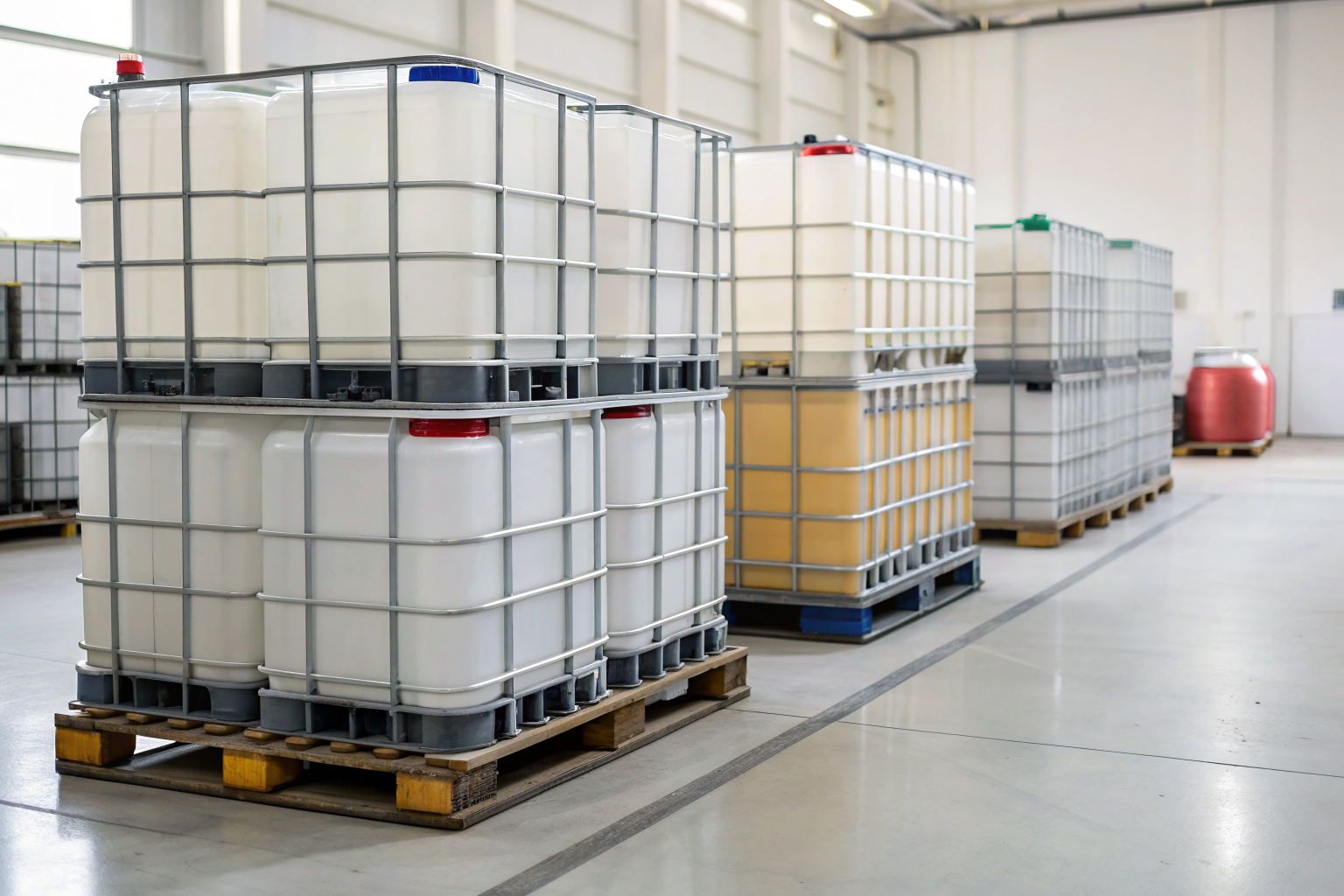
Polyethylene pallets resist most industrial chemicals including oils, coolants, and mild acids up to concentrations that cover 95% of standard IBC applications. This means facilities storing diesel fuel, hydraulic oil, or water-based solutions can rely on polyethylene containment without compatibility concerns.
Polyethylene construction offers excellent chemical resistance at the lowest cost point for IBC containment. High-density polyethylene (HDPE) withstands temperatures from -40°F to 140°F while resisting UV degradation in outdoor storage applications. The material won’t crack under freeze-thaw cycles and maintains structural integrity for 10-15 years in typical warehouse environments.
Steel containment pallets handle aggressive chemicals that attack polyethylene including strong bases above pH 12, concentrated acids, and aromatic solvents like toluene. Steel construction supports heavier loads — polyethylene pallets rated for 2,200-pound loads while steel units handle up to 4,000 pounds including the IBC and product weight.
Composite materials combine fiberglass reinforcement with resin systems designed for specific chemical families. These specialized pallets cost 40-60% more than polyethylene but offer superior resistance to chemical families that damage both plastic and steel. Composite construction works best for facilities storing multiple chemical types requiring broad compatibility.
Chemical compatibility requires matching pallet materials to stored substances through compatibility charts provided by manufacturers. Polyethylene shows excellent resistance to petroleum products, alcohols, and most water-based chemicals. Steel pallets with epoxy coatings resist acidic solutions but require periodic coating maintenance to prevent corrosion.
Temperature ratings vary significantly between materials. Polyethylene maintains flexibility down to -40°F but softens above 140°F under load. Steel pallets operate from -20°F to 200°F but require thermal expansion joints for temperature cycling applications. Composite materials offer the widest temperature range from -60°F to 250°F depending on resin selection.
Load capacity differences between materials affect multi-tote applications. Single polyethylene pallets safely support one 275-gallon tote plus product weight totaling 2,400 pounds. Four-tote steel platforms distribute 9,600 pounds across reinforced framework designed for forklift handling and stacking operations.
What Are the EPA Requirements for IBC Storage?
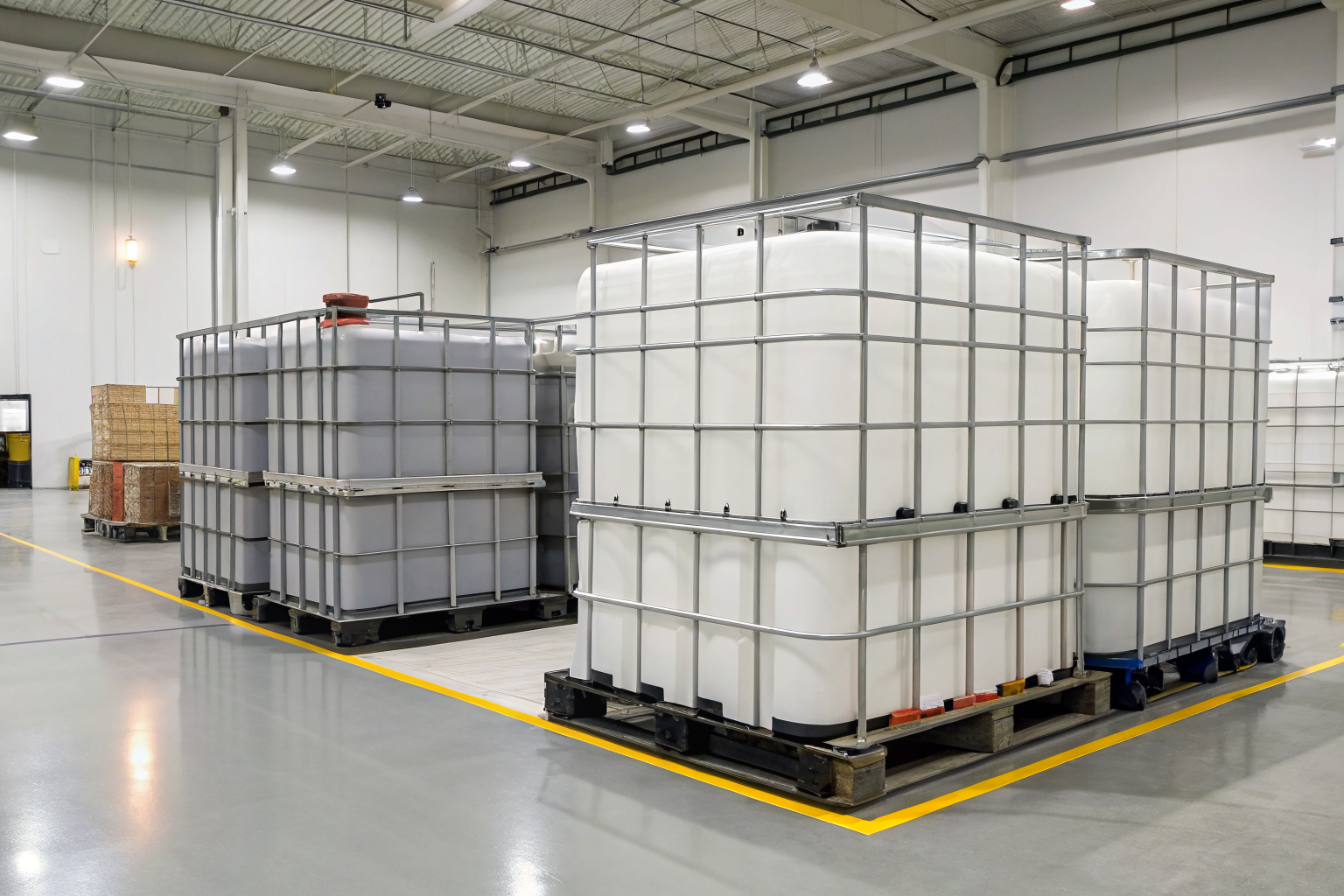
SPCC Plan requires secondary containment systems for facilities storing over 1,320 gallons of oil in containers larger than 55 gallons. This means any warehouse with five or more 275-gallon IBCs containing petroleum products must implement containment systems and maintain spill prevention documentation.
EPA regulations specify that secondary containment must hold 100% of the largest container plus 10% of remaining container volumes within the same containment area. For IBC storage, this simplifies to 110% of total storage capacity when all containers are identical sizes. The containment system must be impervious to stored substances and capable of containing spills plus reasonable precipitation.
Inspection protocols under SPCC plans require monthly visual assessments of containment integrity including checks for cracks, corrosion, or drainage issues that compromise containment capacity. Annual inspections by qualified personnel must verify containment calculations, structural soundness, and compliance with design specifications. Documentation must record all inspections and any maintenance performed.
Spill prevention measures extend beyond containment to include proper IBC handling procedures, valve maintenance schedules, and employee training programs. The SPCC plan must detail loading and unloading procedures that minimize spill risks during product transfer operations. Facilities must maintain spill response equipment sized appropriately for potential release volumes.
Penalty structure for SPCC violations starts at $47,000 per violation for facilities without adequate containment systems. EPA enforcement data shows penalties escalate rapidly for repeat violations or cases involving actual environmental contamination. Facilities face additional cleanup costs averaging $180,000 for soil remediation when spills reach groundwater.
Documentation requirements include maintaining SPCC plan updates, inspection records, and employee training logs for EPA review. Plans must be updated within six months of changes affecting spill potential including new storage areas, increased capacity, or different chemical types. Professional engineer certification is required for facilities storing over 10,000 gallons total capacity.
How Do You Select Single vs Multi-Tote Containment Systems?
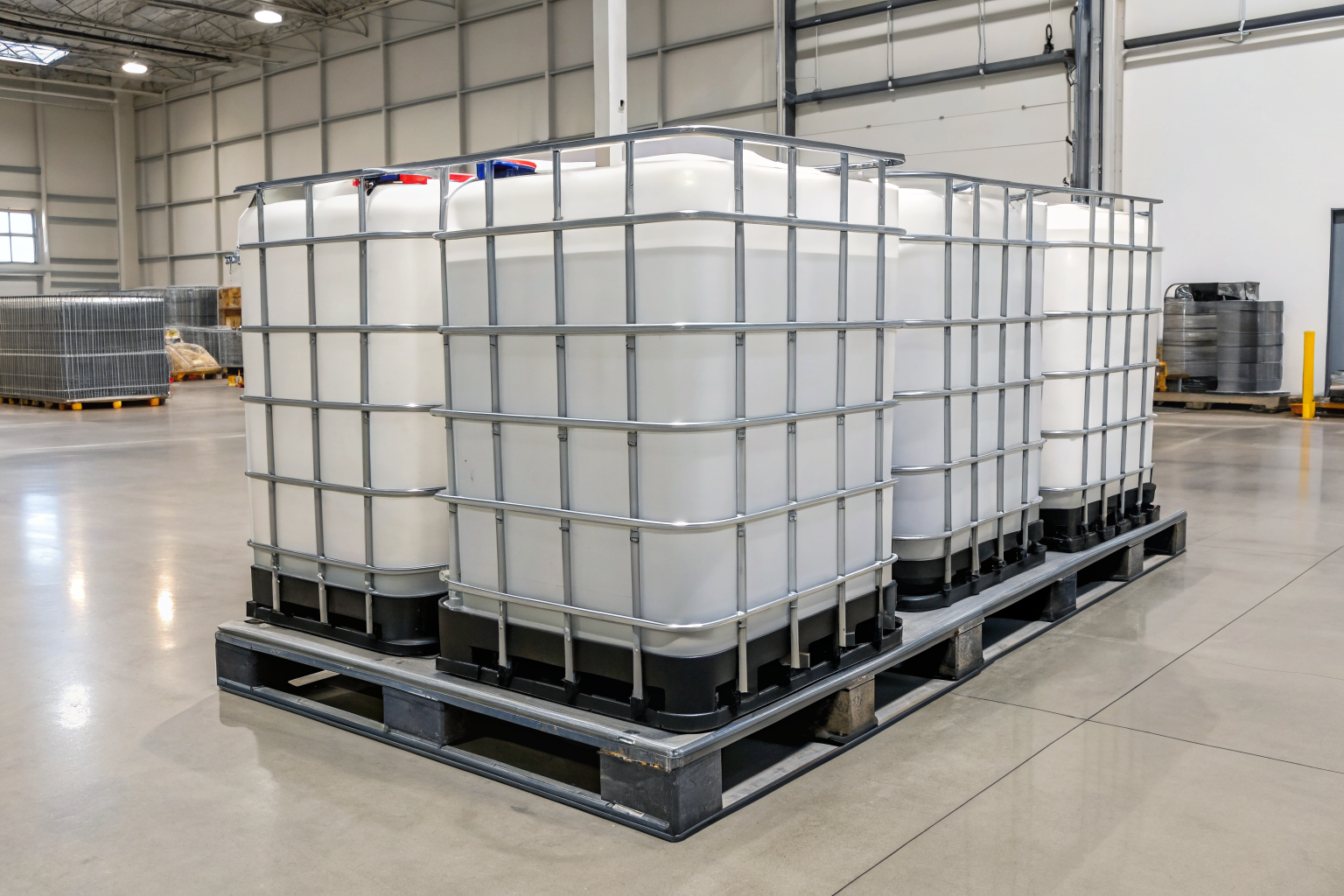
Multi-tote systems reduce per-unit containment costs from $1.65 per gallon for single-tote pallets to $0.87 per gallon for four-tote platforms. This means facilities storing multiple IBCs achieve significant cost savings by consolidating containment rather than purchasing individual spill pallets for each tote.
| Configuration | Purchase Cost | Containment Capacity | Cost Per Gallon | Mobility | Floor Space |
|---|---|---|---|---|---|
| Single Tote | $280 | 302.5 gallons | $0.93 | High | 27 sq ft |
| Double Tote | $650 | 605 gallons | $1.07 | Medium | 37 sq ft |
| Four Tote | $1,850 | 1,210 gallons | $1.53 | Low | 75 sq ft |
| Modular System | $420/module | 302.5/module | $1.39 | High | Variable |
Single-tote containment pallets offer maximum flexibility for facilities with changing storage requirements or frequent product rotation. These units support forklift handling while loaded, allowing repositioning without emptying IBCs first. The compact 52×52-inch footprint fits standard pallet rack systems and doorway clearances in most facilities.
Bulk containment platforms accommodate multiple totes within shared containment volume but sacrifice mobility for cost efficiency. Four-tote systems require permanent installation with adequate clearance for forklift access on all sides. The 104×104-inch footprint demands 75 square feet of floor space plus maneuvering room for equipment.
Space efficiency calculations must account for aisle requirements and emergency access paths around containment systems. Single-tote pallets integrate into existing warehouse layouts with minimal disruption. Multi-tote platforms require dedicated storage areas with 8-foot minimum clearance for safe forklift operations.
Mobility trade-offs become critical during facility reconfiguration or seasonal storage changes. Single pallets move with their IBCs using standard material handling equipment. Multi-tote platforms require emptying all containers before repositioning, creating operational delays during layout changes.
Modular containment systems split the difference by connecting individual single-tote units into larger arrays when needed. This approach costs 15-20% more than dedicated multi-tote platforms but maintains flexibility for facilities with evolving storage patterns. Modular systems work best for companies expecting growth or seasonal capacity changes.
Tote containers stored on multi-tote platforms share containment volume, creating regulatory considerations if different chemical types mix during a spill event. Facilities storing incompatible chemicals must use separate containment systems to prevent dangerous reactions within shared sumps.